
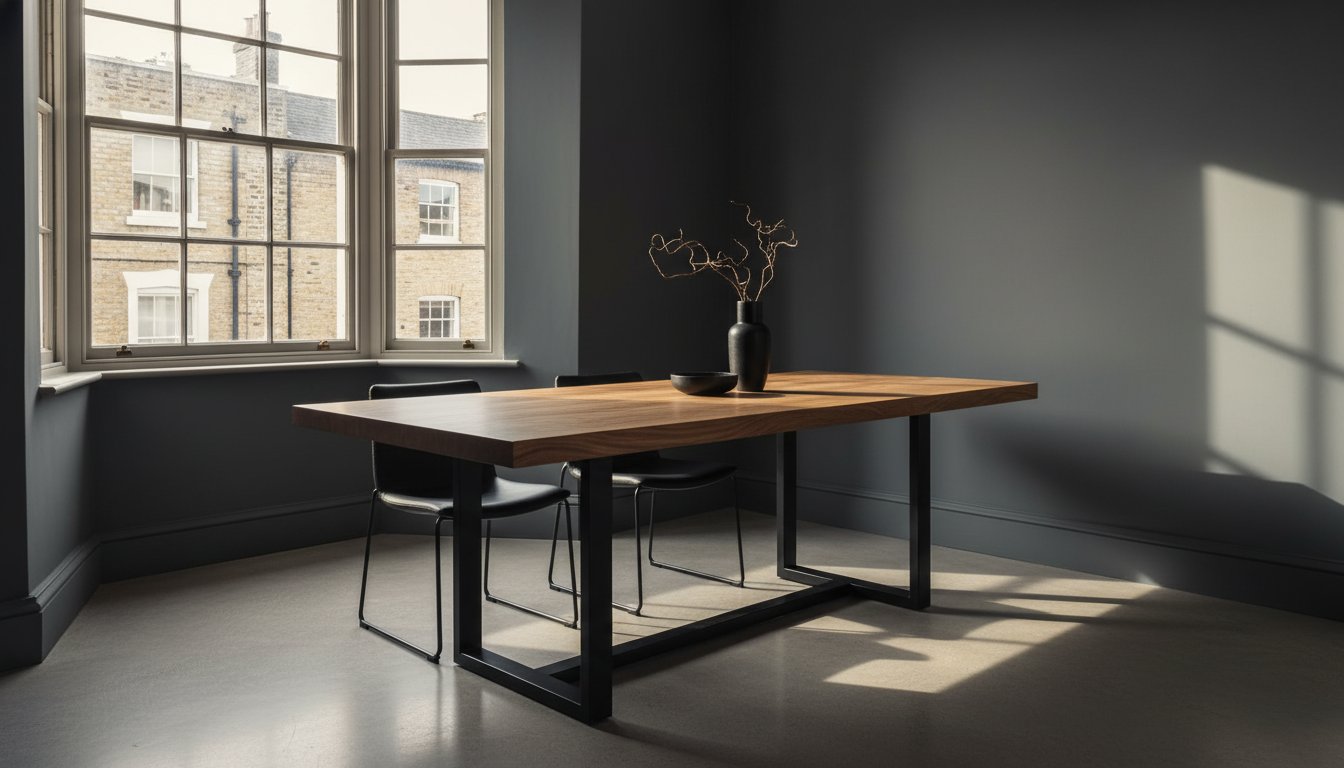
What if the reason your dining room feels cramped isn’t the square footage, but the rigid geometry of mass-produced furniture? You’ve likely felt that frustration when a standard table leaves a puzzling “dead zone” in a corner or when guests find themselves constantly dodging heavy wooden legs just to sit down. Finding a dining table for awkward shaped room layouts requires a shift in perspective, moving away from off-the-shelf solutions toward pieces that respect the unique lines of your home. We understand that a table is more than a surface; it’s a site for shared stories and slow Sunday mornings, and it shouldn’t feel like an obstacle in your daily path.
You deserve a space that feels intentional rather than accidental, where every inch of floor is used with purpose. In this guide, we’ll show you how the right silhouette, leg design, and bespoke dimensions can breathe life into challenging floor plans. We’ll look at how sculptural bases like the Spider Leg or V-Frame maximize legroom, while our manual approach to production ensures your furniture remains a focal point for generations. By prioritizing the natural grain of the wood and the specific flow of your home, you’ll discover how to transform even the most difficult alcove into a spacious, welcoming sanctuary for your family.
Key Takeaways
- Identify the unique geometry of your space to understand why standard, mass-produced tables often create uncomfortable bottlenecks in galley or L-shaped rooms.
- Learn how the soft curves of an oval table or the intentional lines of a rectangular design can reclaim “dead space” and improve the natural flow of your home.
- Discover the secret of leg architecture, where choosing a dining table for awkward shaped room layouts with a Spider or V-Frame base maximizes seating without the clutter of corner legs.
- Master the professional measurements needed for a functional space, including the essential 90cm clearance rule for effortless movement around seated guests.
- Explore the bespoke advantage of handcrafted furniture, where millimetre precision and high-quality timbers like solid black walnut transform a challenging layout into a site for human connection.
Identifying Your Room Geometry: Why Standard Tables Fail
Every home has its own rhythm and quirks. Some rooms are long and narrow, reminiscent of a galley kitchen, where every spare inch is a precious commodity. Others feature an L-shaped open plan where the dining area must coexist peacefully with the living zone without feeling like an afterthought. Then there is the “alcove dilemma,” those stubborn recesses beside a chimney breast that often remain empty because nothing quite fits. When you try to force a standard dining table for awkward shaped room layouts, you often end up with accidental gaps that collect dust or bulky corners that block the natural light pouring through a window.
The Problem with Mass-Produced Dimensions
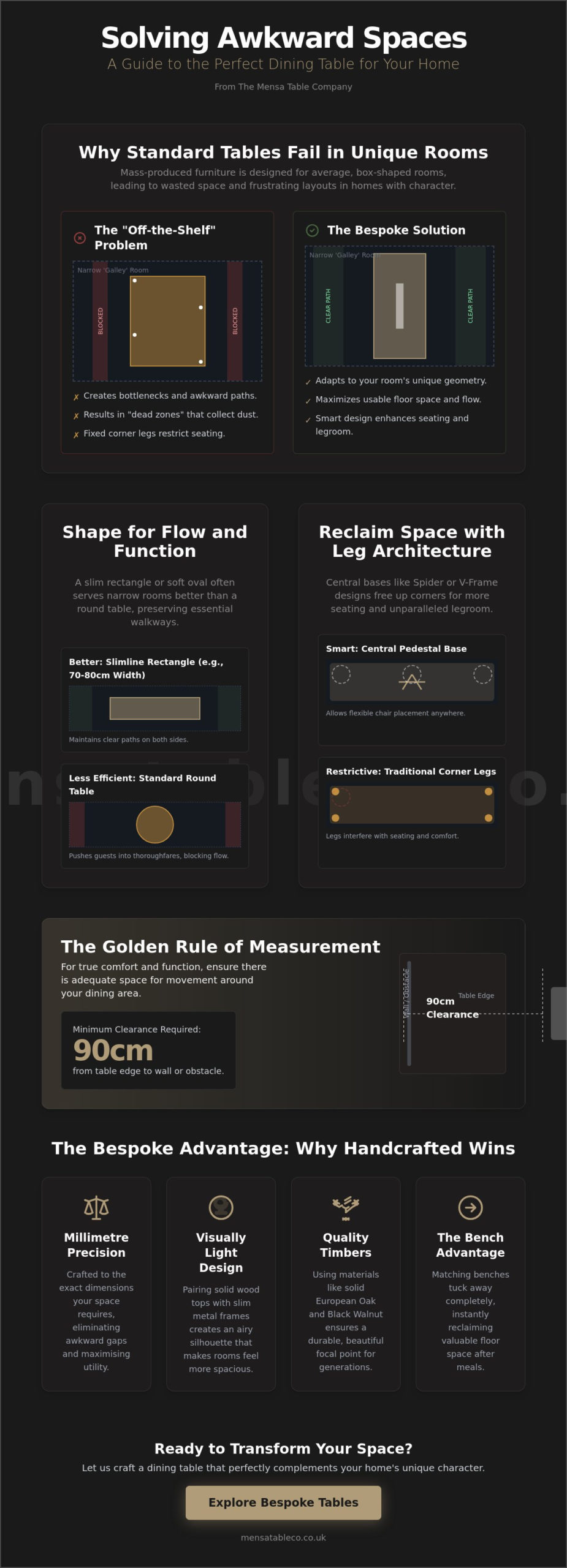
Off-the-shelf furniture is designed for a mathematical average, not for the reality of a characterful home. A standard 90cm width might sound reasonable in a showroom, but in a narrow UK dining room, it can choke the walkway and make movement feel like a chore. Most flat-pack options rely on fixed leg positions at the very corners, which dictates exactly where your guests must sit. If a leg happens to land right where someone needs to pull out a chair, the whole arrangement feels cramped and clumsy. We believe furniture should adapt to you, not the other way around. Our manual approach to crafting each piece means we can shave off those few centimetres that make the difference between a room that feels blocked and one that feels free.
Visual Weight vs. Physical Footprint
True comfort isn’t just about the physical space a piece occupies; it’s about how it feels to the eye. This is a core concept in the principles of interior design, where space planning involves balancing the “visual weight” of an object. A table with a thick, heavy base can make a small room feel claustrophobic, even if it technically fits. By pairing a character-rich solid European oak top with a slim, intentional metal frame, we create an “airy” silhouette. This approach lets you see more of the floor area, which psychologically opens up the room. It’s about creating a focal point that feels grounded yet light, allowing your home to breathe while still providing a sturdy foundation for years of family meals and shared laughter.
Choosing the Right Shape for Flow and Function
Selecting the silhouette of your tabletop is a deeply personal decision that dictates the energy of your home. While many generic guides suggest round tables for every small space, we’ve found that they can often be inefficient in the narrow, linear rooms common in the UK. A round table pushes guests further into the room’s thoroughfares, whereas a thoughtfully sized rectangular or oval piece can follow the natural architecture of the walls. When searching for a dining table for awkward shaped room layouts, it’s vital to consider how the shape facilitates movement during a busy Tuesday morning or a quiet Saturday dinner.
We often recommend a “slimline” approach for those tight galley spaces. By reducing the width of a table to 70cm or 80cm, you preserve the essential walkways of your home without sacrificing the intimacy of a shared meal. This is where the “bench advantage” truly shines. Unlike chairs, which have backs that create visual and physical clutter, matching benches can be tucked completely beneath the table when the meal is over. This simple adjustment reclaims valuable floor space, transforming a dining area into a clear passage in seconds. It’s a practical way to apply Decorating tips for awkward spaces while maintaining high seating capacity.
The Case for Slim Rectangles
A narrow rectangular top is a secret weapon for multipurpose rooms. It allows you to place the table against a wall or in a central “island” position while still leaving room for a person to pass comfortably behind it. This adaptability makes it a premier choice when selecting a dining table for awkward shaped room zones that need to serve multiple functions throughout the day. We focus on millimetre precision to ensure you have enough space for dinner plates and centerpieces without the table feeling like a barricade. If you’re struggling to find the right balance, our range of dining tables offers the flexibility to tailor dimensions to your specific floor plan.
Softening Corners with Ovals
If your dining area sits in a high-traffic walkthrough, an oval table offers a distinct advantage. The absence of sharp corners means no more bruised hips as you navigate the room with a basket of laundry or a tray of tea. Ovals also perform a clever optical trick; their curved lines lead the eye around the room rather than cutting it short, making narrow spaces feel wider than they are. From a social perspective, the lack of a “head” of the table encourages a more conversational, egalitarian atmosphere. If you’re unsure which silhouette will best serve your family rituals, we invite you to reach out for a personal chat about your project.
Leg Architecture: The Secret to Reclaiming Floor Space
The foundation of a table often goes unnoticed until your knee strikes a cold metal corner or a guest finds themselves straddling a bulky wooden post. While the shape of the tabletop defines the room’s flow, the leg architecture determines the true usability of the space. In a standard home, corner legs are an accepted norm, but when you’re selecting a dining table for awkward shaped room layouts, these traditional placements often become obstacles. We believe that the support beneath the timber should be as intentional as the grain on top, providing stability without sacrificing a single inch of precious legroom.
Centralised supports, such as the Spider Leg or the V-Frame, are transformative for tight or non-traditional spaces. By moving the structural weight to the centre of the piece, you liberate the perimeter. This allows chairs to be placed anywhere along the edge, which is particularly useful in alcoves where a table might be tucked against a chimney breast. Similarly, U-Frame and Trapezium designs move the support away from the corners, keeping the ends clear. This spatial logic ensures that even if your room has an unusual footprint, your seating arrangement doesn’t have to feel compromised or cramped.
Maximising Chair Tuck-In Depth
The ability to tuck chairs completely under the table is the difference between a clear walkway and a constant trip hazard. Recessed leg designs allow the seat and backrest to sit flush with the table edge when the meal is over, effectively shrinking the furniture’s footprint during the day. This is why the Spider Leg Dining Table has become a staple for our clients with challenging floor plans. It offers a centralised hub of steel that provides rock-solid stability while leaving the entire underside open for chairs or benches. When every millimetre counts, this clearance is essential for maintaining a sense of order and calm in a busy household.
Style Meets Spatial Logic
Choosing the right frame isn’t just a functional exercise; it’s an opportunity to blend industrial strength with natural beauty. We often pair our hand-welded steel frames with solid European oak to create a look that feels both grounded and modern. For rooms that already feel “busy” with architectural details, a V-Frame offers a minimalist profile that disappears into the shadows, while an X-Frame or A-Frame provides a more robust, rustic aesthetic. These steel structures are built to last generations, offering a durable alternative to mass-produced furniture that often wobbles in high-traffic, narrow areas. By choosing a dining table for awkward shaped room zones with a thoughtful base, you’re investing in a piece that respects both the history of the materials and the specific needs of your home.
How to Measure Your Awkward Room Like a Pro
Precision is the silent partner of artisanal craftsmanship. While we spend hours refining the tactile qualities of a timber surface, that work only truly shines when the piece fits your home with millimetre accuracy. When you’re choosing a dining table for awkward shaped room layouts, a tape measure becomes your most trusted tool. You aren’t just measuring the furniture; you’re measuring the negative space around it. The 90cm rule is a standard we live by; it ensures that a person can glide behind a seated guest without a squeeze. If your room is particularly tight, you might reduce this to 70cm in low-traffic areas, but never sacrifice the 50-60cm required for a chair to be pulled out comfortably.
Measuring an alcove or a recessed wall requires a patient hand and a bit of technical savvy. Walls in older, characterful homes are rarely perfectly vertical or square. We always recommend measuring the width at three distinct heights: the floor, the midpoint, and the height of the table surface. Use the smallest of these three figures as your guide to avoid a heart-stopping moment on delivery day. Map your traffic path by noticing where your family naturally walks to reach the kitchen or the garden door. A table should be a destination, not a hurdle in your daily commute through the house.
The Masking Tape Trick
We often suggest our clients use low-tack masking tape to template the floor before making a final decision. This simple step allows you to walk around the proposed footprint and feel the flow of the room. To take this a step further, use empty cardboard boxes to simulate the “visual bulk” of the table. A flat piece of tape doesn’t account for the height and presence of a solid wood top. Move the tape, trim the boxes, and adjust the layout until you find the “Goldilocks” size that feels substantial yet respectful of the room’s boundaries. It’s a manual process that mirrors the way we approach our work in the workshop.
Considering Seating Alternatives
If space is truly at a premium, matching benches offer a versatility that chairs simply cannot match. Benches provide a “tuck-under” benefit, disappearing completely beneath the table when the meal is finished to leave the floor clear. They also solve the problem of fixed seating capacity; you can easily slide in an extra child or guest without needing to find another chair. This adaptability is essential for narrow rooms where a row of chair backs would create too much visual noise. If you’re staring at a particularly stubborn corner and need a second opinion on dimensions, we invite you to get in touch with our workshop team for a personal consultation.
The Bespoke Advantage: Why Handcrafted Wins
Choosing a bespoke piece isn’t just about aesthetics; it’s about solving the “millimetre problem” that plagues traditional floor plans. A dining table for awkward shaped room environments acts as the anchor that turns a frustrating corner into a functional heart of the home. Where mass-produced frames leave accidental gaps or block natural light, a handcrafted table is built to the specific rhythm of your walls. This manual approach ensures that every joint is tight and every edge is smoothed to perfection, creating a legacy piece that far outlasts the temporary nature of flat-pack alternatives. By selecting the raw materials yourself, from the deep, soulful tones of solid black walnut to the bright, honest character of Swedish pine, you ensure the table feels like a natural extension of your personality.
Tailoring the Finish to Your Light
Light plays a vital role in how we perceive space. In a north-facing or narrow room, a heavy, dark table can feel like it’s absorbing all the available sunshine and making the area feel smaller. We often guide our clients toward lighter oaks or ash, finished with a natural oil that protects the wood without masking its organic warmth. The tactile experience of running your hand across a surface that has been sanded and oiled by a real person is something mass-produced furniture can’t replicate. It’s a sensory connection to the natural world that makes your dining area feel like a deliberate sanctuary rather than a cramped walkthrough.
Investing in Your Home’s Future
Investing in a high-quality, manual build is a commitment to sustainability and heritage. Unlike the disposable nature of furniture that often finds its way to a landfill after a few years, artisanal joinery is designed to age with grace. It becomes a silent witness to a generation’s worth of birthdays and late-night conversations. When you choose a dining table for awkward shaped room layouts that is built with care, you’re buying once and buying well. It’s an investment in your daily comfort and the long-term value of your living experience. We invite you to Explore our full range of handcrafted tables and discover how a piece built specifically for your home can transform your space into something truly intentional.
Reclaiming Your Home’s Heart
Your living space should never feel like a series of compromises. By embracing the unique geometry of your home, whether it’s a narrow galley or a recessed alcove, you can transform a challenging layout into a site for human connection. We’ve explored how the right leg architecture, such as centralised Spider or V-Frame bases, can liberate floor space and how slimline silhouettes preserve essential walkways. Finding the perfect dining table for awkward shaped room zones is a journey that starts with intentional measurement and ends with a piece that feels like it has always belonged there.
Every piece we create is handcrafted in the UK using solid timber throughout, ensuring your furniture carries the weight of future memories without the need for veneers. We offer bespoke sizing available on request to help you navigate those tricky millimetre decisions with confidence. We invite you to reach out to our team today to discuss how we can tailor a design specifically for your floor plan. Your home has its own story, and we’re here to help you find the perfect furniture to tell it.
Frequently Asked Questions
What is the best table shape for a long, narrow dining room?
A slimline rectangular table is the most efficient choice for long, narrow spaces. By choosing a width between 70cm and 80cm, you preserve essential walkways while maintaining enough surface area for a full dinner service. This shape follows the natural architecture of the room, preventing the “bottleneck” effect often caused by round tables that push guests too far into the centre of the passage.
How much space should I leave between the table and the wall?
You should aim for a clearance of 90cm between the table edge and the wall to allow for comfortable movement. This distance ensures that a person can walk behind a seated guest without a squeeze. If the area is low-traffic, you might reduce this to 70cm, but always preserve at least 50-60cm for the “chair pull-out” distance to avoid a cramped dining experience.
Can I put a rectangular table in a square room?
Placing a rectangular table in a square room works beautifully if you use the extra space for a sideboard or an accent chair. This arrangement can help define a specific “dining zone” within the larger square footprint. However, for a dining table for awkward shaped room layouts that are perfectly square and small, a square or round table often feels more intentional and symmetrical.
Are benches better than chairs for small, awkward spaces?
Benches are often superior to chairs in tight or narrow spaces because they can be tucked completely under the table when not in use. This reclaims floor space instantly, turning a dining area back into a clear thoroughfare. Additionally, benches provide flexible seating for extra guests or children, whereas chairs have fixed backs that create physical and visual clutter in a small room.
How do I choose a table that doesn’t block the walkway in an open-plan room?
To keep walkways clear in an open-plan layout, prioritise a “slimline” width and a centralised leg architecture like the Spider Leg or V-Frame. These designs move the structural support away from the corners, allowing chairs to be tucked in deeper. Mapping your natural “traffic path” before buying ensures the table acts as a destination rather than a hurdle in your daily commute through the house.
Is a 70cm wide dining table big enough for four people?
A 70cm wide table is sufficient for four people if they are seated in pairs along the longer sides. This width provides enough room for standard dinner plates and glassware, though it leaves little space for large central serving platters. It is a highly effective “secret weapon” for narrow UK homes where a standard 90cm table would simply block the room’s flow.
What leg design gives the most legroom in tight corners?
Centralised designs like the Spider Leg or V-Frame provide the most legroom because they eliminate bulky supports at the table corners. This is essential when selecting a dining table for awkward shaped room alcoves or corners, as it allows guests to slide into their seats without knocking their knees. By moving the structural weight to the centre, you liberate the entire perimeter for seating.
Should I choose a light or dark wood for a small, awkward room?
Lighter timbers like European Ash or Oak are ideal for small, north-facing rooms as they reflect natural light and create an airy feel. If the room is large but oddly shaped, a darker wood like Black Walnut can act as a grounding “anchor” that makes the space feel more intentional. The choice should balance the room’s lighting with the tactile warmth you want to evoke in your home.

Leave a Reply