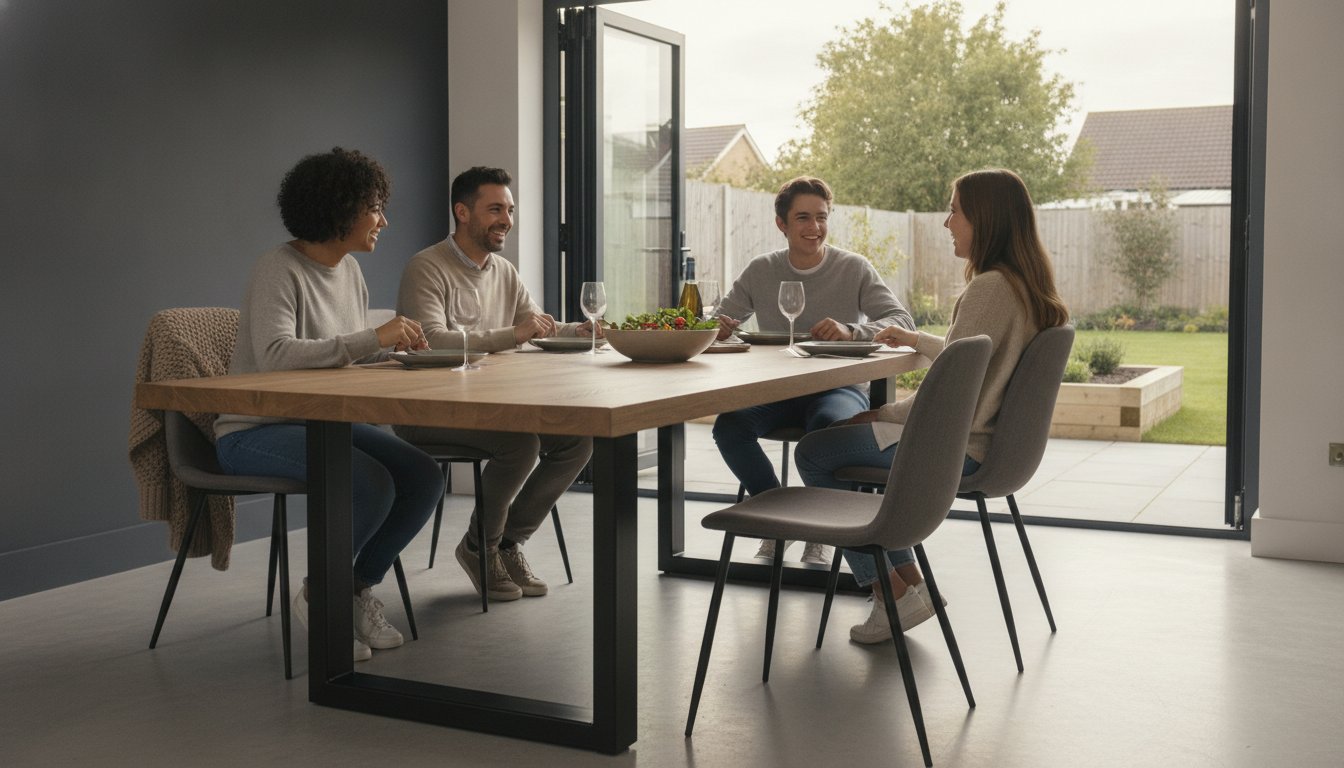
The dining table is rarely just a surface; it is the silent witness to every Sunday roast, late-night conversation, and milestone celebration in a home. When you begin the journey of choosing a dining table uk, you aren’t just looking for a place to eat. You’re searching for a piece of heritage that can withstand the unique demands of British living spaces while maintaining its structural integrity. We understand the frustration of finding a design you love, only to realise the frame is too bulky for your chairs or the timber might not cope with the shifting temperatures of a lived-in home.
It’s entirely possible to find a table that marries the raw, tactile beauty of solid European oak with the spatial intelligence required for modern floor plans. This guide will provide you with the confidence to select the right timber species and understand how different leg geometries, such as the Spider Leg or X-Frame, influence room flow. You’ll discover how to measure for perfect scale and why handcrafted joinery remains the only true alternative to the disposable nature of mass-produced furniture.
Key Takeaways
- Learn why the dining table is the emotional anchor of the home and how to select a surface that serves both as a social hub and a functional workspace.
- Master the technical side of choosing a dining table uk by understanding how solid European hardwoods naturally move and breathe over time.
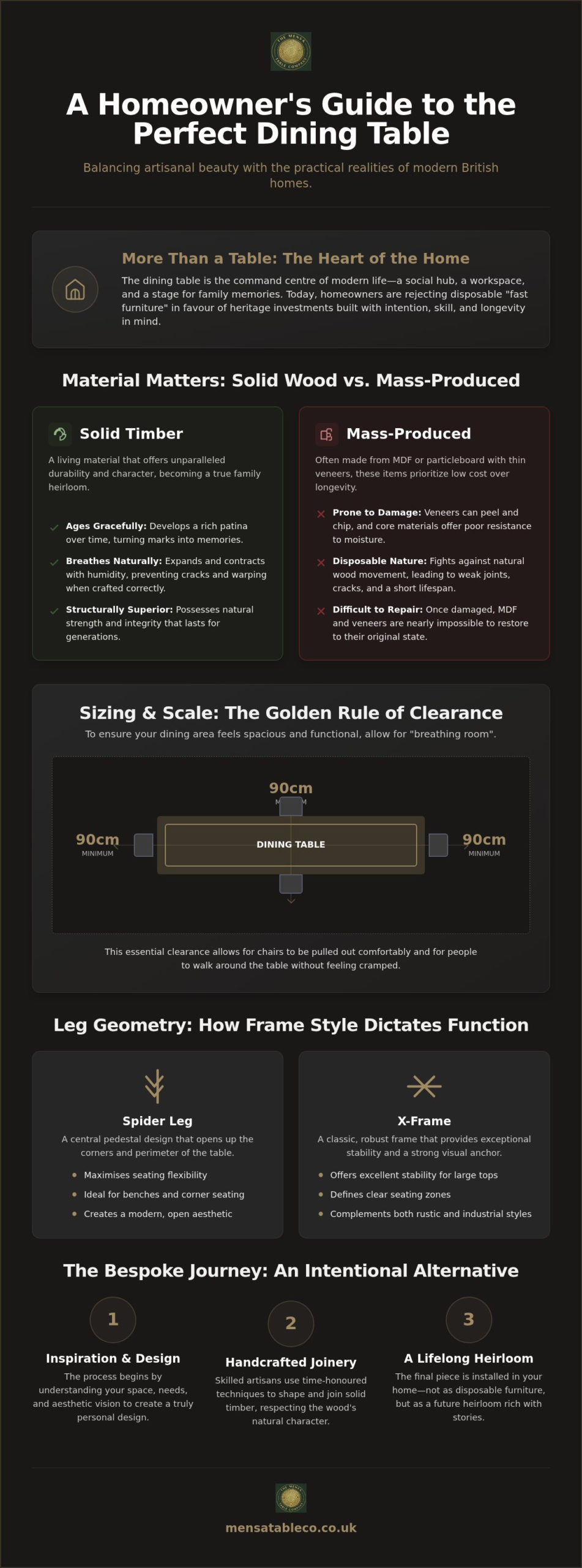
- Discover the “Golden Rule of Clearance” to ensure your dining area feels spacious, allowing for the essential 90cm of breathing room around your furniture.
- Identify how specific leg geometries, such as the Spider Leg or X-Frame, dictate seating flexibility and the overall flow of your room.
- Explore the bespoke journey to see how handcrafted UK joinery offers a durable, intentional alternative to the disposable nature of mass-produced furniture.
Understanding the Role of the Dining Table in the UK Home
In many British households, the dining table is the only piece of furniture that truly works for its living. It isn’t just a surface for a plate; it’s the command centre for the morning rush, a quiet sanctuary for Sunday morning coffee, and, increasingly, the primary workspace for the professional working from home. This shift toward multi-functional living has changed the way we view our interiors. A table must now be robust enough to handle the weight of a laptop and the heat of a serving dish, all while remaining the aesthetic anchor of the room. We see a growing movement away from the “fast furniture” culture of the last decade. Homeowners are looking for heritage investments that reject the disposable, flat-pack ethos in favour of something built with intention and manual skill.
The “Heart of the Home” Philosophy
We believe a table is a site for human connection and shared social rituals. Solid timber, sourced from managed European forests, forms the foundation of a piece that lives as long as the house it occupies. When you run your hand across a surface of solid European oak, you feel the grain and the history of the wood. This tactile experience grounds us. Unlike hollow, veneer-clad alternatives, a solid wood table ages gracefully with your family. It absorbs the scratches of childhood crafts and the rings of late-night wine glasses, turning every mark into a chapter of your home’s story. For a broader dining table overview, history shows that these items have always been the emotional hubs of domestic life, evolving from simple utility to structural art.
Spatial Challenges in British Architecture
British homes present unique architectural puzzles. You might be working with the snug proportions of a Victorian terrace or the sprawling, airy dimensions of a modern glass extension. The process of choosing a dining table uk homeowners face involves balancing these physical limits with the need for a generous social space. A well-placed table defines the room’s flow, creating “zones” in an open-plan layout without the need for walls. By respecting negative space, the empty areas around the furniture, you allow the room to breathe. A heavy, dark table might ground a large room, while a design with a more open frame can make a compact dining area feel significantly more expansive. Whether you are selecting from our range of dining tables or looking for a space-saving solution like a breakfast bar, the goal is always to find a balance between artisanal beauty and the practical reality of your floor plan.
Materiality Matters: Solid Wood vs. Mass-Produced Alternatives
The weight of a solid timber table tells a story that mass-produced alternatives simply cannot replicate. While high-street options often rely on thin veneers or medium-density fibreboard (MDF) hidden beneath a plastic-like finish, these materials lack the soul and structural integrity of raw wood. When you are choosing a dining table uk, the material you select dictates whether the piece is a temporary fixture or a lifelong heirloom. Solid timber is a living material; it possesses a unique grain pattern, a specific density, and a tactile warmth that actually improves as it ages. Mass-produced flat-packs often fail the longevity test in the British climate, as fluctuating moisture levels can cause veneers to peel and joints to weaken beyond repair.
A critical factor often overlooked by industrial manufacturers is the science of the wood itself. Timber movement is the natural expansion and contraction of wood cells in response to humidity. Because wood is hygroscopic, it breathes. A table crafted with artisanal care respects this movement, whereas a factory-line product often fights against it, leading to cracks or warping. Looking through the V&A’s furniture collection, one sees that the most enduring pieces of British history are those crafted from honest, solid materials that were allowed to move with the seasons rather than being glued into submission.
Choosing Your Species: Oak, Walnut, or Ash?
Selecting the right species is an exercise in balancing aesthetics with daily utility. Solid European Oak remains the gold standard for many, prized for its exceptional durability and the classic, prominent grain that brings a sense of grounded history to a room. You can explore our Solid European Oak collection to see how this material anchors a space. For those seeking a more sophisticated, moody atmosphere, Solid Black Walnut offers rich, chocolatey tones and a smoother texture. Alternatively, Solid European Ash provides a lighter, contemporary feel, often featuring bold, athletic grain patterns that make a striking statement in modern extensions.
The Craftsmanship Benchmark
True durability is found in the joinery. Artisanal techniques allow us to secure a heavy tabletop to its frame while leaving room for those microscopic shifts in the wood. This manual approach ensures that every table we build is structurally sound for generations, rejecting the “planned obsolescence” of the modern furniture industry. Hand-built manufacturing allows us to select each plank for its character, ensuring the grain flows beautifully across the entire surface. If you have specific questions about how a certain timber might fit into your home, we invite you to reach out to our workshop team for a personal conversation about your project.
Sizing and Scale: Fitting Your Table to Your Space
A table that dominates a room can feel like an obstacle rather than an invitation. Scale is everything. When you are choosing a dining table uk, you must first respect the physical boundaries of your architecture. We recommend the Golden Rule of Clearance: always aim for at least 90cm of breathing room between the edge of your table and the nearest wall or piece of furniture. This space isn’t just for aesthetics; it allows guests to pull back their chairs and move around the room without feeling trapped. Measuring your room accurately is the first step in our manual process, as it ensures the finished piece sits in harmony with its surroundings. We often suggest using masking tape on the floor to visualise the footprint before you commit to a specific size.
The relationship between table height and seating comfort is often overlooked. Most of our handcrafted surfaces sit at a standard height of 75cm to 76cm, which pairs perfectly with the majority of dining chairs. Integrating contemporary furniture design principles reminds us that ergonomics are just as vital as aesthetics. If the table is too high, it feels formal and detached; too low, and it becomes impractical for the “work-from-home” desk duties that many British tables now perform. A well-measured table ensures that your elbows have room to move and your legs have space to stretch.
The Seating Capacity Framework
Calculating seating capacity requires more than just looking at the length of the timber. You must account for the width of your chairs and the “elbow room” each guest needs to feel comfortable. While high-street guides often claim a 180cm table is sufficient for six people, they rarely account for the thickness of the table legs. If you choose a frame with bulky outer legs, you lose valuable seating space. We generally recommend these dimensions for a comfortable experience:
- 6-person seating: 180cm to 200cm in length.
- 8-person seating: 240cm in length.
- 10-person seating: 300cm in length.
Benches vs. Chairs: Maximising Your Footprint
In narrower rooms or open-plan extensions, matching benches offer a clever way to save space. Unlike chairs, which require permanent floor space even when not in use, a bench can often be tucked completely under the table. This creates a cleaner silhouette and opens up the walkway when the meal is over. Beyond the practical benefits, a bench-and-table set evokes a rustic, communal feel that encourages longer, more relaxed gatherings. It’s a choice that values social connection over formal rigidity, making your dining area feel more expansive and less cluttered.
Leg Geometry: How Frame Style Dictates Function
While the timber top provides the tactile soul of your furniture, the frame acts as its structural heart. The geometry of the legs is what ultimately determines how the piece interacts with your floor plan and your guests. When choosing a dining table uk homeowners often find that the base is where the battle between aesthetics and ergonomics is won or lost. A frame should do more than just hold the wood aloft; it must facilitate movement, allow for comfortable seating, and complement the architectural lines of your home. Whether you are aiming for a sense of industrial weight or a lighter, more contemporary silhouette, the placement of the steel or timber supports will dictate how many people can gather without clashing knees.
Different frame styles offer distinct advantages for various living scenarios. The Spider Leg Dining Table, for instance, uses a centrally mounted support system that is a revelation for social flexibility. By anchoring the weight in the middle of the table, you remove the traditional corner legs that often limit where chairs can be placed. This makes it an ideal choice for those who frequently host larger groups or have a rotating cast of guests. In contrast, the X-Frame and A-Frame Dining Tables offer a sense of rustic heritage and immense stability, making them perfect for the wide, heavy planks of solid European oak that define a traditional British dining room.
Industrial vs. Traditional Frames
The choice between modern minimalism and farmhouse warmth often comes down to the frame’s silhouette. The V-Frame Dining Table creates a striking sense of lightness, using sharp angles to make a heavy timber top appear as though it is floating. This works beautifully in modern extensions where glass and natural light are prominent. On the other hand, the X-Frame Dining Table brings a sense of grounded history to a space, echoing the sturdy joinery found in heritage workshops. We often recommend matching the powder-coated finish of these steel frames to your existing interior hardware, such as door handles or light fixtures, to create a cohesive design narrative throughout the room.
The Ergonomics of the Table Base
The most common frustration in choosing a dining table uk is the “knee-clash” caused by bulky frames that ignore the reality of human proportions. Central leg styles are particularly effective in tight dining areas because they allow chairs to be tucked in completely when not in use. For larger, grander settings, end-frame designs like the Trapezium or U-Frame Dining Table provide the necessary stability for massive timber tops while maintaining a clean, open floor plan. Our signature Mensa Dining Table was designed to navigate this exact challenge, offering a silhouette that is visually captivating yet remarkably generous with legroom. If you are unsure which frame geometry best suits your seating requirements, we invite you to discuss your floor plan with our workshop team for tailored advice.
The Bespoke Journey: From Inspiration to Installation
Commissioning a piece of furniture should feel like a thoughtful partnership rather than a cold transaction. When you’re choosing a dining table uk, the process often feels rushed by “add to basket” buttons and generic finance options. We believe the journey should be a steady, deliberate experience where every step of the production is given its due respect. Our manual approach means you aren’t just selecting a product; you’re deciding on the specific planks of solid timber that will hold your family’s future memories. This bespoke journey allows you to tailor the dimensions to your room’s exact needs, ensuring the scale is perfect before the first cut is made in our workshop.
This intentionality extends beyond the dining room to create a cohesive narrative across your home. You might consider matching your breakfast bar or a dedicated home-office desk to your main table’s aesthetic. By using the same timber species and leg geometry, you create a visual rhythm that ties different living zones together. Choosing British-made furniture also significantly reduces your carbon footprint compared to imported mass-market goods, as the materials and the makers are rooted in a specific, localized setting. It’s a choice that values the connection between the creator and the end user.
Commissioning Your Perfect Piece
The beauty of the Mensa process is that “bespoke” doesn’t have to mean complicated. It simply means having the freedom to choose the timber, size, and leg frame that speaks to your personal style. Whether you prefer the athletic grain of solid European ash or the moody depths of walnut, you can start your journey at our online shop to explore the core designs. From there, we work as a tight-knit team to bring the initial inspiration to life, ensuring the physical output matches the natural origins of the wood.
Long-term Care for Solid Timber
A solid wood table is a living, breathing entity that develops a unique character over time. Unlike the plastic finishes of flat-pack furniture, our surfaces are treated with high-quality oils that protect the wood without losing its soul. Daily maintenance is simple, yet it allows the timber to develop a beautiful patina as it ages across multiple generations. If life happens and a spill or scratch occurs, handcrafted furniture is remarkably resilient. Because the material is solid all the way through, it’s much easier to repair and refinish than mass-produced alternatives. When choosing a dining table uk, you’re making a lifelong investment in a piece that will only grow more meaningful with the passage of time.
Creating a Legacy Around Your Table
Selecting the right furniture is a process of balancing the tactile beauty of raw materials with the practical flow of your living space. We’ve explored how the marriage of solid European hardwoods and thoughtful leg geometry can transform a simple surface into the emotional anchor of your home. By prioritising scale and structural integrity over the fleeting trends of mass production, you ensure your dining area remains a sanctuary for connection. The journey of choosing a dining table uk families can trust ends with a piece that breathes with the house and ages with the family.
Our workshop is dedicated to the manual spirit of production. Every table is hand-built by local UK craftsmen who reject the disposable nature of flat-pack alternatives in favour of lifelong durability. We work exclusively with solid European hardwoods, selecting each plank for its unique grain and story. We invite you to take the next step in crafting a focal point that reflects your home’s character and values.
Discover our signature range of handcrafted British dining tables and let us help you find the perfect match for your space. We look forward to bringing your vision to life with the care and expertise your home deserves.
Frequently Asked Questions
What is the standard dining table height in the UK?
The standard height for most British dining tables is between 75cm and 76cm. This specific elevation is designed to pair harmoniously with standard dining chairs, providing enough clearance for your legs while maintaining an ergonomic position for eating or working. It’s a height that balances the table’s role as a social hub and a functional home office desk, ensuring comfort across multiple generations of use.
How much space do I need around my dining table for chairs?
You should aim for at least 90cm of breathing room between the table edge and the nearest wall or obstacle. When choosing a dining table uk homeowners often overlook this “negative space” which is vital for guest comfort and room flow. This clearance allows chairs to be pulled back easily and ensures that the dining area feels expansive rather than cluttered, especially in traditional or compact British interiors.
Which wood is best for a dining table: Oak or Walnut?
The choice depends on your aesthetic preference and durability needs; however, both are exceptional hardwoods. Solid European Oak is the gold standard for its incredible strength and classic grain, making it ideal for busy family homes. Solid Black Walnut offers a more sophisticated, darker tone with a rich patina that brings a sense of luxury and warmth to a dining space, though it is slightly softer than oak.
Is a solid wood table better than a veneer table?
Solid wood is significantly superior for longevity, tactile quality, and repairability. While veneer tables use a thin layer of wood over MDF that can peel or warp over time, solid timber is a living material that can be sanded and refinished for generations. When choosing a dining table uk, investing in solid timber means choosing a piece that ages gracefully rather than one destined for a landfill after a few years.
How many people can comfortably sit at a 2-metre dining table?
A 2-metre table typically accommodates six people comfortably, with three seated along each side. If you choose a frame with central support, such as the Spider Leg Dining Table, you might find it easier to squeeze in an additional person at each end. It’s important to account for the width of your chosen chairs to ensure everyone has enough elbow room for a relaxed, communal dining experience.
Do I need to worry about my solid wood table warping?
You don’t need to worry if the table is crafted using artisanal joinery that allows for natural timber movement. Wood naturally expands and contracts with changes in humidity; our hand-built process accommodates these microscopic shifts to prevent cracking or structural failure. Using high-quality oils and keeping the table away from direct heat sources like radiators will further ensure its long-term stability and health in your home.
What is the difference between a Spider Leg and an X-Frame table?
The primary difference lies in the leg placement and the resulting seating flexibility for your guests. The Spider Leg Dining Table features a centrally mounted support that offers maximum legroom and allows chairs to be placed anywhere around the perimeter. The X-Frame Dining Table provides a more traditional, rustic aesthetic with supports at the ends, offering immense stability for larger, heavier timber tops that ground a room.
How do I maintain the finish on a handcrafted wooden table?
Maintenance is simple and involves regular dusting with a soft cloth and occasional re-oiling to preserve the wood’s soul. We use high-quality finishes that protect the surface from minor spills while allowing the natural grain to breathe. Simply using coasters for hot items and wiping away liquids promptly will keep the timber looking vibrant. Avoid harsh chemicals; a gentle touch is all that is required for a handcrafted piece.

Leave a Reply