
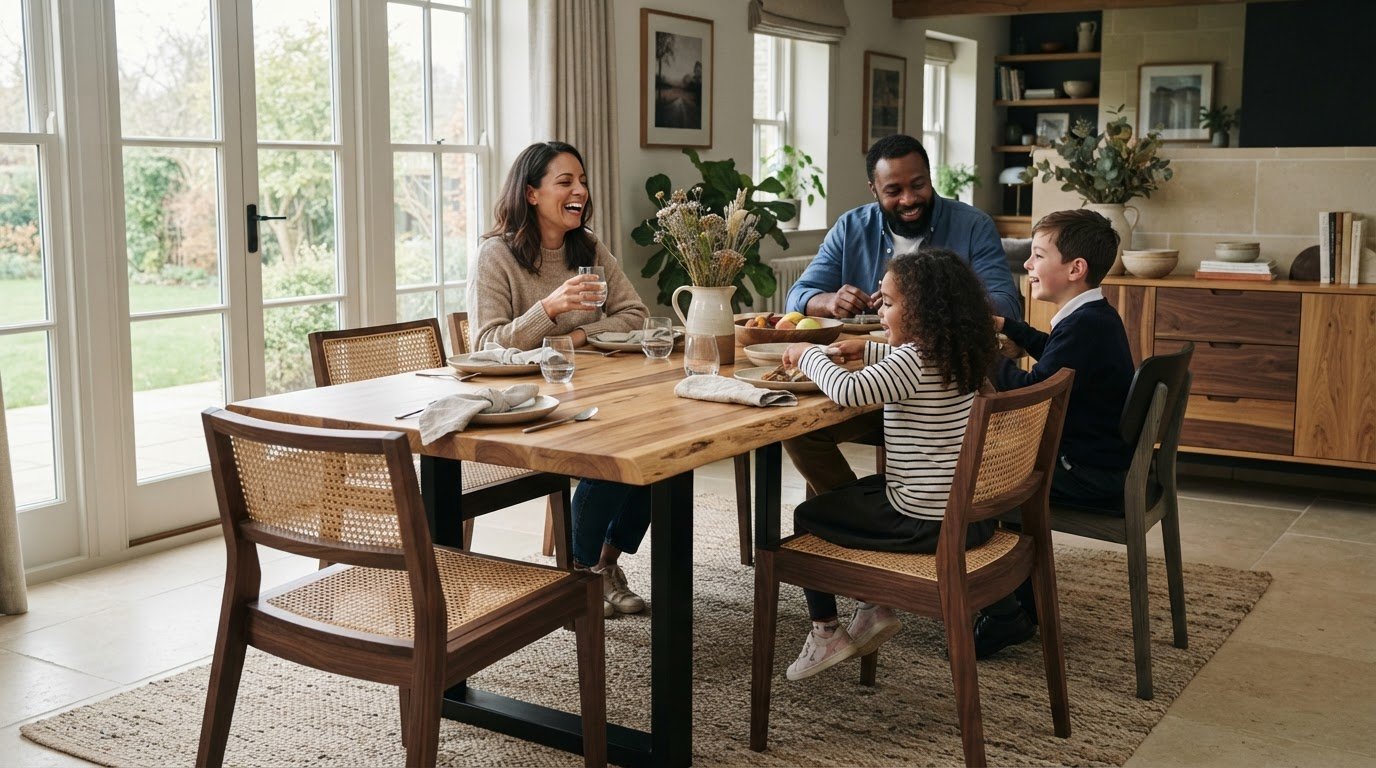
Buying a matching furniture suite is the quickest way to strip a home of its character. When faced with diverse finishes, many homeowners pause and ask: can you mix different wood types in one room without creating visual chaos? It’s completely natural to worry that placing a rich, dark timber piece alongside pale oak floorboards will clash, leaving your space looking disjointed rather than thoughtfully composed. Perfectly matched sets often feel sterile and flat, yet the prospect of contrasting grains can feel equally daunting.
The truth is that blending different species is precisely what gives a home depth, tactile warmth, and an authentic sense of living history. You don’t need uniform timber to achieve balance. In this guide, you’ll discover the foundational design framework for pairing distinct woods with quiet confidence. We explore how to read warm and cool undertones, balance varying grain textures, and anchor your room so every piece feels deliberate and organically gathered over time.
Key Takeaways
- When asking can you mix different wood types in one room, the answer is a resounding yes; combining distinct species avoids the flat, uninspired look of matching showroom suites.
- Visual harmony depends on matching underlying temperatures rather than surface shade, so pair warm tones with warm, and cool with cool.
- Anchor your space with a single dominant timber, such as hardwood flooring or a handcrafted solid wood dining table, to set the tone for surrounding accents.
- Apply the rule of threes and repeat each wood finish at least twice across the room to ensure your design feels balanced and deliberate.
- Avoid the near-miss trap by opting for confident, intentional contrast between species, using rugs and textiles as soft buffers between different grains.
Can You Mix Different Wood Types in One Room? The Short Answer
If you are standing in a newly renovated living space wondering, can you mix different wood types in one room, the answer from seasoned interior designers and craftsmen is an emphatic yes. In fact, combining varied species is thoroughly encouraged. The age of purchasing an entire matching suite from a single showroom has passed, and for good reason. Uniform timber flattens a room, stripping away visual dimension and leaving your home looking like a catalogue spread rather than a lived-in sanctuary.
Working with varied organic materials breathes life into an interior. By understanding how different wood types behave alongside one another, you create visual texture, tactile warmth, and an authentic curated character. The secret does not lie in matching every surface down to the last shade. Instead, successful timber styling hinges on intentional contrast and harmonious undertones.
The Problem with Matching Furniture Sets
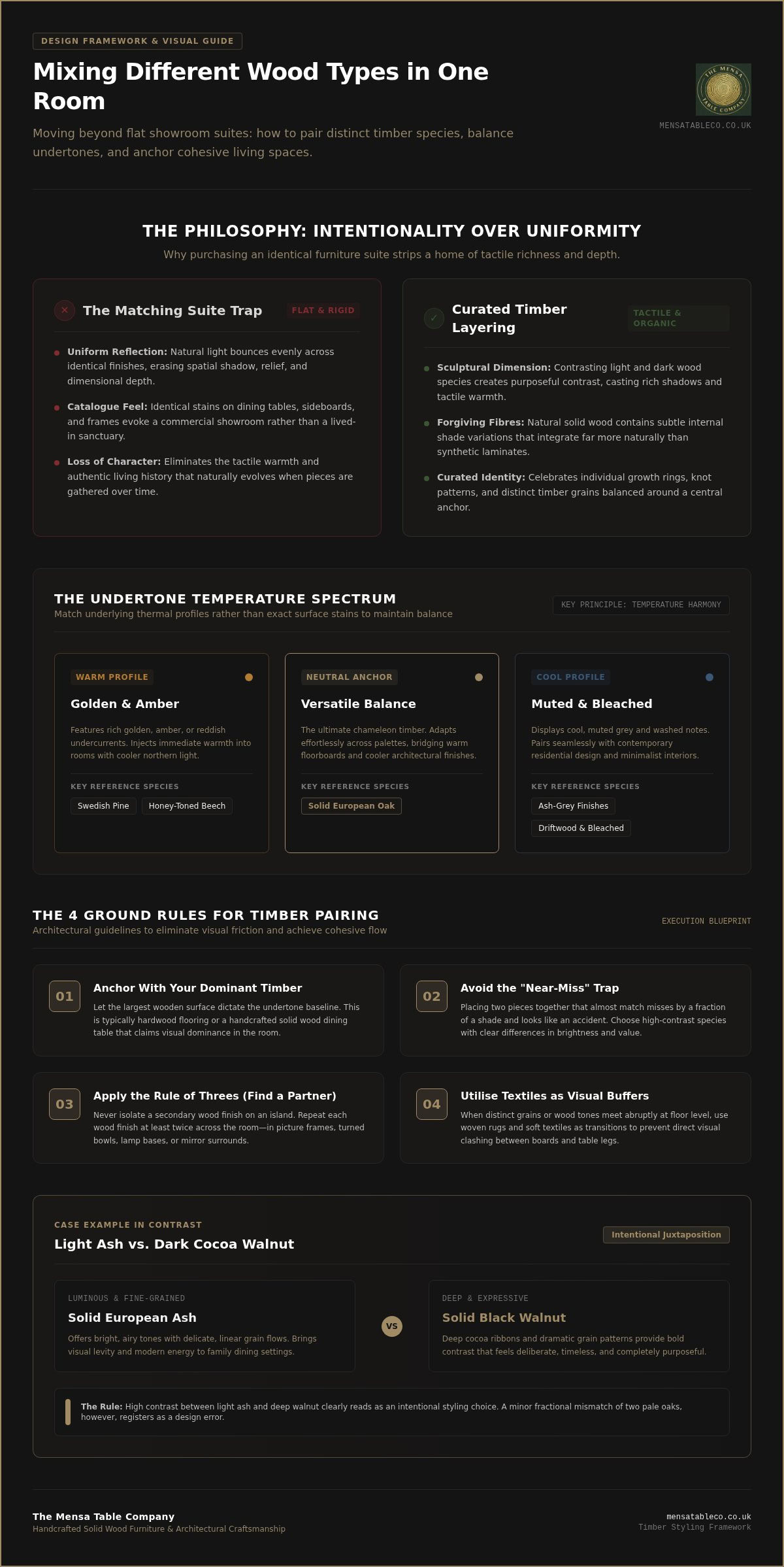
Identical suites might feel like a safe path to visual cohesion, but they often produce the opposite effect. When your coffee table, sideboard, dining table, and shelving all share the exact same stain, natural light bounces across the room uniformly without shadow or relief. The space feels rigid, dated, and two-dimensional. Homes naturally evolve across years, not afternoons. A layered room should reflect that journey, celebrating the distinct marks, knots, and textures of diverse timbers collected over time.
The Golden Rule: Intentionality Over Coincidence
The cardinal sin of timber styling is accidental similarity. Placing two pieces together that almost match, but miss by a fraction of a shade, creates uncomfortable visual friction. It makes the pairing look like an oversight rather than a deliberate design choice.
True harmony requires confidence. Pairing bright, airy solid European ash with the deep, cocoa ribbons of solid black walnut establishes high contrast that feels purposeful and bold. To make this dialogue work across the room, follow these baseline rules:
- Commit to distinct separation: Choose woods with clear differences in value or brightness rather than near-matches.
- Find every piece a partner: Never isolate a timber tone on an island; repeat your secondary wood in a picture frame, turned bowl, or mirror surround.
- Anchor the room first: Let your largest surface dictate the undertone baseline for every smaller wooden accent that follows.
Understanding Wood Undertones and Grain: The Secret to Harmony
Cracking the code of timber pairing comes down to seeing past surface colour and reading the underlying temperature. When questioning whether can you mix different wood types in one room effectively, the answer rests on undertones. Timber species naturally express three distinct temperature profiles: warm yellow-red, cool grey, and balanced neutral. While contrasting light and dark boards adds visual depth, clashing opposing undertones can make an interior feel discordant.
Natural solid timbers possess subtle shade variations within their fibres, which makes them far more forgiving to integrate than flat, synthetic laminates. Adopting reliable expert tips for mixing wood finishes helps clarify how timber undertones interact under your home’s natural light, letting you assemble different pieces with quiet precision.
Identifying Warm, Cool, and Neutral Timber Tones
Every tree species carries an intrinsic colour bias shaped by its natural cellular structure and the oils cured within it:
- Warm Timbers: Species such as Swedish pine or honey-toned beech feature rich golden, amber, or reddish undercurrents. They inject immediate cosiness into spaces with northern light.
- Cool Timbers: Ash-grey finishes, driftwood stains, and bleached woods display cool, muted notes that complement contemporary minimalist interiors.
- Neutral Timbers: Versatile species like solid European oak anchor varied palettes effortlessly, bridging the visual gap between warm flooring and cooler architectural details.
Balancing Open and Closed Grain Patterns
Grain structure introduces a secondary layer of texture that dictates how a room feels. Hardwoods like European oak and European ash feature prominent, open cathedral grain arches that feel tactile and grounded. In contrast, fine-grained timbers such as solid black walnut offer a tighter, silky surface with gentle linear movement.
To avoid visual competition, pair an open-grain statement table with closed-grain secondary pieces like slender walnut shelving or smooth side tables. If you are uncertain which timber species will sit best alongside your existing hardwood floorboards, feel free to get in touch with our workshop team for tailored material advice.
How to Mix Different Woods in 5 Actionable Steps
Curating a layered home doesn’t require guesswork when you follow a structured sequence. When people ask whether can you mix different wood types in one room successfully, they often hesitate because they lack an orderly method. Applying proven design principles for mixing wood tones turns what feels like a gamble into an intentional, creative process that honours natural materials.
Step 1 & 2: Establish the Anchor and Choose Accent Species
Every cohesive scheme starts with a dominant foundation. This anchor represents the largest wooden footprint in your space, typically your architectural hardwood flooring or a substantial handcrafted dining table. This primary timber sets the tone for the entire room.
Once your anchor is set, select one or two secondary accent species. Choose timbers that provide clear, decisive contrast rather than an awkward near-miss. Crucially, verify that your accent species shares the same underlying colour temperature as your anchor, ensuring that dark and light boards sit together in effortless visual balance.
Step 3 & 4: Repeat Tones and Introduce Tactile Buffers
A solitary timber finish quickly looks like an accident. Follow the rule of repetition: ensure every secondary wood tone appears at least twice within the space. If you introduce darker tones through solid wood coffee tables, echo that finish across the room using framed artwork, open shelving, or sculptural wooden bowls.
Equally critical is handling the physical junction where furniture meets the floor. Placing timber legs directly onto timber flooring can trigger visual clashing, especially when the grain patterns fight for dominance. Break this up by sliding a woven wool, linen, or jute rug between the two surfaces. The neutral textile acts as a gentle buffer, allowing both species to breathe.
Step 5: Tie the Scheme Together with Metal and Texture
Unify diverse woods by introducing shared non-timber accents across the room. Industrial black steel table bases, warm brass hardware, or stone ceramics establish a common aesthetic thread that ties different species together. Finally, keep sheen levels consistent; specifying matte, oiled, or satin finishes across all your wooden surfaces preserves authentic tactile grain and creates a calm, cohesive room.
Common Mistakes When Blending Timbers in Living and Dining Spaces
While the design consensus to can you mix different wood types in one room is a resounding yes, missteps happen easily without an eye for balance. Bringing diverse timber species into an interior requires deliberate restraint. When handled without care, a scheme quickly feels disjointed, as though pieces were acquired by accident rather than assembled with purpose.
Beyond clashing undertones, three subtle errors often undermine an otherwise beautiful room:
- Visual clustering: Grouping every dark walnut piece along one wall while leaving pale timbers stranded on the opposite side upsets the visual equilibrium of the room.
- Ignoring architectural woodwork: Forgetting the tone of existing door casings, window sills, and skirting boards when choosing freestanding furniture leads to quiet visual discord.
- Overcrowding species: Exceeding three distinct wood finishes in an average-sized room produces a restless, cluttered environment rather than a calm, layered aesthetic.
The “Near-Miss” Trap and How to Avoid It
The most frequent styling error is the near-miss. This occurs when you place two pieces together that attempt to be the same shade of medium oak, but differ just enough to look wrong. Instead of harmonising, one surface inevitably appears muddy, discoloured, or tired against the other.
Dodge this trap by committing to decisive contrast. If your floorboards feature warm, medium oak, step distinctly lighter with pale ash or noticeably darker with rich walnut. If you must place two similar timbers near one another, separate them physically with an upholstered chair, a painted surface, or a tactile textile.
Neglecting Sheen Consistency and Lighting
Surface reflectivity matters just as much as grain or hue. Pairing a high-gloss, plasticised lacquer finish beside an honest, matte-oiled tabletop creates an immediate tactile clash. High-gloss varnishes bounce harsh artificial glare, whereas natural matte and low-sheen oiled finishes preserve authentic grain texture and quiet elegance.
Always evaluate your timber in the room where it will live. Natural northern daylight pulls out cool undertones, while warm evening lamplight enhances golden and amber hues. If you are balancing complex timber flooring with new furniture and want bespoke guidance, contact our workshop directly to discuss timber pairing options with our experienced makers.
Curating a Cohesive Space with Handcrafted Statement Furniture
Mass-market veneers print a repeating photograph of timber onto compressed board, leaving an interior looking sterile and synthetic. When deciding can you mix different wood types in one room, investing in genuine solid hardwood changes everything. Authentic timber contains natural micro-variations across every plank, from golden sapwood streaks to smoky mineral lines. These organic transitions soften visual boundaries, allowing a handmade table to converse naturally with older architectural floorboards or adjacent wooden accents.
A bespoke centerpiece commands presence. It sets the baseline quality for your entire home, serving as a gathering space that turns shared meals and quiet conversations into grounding everyday rituals.
Using Statement Tables as Natural Room Anchors
Signature profiles like The Mensa or Spider Leg dining tables establish confident, architectural focal points in open-plan areas. Pairing a solid timber surface with matching wooden benches maintains balanced dining proportions while keeping sightlines clear and open.
Fabricated steel frameworks offer an ingenious design bridge for homes with existing hardwood flooring. Choosing an industrial X-Frame or geometric U-Frame base physically separates the wooden tabletop from the boards below. This structural metal divide prevents conflicting timber grains from competing directly, letting you feature contrasting species overhead without worrying about floorboard friction.
Bringing Your Vision to Life with Bespoke Timber
Every home holds its own rhythm of light and architectural character. Selecting furniture crafted from traceable, ethically sourced hardwoods ensures your pieces feel rooted in their setting rather than transient:
- Durable Joinery: Handcrafted traditional joints withstand seasonal timber movement, creating heirloom pieces built for generations of daily use.
- Living Patinas: Unlike flat-pack furniture that deteriorates with age, solid timber matures gracefully, deepening its tone and settling into surrounding decor across decades.
- Custom Specifications: From Scandinavian-inspired Swedish pine to deeply grained European ash, tailoring dimensions and timber species ensures your anchor piece belongs effortlessly in your space.
If you are ready to design a timeless centrepiece tailored to your home’s unique palette, reach out to our team to discuss custom timber combinations for your space and bring authentic warmth to your interior.
Crafting Your Layered, Timeless Interior
Stepping away from sterile matching furniture suites gives your home permission to feel lived-in, warm, and deeply personal. When considering whether can you mix different wood types in one room, remember that character comes from intentional contrast and shared undertones. Anchoring your space with a single dominant timber, repeating secondary species across accent points, and introducing tactile buffers ensures every wooden element feels purposefully placed.
Every piece of heirloom furniture should tell an enduring story. Handcrafted across Britain using premium solid European oak, black walnut, and ash, our dining tables pair rich natural grains with durable steel architecture like our Spider, X-Frame, and U-Frame designs. These custom-built pieces provide an unshakeable visual foundation, grounding your interior and elevating everyday gatherings for generations to come. When you are ready to shape your space, speak with our craftsmen about selecting the perfect timber for your space and bring authentic warmth into your home.
Frequently Asked Questions
Can you mix light and dark wood furniture in the same room?
Yes, pairing light and dark timbers is one of the most reliable ways to create depth and contrast. High-contrast combinations, such as pale European ash alongside rich black walnut, look deliberate rather than accidental. To keep the look cohesive, ensure both species share compatible warm or neutral undertones, and balance visual weight by scattering darker accents across the space rather than concentrating them in one corner.
How do you match wood furniture to existing hardwood floors?
You don’t need an exact match between furniture and flooring; aim for intentional contrast instead. When asking can you mix different wood types in one room, treat your hardwood floor as the neutral anchor. If your boards are medium oak, choose a distinctly lighter tabletop or darker timber accents. Inserting a woven wool or jute rug between table legs and floorboards provides a soft visual buffer that prevents competing grains from clashing.
How many different wood tones can you have in one room?
Sticking to a maximum of two or three distinct wood tones creates the most balanced interior. Using only one tone feels flat and sterile, while using four or more risks visual clutter. Designate one dominant timber, such as your architectural floor or a solid dining table, to take up roughly sixty percent of the wooden elements. Distribute the remaining secondary and accent tones across shelving, frames, and smaller furniture.
Can you mix oak and walnut furniture together?
Yes, oak and walnut pair naturally together because they offer clear, deliberate contrast without fighting for attention. European oak carries a balanced, neutral to warm undertone, while black walnut brings deep chocolate hues and a fine, flowing grain. The wide cathedral grain of oak provides an earthy foundation, allowing the refined, silky grain of walnut accents to stand out as sophisticated focal points across the living or dining area.
What happens if two wood undertones clash in a room?
When clashing undertones meet, such as an orange-red pine placed against a cool, grey-washed oak, the pieces fight for dominance. One timber inevitably looks muddy or sickly under natural daylight. To resolve an existing clash, physically separate the pieces. You can bridge the gap using neutral painted furniture, textured textiles, or large indoor plants, which interrupt direct sightlines between the conflicting colour temperatures.
Is it out of style to buy matching dining room sets?
Yes, purchasing identical matching dining suites is generally considered dated. Identical wood packages from commercial retailers often make a dining space look flat, rigid, and uninspired. If you’re wondering can you mix different wood types in one room, modern interior design strongly encourages it. Pairing a solid timber dining table with contrasting benches, upholstered chairs, or steel legs builds an organic, curated aesthetic that reflects personal history rather than showroom uniformity.
Does the finish or sheen level matter when mixing woods?
Yes, finish sheen is just as important as colour temperature. A high-gloss, reflective lacquer placed next to an organic matte surface creates severe visual discord. High-gloss finishes catch harsh light reflections and highlight surface scratches, while matte and natural oiled finishes soften transitions between varied species. Keeping finishes uniformly low-sheen or matte ensures that different grain patterns and tones speak the same visual language.

Leave a Reply