What if the most expensive timber in the workshop isn’t actually the right choice for your home? Selecting the best wood for dining table use often feels like a gamble between aesthetic beauty and the quiet fear of a surface that might warp or crack before its time. You want a piece that anchors your room, yet the confusion between solid timber and high-quality veneers can leave even the most design-conscious homeowner feeling adrift. We believe a table should be more than a flat surface; it’s a site for human connection and shared rituals.
In this guide, we’ll demystify the selection process by looking through the eyes of a craftsman, helping you find a timber that doesn’t just survive daily life but grows more soulful with every passing year. You’ll gain the confidence to choose a material that suits your interior style while understanding the inherent value of handcrafted furniture. We will explore the enduring strength of European Oak, the rich depth of Black Walnut, and how specific joinery techniques ensure your investment remains a stable, stunning centrepiece for generations.
Key Takeaways
- Learn why deciduous hardwoods offer the density required to withstand the rigours of daily life and morning coffee spills.
- Understand how to identify the best wood for dining table use by balancing the natural durability of European Oak with the sophisticated grain of Black Walnut.
- Discover how specific joinery techniques allow solid timber to breathe and move naturally, protecting your investment from warping or cracking.
- Find out how different grain patterns can either hide or highlight the character marks that accumulate through years of family rituals.
- Gain insight into the artisanal process that transforms raw, ethically sourced planks into a handcrafted centrepiece like the signature Mensa Dining Table.
Hardwood vs. Softwood: Why Your Dining Table Choice Starts with Durability
Choosing the best wood for dining table use begins with a look at the tree itself. Botanically, the distinction between hardwood and softwood isn’t about how the wood feels to the touch, but how the tree reproduces. Hardwoods come from deciduous trees that lose their leaves annually, while softwoods originate from needle-bearing conifers. In our workshop, we see this difference in the cellular density of the timber. Hardwoods grow more slowly, resulting in a tighter grain structure that offers the resilience needed for a piece of furniture that anchors a busy home.
While hardwoods are often the standard for longevity, solid Swedish Pine offers a different kind of appeal. As a softwood, it possesses a lighter density and a paler, more uniform complexion. It provides a rustic, lived-in charm that some families prefer, especially when they want a table that wears its history openly. It is a more forgiving material to work with and comes at a different price point, making it an honest, accessible choice for those who value a relaxed, farmhouse aesthetic over clinical perfection.
Understanding the Janka Scale for Furniture
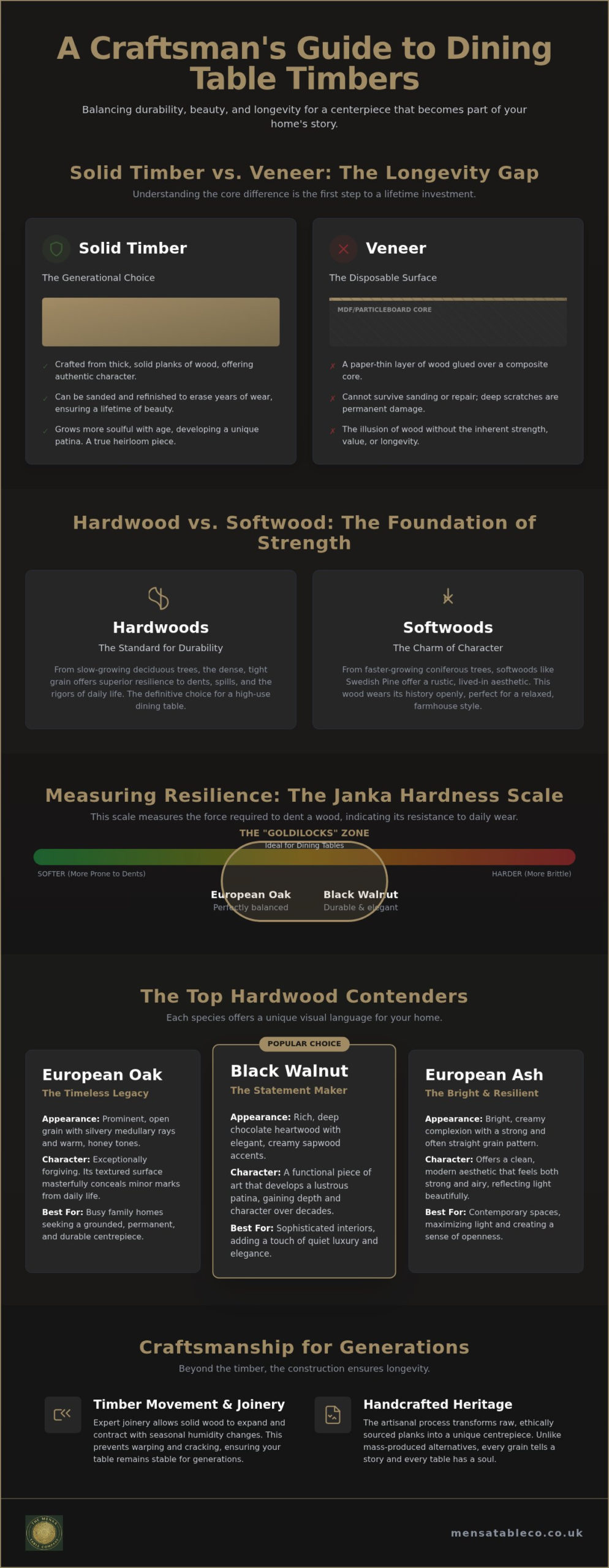
The Janka scale is a measure of the force required to embed a steel ball into the wood. This rating provides a clear indicator of scratch resistance and how well a surface will withstand the impact of a dropped fork or a heavy ceramic mug. For UK homes, solid European Oak and Black Walnut are often considered the ‘Goldilocks’ woods. They sit perfectly in the middle of the scale, being hard enough to resist daily wear and tear without being so dense that they feel cold or prove impossible to craft into elegant shapes. This balance of density ensures that the best wood for dining table longevity is also one that feels warm and inviting to the touch.
Solid Wood vs. Veneers: The Longevity Gap
There is a quiet confidence in a table made from solid timber. Unlike mass-produced alternatives that use thin veneers over MDF cores, solid wood allows for a lifetime of use. If a table suffers a deep scratch or a stubborn stain after years of service, it can be sanded back and refinished to its original glory. A veneered top simply cannot survive this process; once the paper-thin layer of wood is gone, the table’s life is effectively over. We believe in creating pieces that can be passed down through the family, where every mark becomes part of a shared heritage rather than a reason to replace the furniture.
The Top Hardwood Contenders: Oak, Walnut, and Ash Compared
While density dictates the functional durability of a surface, the spirit of your home is often decided by the grain. Each timber species carries its own history and visual language. Finding the best wood for dining table use involves more than just measuring strength; it’s about the visual harmony between the raw material and your daily rituals. We select our timbers not just for their resilience, but for the way they respond to light and the passage of time.
Solid European Oak: A Timeless Legacy
There is a reason why oak remains the definitive choice for the British home. Solid European Oak is celebrated for its prominent, open grain and the presence of medullary rays. These silvery, ribbon-like streaks are a natural hallmark of the wood’s internal structure, appearing as shimmering flecks that dance across the surface. Oak is incredibly forgiving. Its textured grain and natural honey hues are masters at concealing the small character marks that a busy family inevitably leaves behind. It feels grounded and permanent, offering a sense of security that few other materials can match.
Solid Black Walnut: The Statement Maker
If oak is the king of durability, walnut is the master of elegance. Choosing solid Black Walnut brings a sense of quiet luxury to a room. The natural variation found in each plank, from the creamy, pale sapwood to the deep, chocolate heartwood, creates a visual landscape that evolves as the light changes throughout the day. It is a wood that demands to be touched. Over decades, walnut develops a rich patina, slightly lightening in tone while gaining a lustrous depth that mass-produced furniture simply cannot replicate. It is a sophisticated choice for those who view their dining table as a piece of functional art.
Solid European Ash: Bright and Resilient
For a more contemporary or Scandi-inspired interior, solid European Ash offers a refreshing brightness. It is a remarkably tough and elastic timber, often featuring a bold, flowing grain that can include ‘olive’ streaks of darker brown. This contrast gives the wood a modern, energetic character. Ash takes oils and stains beautifully, allowing us to highlight its natural highlights while maintaining its pale, airy feel. It is the best wood for dining table designs that need to feel light and spacious without sacrificing the structural integrity of a solid hardwood.
For those seeking a softer, more casual aesthetic, we also work with solid Swedish Pine. It brings a warm, farmhouse feel to a space, though it requires a little more care than its hardwood cousins. If you’re unsure which grain will best complement your existing interior, you can speak with our team about your specific requirements to ensure your chosen timber feels right at home.
Aesthetic vs. Utility: Selecting the Best Wood for Your Lifestyle
A table is rarely just a place to eat. It’s often the centre of gravity in a home, serving as a makeshift office, a craft station, or a gathering point for Sunday roasts. Determining the best wood for dining table use requires an honest look at your daily rituals. If your surface will host heavy textbooks and the occasional spilled juice, your priorities will differ from someone seeking a sleek, minimalist showpiece for evening hosting. We always suggest considering how light interacts with the timber; a dark walnut can look dramatic in a sun-drenched room but might feel heavy in a smaller, shaded space.
The choice of support also plays a vital role in the overall aesthetic. An X-Frame or ‘Spider Leg’ design can transform a traditional plank of wood into a contemporary statement. These structural elements don’t just hold the weight; they frame the wood’s natural character, allowing the grain to take centre stage while providing the stability required for a lifetime of use. It’s about finding that perfect intersection where the raw material meets your home’s unique rhythm.
The Best Woods for Active Families
For those with young children, solid European Oak remains the gold standard. Its dense, textured grain acts as a natural shield against the accidental dings of toddler-driven cutlery. To enhance this communal feel, pairing a table with matching benches creates a versatile seating environment that encourages everyone to squeeze in. Benches are practical for busy households, tucking neatly under the table when not in use to keep floor space clear for play and movement.
The Best Woods for Modern Professionals
Modern professionals often lean towards the clean lines of solid European Ash or the rich depth of walnut. These timbers lend themselves to a more architectural look, especially when paired with industrial metal bases. The ‘Spider Leg’ aesthetic provides a striking contrast to the organic warmth of the timber, making the table feel grounded yet airy. For those working from home, these materials provide a tactile, inspiring surface that transitions seamlessly from a desk to a dining area. You might even consider extending this aesthetic into the kitchen with custom breakfast bars, creating a cohesive flow throughout your living space.
To perfectly complement these modern surfaces, especially when used in open-plan kitchens, you can check out Grosvenor Furniture for sophisticated seating options that pair velvet textures with metallic accents.
Timber Movement and Longevity: Protecting Your Investment
Understanding the best wood for dining table longevity requires a subtle shift in perspective. You aren’t merely purchasing a static piece of furniture; you’re welcoming a living, breathing component into your home. Timber movement is the natural expansion and contraction of wood as it responds to the shifting moisture levels in the air. In the United Kingdom, our seasons can be quite dramatic, moving from the damp, heavy air of a coastal autumn to the parched, artificial heat of a centrally heated winter. If a table is built without respecting these natural forces, the internal tension can lead to warping or structural cracks that compromise the piece’s beauty.
We view these physical changes not as flaws, but as the heartbeat of the material. A well-crafted table is designed to breathe in harmony with its surroundings. By choosing the right timber and employing traditional joinery, we ensure that the natural life of the wood is preserved rather than suppressed. This careful approach to construction is what separates a heritage investment from a temporary fixture.
Why Artisanal Construction Prevents Cracking
Artisanal construction is the essential antidote to the pressures of timber movement. We exclusively use kiln-dried timber, which has been slowly and precisely brought to a moisture content that mirrors a typical indoor environment. This process provides a level of stability that cheaper, air-dried alternatives simply cannot match. Our methodology involves using ‘floating’ tops, which are secured to the frame using specialized clips or slotted holes. This allows the wood to expand and contract across its width without being restricted by the base. Wood breathes even decades after being crafted into furniture. By allowing for this movement, we prevent the timber from splitting under its own internal pressure.
Caring for Your Table Through the Seasons
Maintaining the soulful character of your Oak, Walnut, or Ash table is a simple but rewarding ritual. During the first year, your table will undergo a settling period as it adapts to the specific micro-climate of your dining room. It’s vital to avoid placing solid wood furniture directly next to a radiator or in the direct path of a powerful heat source, as this can cause the timber to dry out too aggressively. To keep the grain nourished and the surface protected, we recommend a light application of high-quality furniture oil or wax every few months. This process doesn’t just protect the wood; it enhances the tactile connection between you and the material, ensuring the surface remains as resilient as the day it left our workshop.
If you have specific questions about how a particular timber will settle in your home environment, reach out to our team of craftsmen for professional advice on protecting your investment.
Handcrafted Heritage: How We Shape Your Perfect Table
At The Mensa Table Company, we don’t view timber as a mere commodity. We see it as a story waiting to be told. Finding the best wood for dining table construction is only the first step in a much longer, more deliberate process. The real transformation happens in our workshop, where raw planks of European Oak or Black Walnut are guided through a journey of patience. We respect the history of each raw component, placing the physical output and its natural origins at the forefront of every decision we make. This artisanal spirit ensures that the table we build for you is not just a piece of furniture, but a meaningful life investment.
There is a profound tactile difference between a mass-produced item and a handcrafted one. Most factory-made tables are finished with a thick, plastic-like spray that masks the wood’s true character. We prefer a manual approach, using hand-applied oils that nourish the grain rather than burying it. When you run your hand across the surface, you feel the authentic texture of the timber. This connection between the creator and the end user is what defines our work. We take pride in the slow, steady rhythm of production, where every joint is given its due respect and the pace is dictated by the time required for high-quality output.
For those who value this artisanal approach across all their home furnishings, Urban Reclamation demonstrates how the same respect for raw materials can be applied to specialised pieces, such as crafting the perfect storage solution for a vinyl collection.
Our Signature Styles: Mensa, Spider, and X-Frame
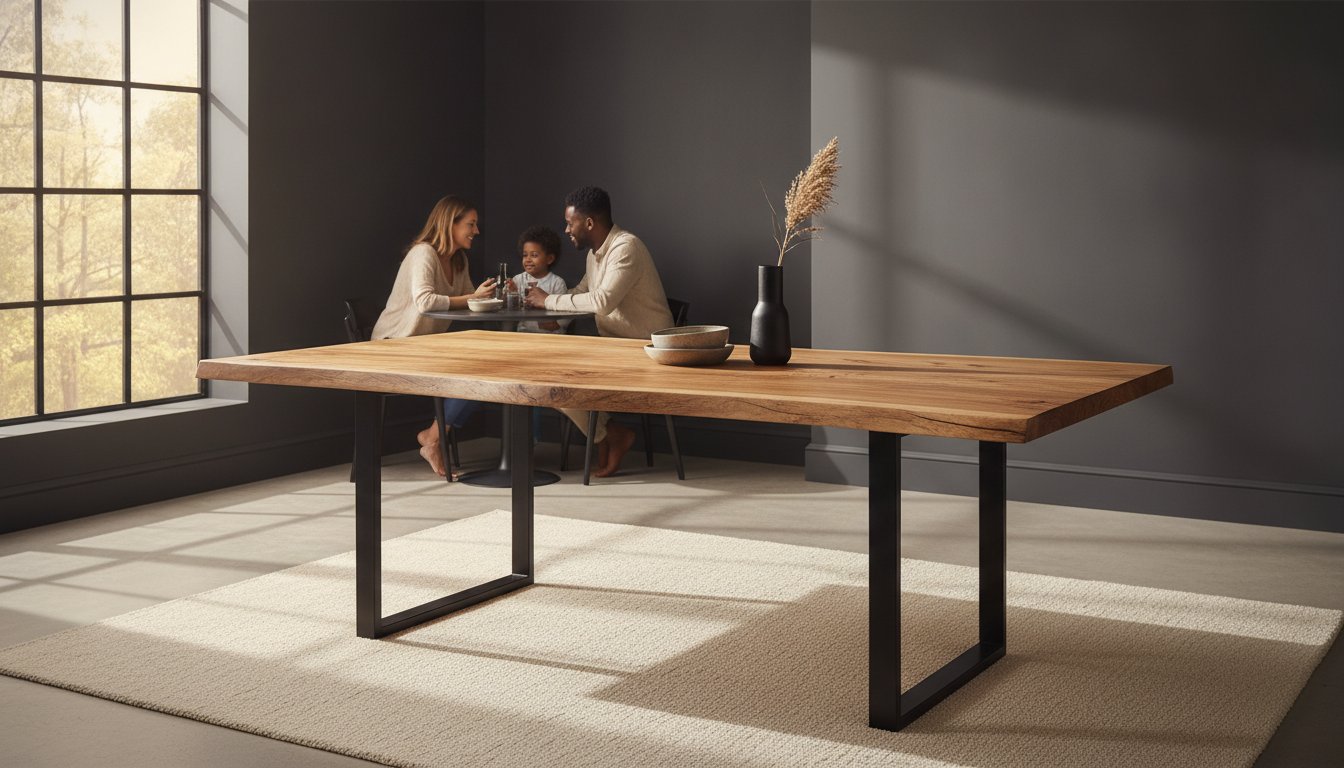
Our designs are engineered to celebrate the inherent strength of the materials we use. The Mensa Dining Table stands as the ultimate expression of Oak’s durability, providing a solid, grounded presence in any room. Alternatively, our Spider Leg and X-Frame models demonstrate how different woods can support bold, architectural designs. These frames are more than just aesthetic choices; they are carefully calculated to support the significant weight of solid timber while allowing for the natural movement we’ve discussed. Customisation is at the heart of our workshop. You can choose the species, size, and finish that harmonises with your unique home, ensuring your table is a perfect reflection of your style.
Start Your Journey with a Personal Consultation
We believe that choosing the best wood for dining table longevity should be a personal experience rather than a purely transactional exchange. Our team is rooted in a sense of warmth and authenticity, and we value the human connection behind every commission. We’re here to help you navigate the nuanced choices between the honeyed warmth of Oak, the luxury of Walnut, or the contemporary brightness of Ash. We don’t rush our clients; instead, we invite you to appreciate the details of the work. Ready to find your centrepiece? Contact our craftsmen today to start a conversation about your future dining table.
Bringing Your New Centrepiece Home
Selecting the best wood for dining table use is a decision that balances the raw, physical character of the timber with the unique rituals of your household. We’ve explored how the density of European Oak provides a forgiving shield for active families, while the deep chocolate tones of Black Walnut offer a sophisticated anchor for modern spaces. Beyond the aesthetics, the longevity of your investment rests on the craftsmanship that respects timber movement, ensuring your piece remains stable through the shifting British seasons.
Since 2018, our team has been dedicated to creating bespoke furniture that values substance over flashy marketing. As specialists in solid European hardwoods, we take pride in the slow, manual process of production that transforms a raw plank into a heritage piece. Speak with our master craftsmen about your perfect table to discuss a design tailored specifically to your home. We look forward to crafting a centrepiece that grows more beautiful with every shared meal and passing year.
Frequently Asked Questions
Which is more durable, Oak or Walnut for a dining table?
Oak is the sturdier choice for high-traffic areas. Its dense grain structure resists impacts more effectively than walnut, which is slightly softer on the Janka scale. While walnut offers undeniable luxury, oak is often the best wood for dining table longevity in homes with young children or heavy daily use. It provides a resilient surface that remains steadfast against the accidental knocks of family life.
Is solid wood better than wood veneer for a family table?
Solid wood is vastly superior for longevity. While veneers might look similar initially, they consist of a paper-thin layer of wood over a composite core like MDF. This layer cannot be sanded back if damaged. A solid timber table is a generational investment that can be restored and refinished multiple times, whereas a veneered piece often ends up in a landfill once the surface is compromised.
How do I prevent my solid wood table from warping?
Preventing warp starts with respecting the timber’s need to breathe. We ensure all our wood is kiln-dried to a stable moisture level before crafting. In your home, you should avoid placing the table directly against a radiator or under a powerful air conditioning unit. Using floating joinery allows the wood to expand and contract naturally with seasonal humidity changes without causing structural stress.
What is the most scratch-resistant wood for furniture?
European Oak and Ash are often cited as the best wood for dining table surfaces when scratch resistance is the priority. Their high density and prominent grain patterns make them exceptionally durable. While no wood is entirely immune to deep gouges, these species possess the physical hardness required to withstand the friction of ceramic plates. Their natural texture also does a wonderful job of masking minor abrasions.
Why are handcrafted tables more expensive than flat-pack options?
Handcrafted tables represent a commitment to quality over speed. Unlike flat-pack furniture made from compressed sawdust and glue, our tables are built from solid planks using traditional joinery techniques. This manual approach ensures structural integrity that lasts for decades rather than months. You’re investing in the skills of local craftsmen and ethically sourced materials that provide a level of soul and durability mass-produced goods cannot match.
Can I use an Oak table in a modern, minimalist dining room?
Oak is incredibly versatile and suits minimalist aesthetics perfectly. When finished with a clear, natural oil and paired with sleek industrial legs like our Spider Leg design, oak loses its traditional connotations. It provides a warm, organic contrast to the clean lines and cool palettes often found in modern UK homes. It’s an ideal way to add texture and character to a contemporary space without clutter.
Does the type of wood affect the table’s weight significantly?
The type of wood has a significant impact on the table’s total weight. A solid oak or walnut table is considerably heavier than one made from Swedish Pine or Ash. This weight is a direct reflection of the timber’s density and strength. While a heavier table can be more difficult to move, it provides a sense of permanence and stability that is essential for a home’s focal point.
How often do I need to oil or wax a solid wood dining table?
We recommend oiling or waxing your table every three to six months. This simple ritual keeps the grain nourished and maintains the protective barrier against spills. You’ll notice the wood starting to look slightly dull or feeling dry when it is time for a fresh coat. Regular maintenance ensures the timber remains supple and continues to develop a beautiful patina as it ages alongside your family.

Leave a Reply