
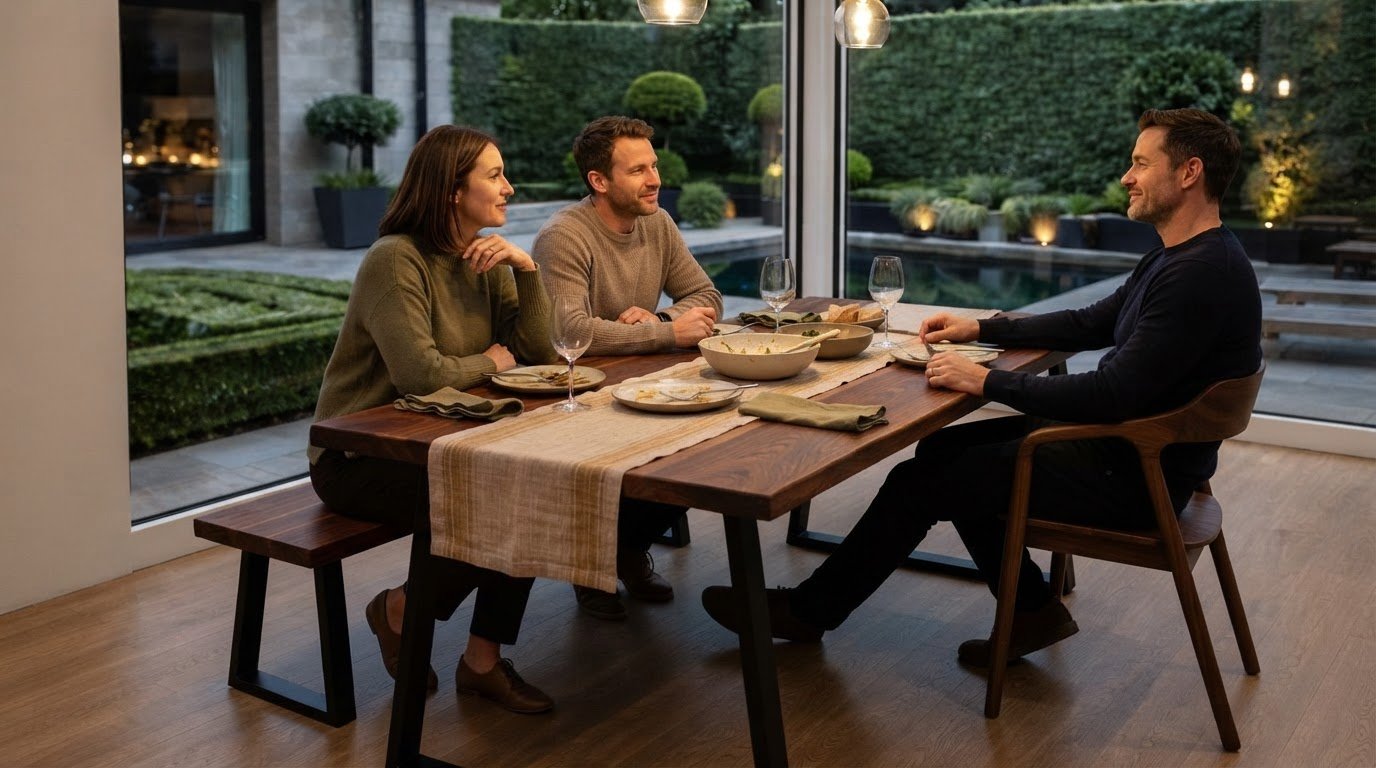
Backless benches can suit everyday meals that last less than an hour, but they’re usually less comfortable for long dinners because they provide no back support. If you’re asking whether backless benches are suitable for long dinners, a backed bench or individual chairs will generally offer more support as the meal goes on.
A bench can bring people together around the table and tuck neatly away after dinner. But its open design comes with a trade-off: without a backrest, diners have less support when they want to settle in and linger.
This guide compares backless benches, backed benches and chairs for comfort and support. You’ll learn when a bench makes practical sense, what to consider for longer meals, and how to make your dining space welcoming without overlooking everyday comfort.
Key Takeaways
- Choose backless seating for flexible, easy-to-tuck-away dining; consider how often you host longer meals before deciding.
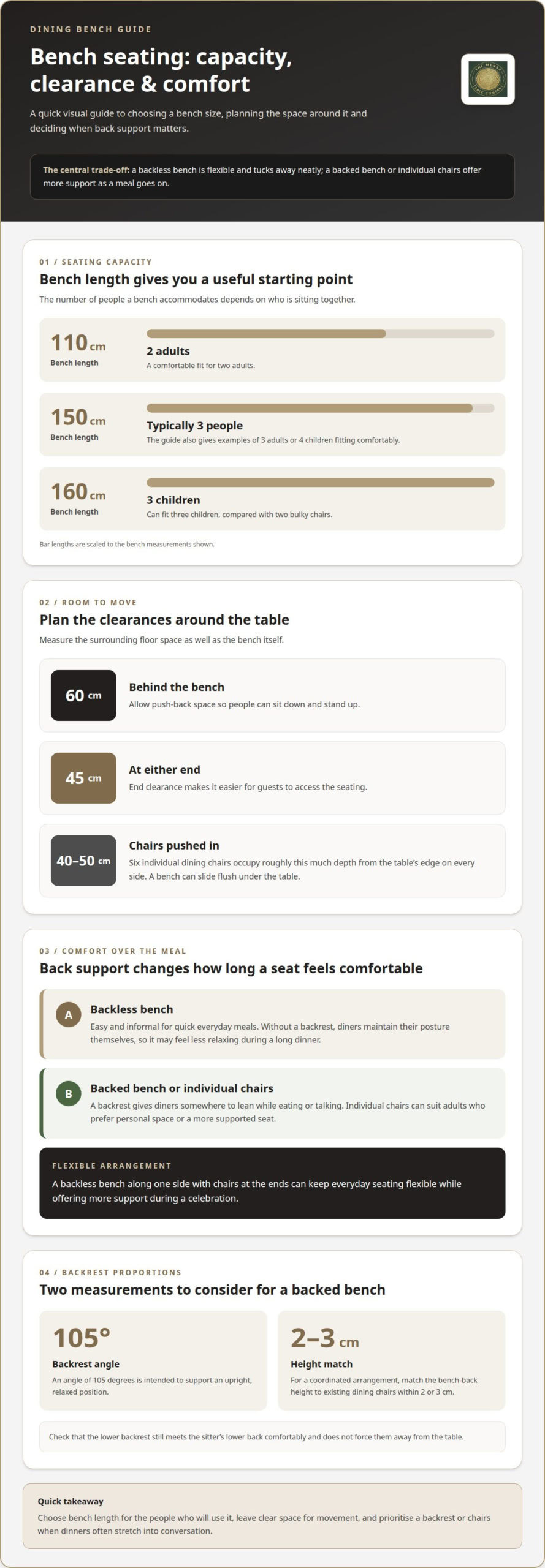
- Use bench length as a guide to seating capacity: a 110 cm bench suits two adults, while a 150 cm bench typically seats three.
- For dinners that stretch on, a backrest offers more support; individual chairs may suit adults who prefer a more supported seat.
- Compare seat height, table clearance and leg placement to help make sitting down and dining comfortably easier.
- Measure the space around the table as well as the bench, so guests can get in and out without crowding the room.
1. What Makes Bench Seating Work for a Relaxed Dining Space?
A dining bench changes how people gather around a table. Instead of assigning each guest a separate chair, one shared seat can accommodate a flexible mix of adults and children. That can make everyday meals feel less formal and give families room to sit together. The trade-off is that guests share the same seating space, so bench length and the people dining matter more than a simple seat count.
Length gives a useful starting point. A 110 cm dining bench comfortably seats two adults, while a 150 cm bench typically seats three people. For a family, a 150 cm bench can comfortably seat three adults or four children. A 160 cm bench can fit three children, compared with two bulky chairs. These examples show why a bench can work well when guest numbers shift between weekday meals and family gatherings.
Yes, backless benches can be practical for families and children at dinner. A 150 cm bench can accommodate four children, and an open seat lets them sit together without separate chairs taking up extra room. For adults who need more support, a bench can be combined with chairs at the same table.
This flexibility lets you tailor seating to the people using it. Put a bench along one side for children or extra guests, then add individual chairs where adults prefer their own space. Matching the bench length to the table also helps the arrangement feel considered. Leave enough room for expected guests without making the bench so long that it restricts movement around the table.
Space is another practical advantage. Six individual dining chairs pushed in occupy roughly 40 to 50 cm of depth from the table’s edge on every side. A dining bench can slide completely flush under the table, freeing the space it would otherwise occupy. This can be useful in a smaller dining room, particularly when chairs would interrupt a walkway or make the room feel crowded. Browse the dining bench range for examples of seating designed to sit alongside a table.
Plan the surrounding floor space, not just the bench’s length. Allow 60 cm of push-back space behind a dining bench so people can sit down and stand up. At either end, 45 cm of clearance makes access easier. These measurements help distinguish a bench that simply fits from one that works comfortably when guests arrive, take their seats and move away from the table.
2. Are dining benches comfortable for long meals?
A backless bench can feel easy and informal for a quick meal, but comfort may change as dinner continues. Without a backrest, diners have to maintain their posture throughout the meal. That may be manageable for a short breakfast, yet less relaxing during a long family gathering. When deciding whether backless benches are suitable for long dinners, consider how long guests will sit and how much support they prefer.
Backless benches are generally better suited to shorter everyday meals than long dinners, because they lack back support. Some people may find this uncomfortable after sitting still for a while, particularly if they like to lean back while talking. Comfort varies, but the practical difference is clear: chairs and backed benches provide somewhere to rest against; a backless seat does not.
For extended meals, a bench with a backrest can feel more supportive. Individual chairs are another option for guests who value personal space or prefer a familiar seat. You could place a backless bench along one side and chairs at the ends, keeping flexible seating for everyday dining while offering guests more support during a celebration.
Cushions can soften a firm bench and make shorter meals more comfortable. Choose one that fits the bench and stays in place when someone shifts position. A removable cushion is practical in a busy kitchen where seats are used every day. Consider the room’s use as well as appearance when choosing a fabric or finish, since these affect both feel and upkeep.
How much do dining benches and bench cushions cost in the UK? The price depends on the bench’s materials, construction, size and finish. Cushion prices vary with the fabric, shape and filling. Compare the complete seating arrangement rather than assuming a cushion alone will make a bench comfortable.
Before choosing, picture a typical meal at home. A simple backless seat may suit a quick weekday supper. If dinner often stretches into conversation, prioritise back support or pair the bench with chairs. The right choice depends on both the length of the meal and the people gathering around your table.
3. Back support and low-backed upholstered benches
A backrest changes how a dining bench supports someone during a meal. Instead of maintaining an upright position without support, diners can lean back while eating or talking. Low-backed designs offer support without adding a tall, chair-like outline to the room. They suit people who prefer a relaxed look but want more support than a bare seat provides.
Proportion matters. A dining bench back should sit at a height that works with the table and nearby furniture. For a coordinated arrangement, match the bench-back height to existing dining chairs within 2cm or 3cm. This helps the seats look considered together, especially when chairs and a bench share one table. A lower backrest may feel visually lighter, but it should still meet the sitter’s lower back comfortably.
The angle also affects posture. A backrest angle of 105 degrees is intended to support an upright, relaxed position. That can suit meals where guests stay at the table after eating, since the seat gives the torso somewhere to rest. Consider how the bench will be used: an upright dining position has different needs from leaning back to chat. The backrest should support without forcing the sitter away from the dining table.
Upholstery adds a softer contact surface, while the covering material affects the look and care routine. For a busy household, choose upholstery with a Martindale rub test score of at least 25,000. This is a useful durability benchmark for frequent use, particularly where the bench serves everyday meals as well as longer gatherings. A fabric finish can bring warmth to a dining room; a smoother covering may suit a home where wiping the seat clean is a priority.
Check the seat-to-table relationship before settling on a design. Standard dining tables are around 74-76 cm high, and a dining bench seat should be around 44-48 cm high. A gap of 30cm between the bench seat and the underside of the table allows legroom. Together, those dimensions help diners sit close enough to eat comfortably without their knees meeting the table. The height of the backrest, seat and table should work as one arrangement, not as separate furniture choices.
For a shared table, consider who uses each seat and for how long. A low-backed bench can offer back support while keeping a visually restrained shape. Someone who prefers a more individual seat may still choose a dining chair. A comfortable arrangement can accommodate both preferences, with a supportive shared place for meals and conversation alongside individual seating.
4. Backless benches compared with benches with backrests
Backless and backed dining benches serve different priorities. An open design keeps seating visually simple and makes it easier to slide the bench beneath a table. A backrest gives diners somewhere to lean, which can make a longer meal feel more supportive. Choose according to how you use the dining room: a quick everyday supper and a long gathering place different demands on seating.
For a flexible family setup, a backless wooden bench can work well alongside chairs. Children can share the bench, while adults who want individual support use the chairs. A backed bench creates a more defined seat, but its frame takes up extra room. Consider who uses the table most often, then decide whether open access or somewhere to lean matters more.
Room dimensions can also shape the choice. A backed dining bench usually needs a total depth of 55cm to 65cm, so allow for that footprint before positioning it near a wall or walkway. It can typically slide 20cm to 30cm under a table, depending on table height and leg placement. A backless model can tuck away more completely, leaving more open floor space when dining is over.
In a room where every seat matters, a dining bench with a back can allow 25% more guests without feeling crowded. Treat that as a layout possibility, not a substitute for planning access and comfort. Guests still need enough clearance to sit down, stand up and move around the table. A long bench can bring people together, while a combination of bench and chairs gives the arrangement more variety.
Appearance matters, too. A velvet-upholstered backrest can create a softer, more formal feel, while a simple wooden bench suits a pared-back dining room. Upholstery adds texture and a cushioned surface; the backrest provides support. If children use the bench, consider how the fabric or finish will stand up to frequent use. Material, room style and cleaning needs all affect which option is practical.
Use this decision process: consider whether meals usually last longer than a quick sitting, identify which guests want back support, then measure the space available for the bench. Choose a backless bench for flexible seating and a clearer sightline, or a backed design for support during longer dinners. If preferences differ, pair a backed bench on one side with chairs or backless seating elsewhere.
5. What are the safety and stability considerations for dining benches?
A stable dining bench needs clear space around the table supports, secure contact with the floor and a suitable length. Start by checking where the table legs sit, then compare that position with the bench’s inside edge. The table’s support structure should be at least 30 cm clear of the bench’s inside edge. This helps avoid interference between the table base and the seating position.
Next, measure the internal distance between the table legs. Choose a bench no longer than that distance minus 10cm, so its ends can fit within the leg opening. For example, a 180cm table with 160cm between its legs should have a bench no longer than 150cm. A bench that extends into the legs can obstruct movement and make it harder to slide the seat into position.
The floor matters, too. Place the bench on a level surface and check for rocking before anyone sits down. Uneven flooring can lift one foot, while a bench partly on a rug may sit differently from one placed entirely on the floor. If it shifts as someone sits, reposition it before dinner. A steady seat helps guests get on and off without unexpected movement.
Think about how people will use the bench. A child climbing onto it or a guest shifting along it can affect its balance. Position it so diners can sit down without reaching across the table or pushing against its edge. Avoid using the table as a handhold when standing, especially if it moves easily. Clear access at both ends also helps guests get in and out without twisting around table legs.
For a backed bench, check that the backrest won’t hit a wall, window ledge or other furniture. Its extra depth affects placement, and a bench pushed too close to a wall may be difficult to pull out. With a backless design, check that it slides beneath the table without catching on supports. In either case, position the bench so its feet rest evenly and diners have room to move.
Before a meal, make a simple stability check: place the bench in its usual position, press gently on each end, then sit down carefully and notice any movement. Recheck after moving it or changing the floor covering. If you’re planning a table-and-bench arrangement, discuss your dining layout with us so the seating can be considered alongside the table supports and available space.
The Mensa Table Company: Matching Benches
The Mensa Table Company offers matching benches for dining spaces where shared seating suits the household. If you’re choosing between a backless bench and chairs, or planning longer dinners, consider how the seating will work alongside your table and the people who gather around it.
Matching Benches can be paired with The Mensa Dining Table, The Spider Leg Dining Table or The X-Frame Dining Table. The table’s leg position and the bench’s length affect how the seats fit together, so consider access as well as appearance. A backless bench offers an open, flexible feel; backed seating may suit diners who want support during a long meal.
Contact The Mensa Table Company to discuss matching benches for your dining arrangement.
Plan a dining space that suits the way you gather
Deciding whether backless benches are suitable for long dinners is also an opportunity to shape the room around your household’s routines. Think beyond the seat itself: the table, its position and the mix of seating all influence how comfortably people settle in together. A considered arrangement can make everyday meals easy while leaving room for guests to linger.
The Mensa Table Company offers The Mensa Dining Table, The Spider Leg Dining Table and The X-Frame Dining Table, alongside Matching Benches. Each table-and-bench combination has its own visual character. Consider which arrangement suits your dining space and how you want people to use it.
Share your plans with The Mensa Table Company and start shaping a dining setting for the moments you want to make room for. A welcoming table begins with choices that feel at home in your everyday life.
Frequently Asked Questions
Why Choose a Dining Table Set with Bench?
A dining table and bench can create a unified centre for a room. This arrangement suits homes where the dining area is part of an open-plan kitchen, as a consistent furniture style can help define the eating space. Consider the table and seating’s shape and finish, then decide whether you want the dining area to blend with nearby furnishings or stand out as a focal point.
Are dining benches comfortable for long meals?
They can be, if the seat feels comfortable for the people using it. Sit as you normally would during a meal and notice whether the seat edge presses against your legs or makes you perch. Check whether you can shift position naturally, too. A bench that feels fine briefly may feel different during a slower meal with several courses.
What Makes Bench Seating Work for a Relaxed Dining Space?
A relaxed dining space lets people focus on the meal rather than awkward seating. Consider how you serve dishes and where serving bowls will go, especially if everyone reaches across the same table. A bench can suit a casual family routine, while lighting, table settings and surrounding furniture help create a warmer atmosphere for a shared meal.
Is bench seating comfortable for a full meal?
Yes, bench seating can work for a full meal if diners have enough room to sit naturally and change position. Check whether people can get into their places without disturbing the table setting or asking others to move. Easy access to plates and serving bowls matters particularly when a meal includes shared dishes.
Are backless benches comfortable for long dinners?
Backless benches suit some diners, but comfort depends on personal preference and how often someone shifts position. A person who moves around may find an open seat easier to use than someone who prefers to stay in one posture. For a long dinner, consider each guest’s usual habits rather than choosing seating solely for its appearance.
How does a backless dining bench compare with dining chairs for long meals?
A backless bench gives diners one continuous seating surface, while chairs let each person choose their own position. This difference matters if guests vary in height or preferred posture. One person, for example, may want to sit closer to the table while another prefers more space. Consider how easily each diner can settle in without affecting the person beside them.
What seat depth and height make a dining bench comfortable?
Choose a seat that lets diners sit comfortably without feeling perched or pressed against the front edge. During a trial sit, check that feet rest naturally and knees have room beneath the table. Consider the usual footwear and who will use the bench most. A fit that feels comfortable to one adult may not suit a child equally well.
Do cushions improve comfort on a backless bench during long dinners?
A cushion can add softness, but it also changes how the seat feels and may shift as someone moves. Check that it stays in place during ordinary use and doesn’t make the table feel awkwardly high. A removable cushion can be taken away when diners prefer a firmer surface. Choose according to how the bench feels during a typical meal at home.

Leave a Reply