

What if the best way to protect solid wood furniture isn’t an occasional polish, but a few thoughtful habits repeated over time? A dining table gathers the day’s small moments, from morning cups to shared meals, and its care shouldn’t mean guessing which cleaner or treatment to use. A practical long-term care plan for your solid wood furniture starts with simple, finish-aware steps and the care instructions supplied for your particular piece.
Wood responds naturally to its surroundings, so spills, direct sunlight, heat and changing humidity all deserve attention. Conflicting advice about sprays and polish can make it hard to know what to do, but using more products isn’t necessarily better. This guide offers a manageable routine for everyday care, periodic checks and seasonal changes, plus guidance on when to pause and consult the maker rather than risk an unsuitable treatment. The aim is steady care, not an intensive routine.
Key Takeaways
- Build a long-term care plan for your solid wood furniture around repeatable habits that suit its finish and everyday use.
- Learn to distinguish normal wood movement from changes that may need closer attention.
- Use a simple routine for dusting, spills, protection and periodic checks, guided by the care instructions for your piece.
- Review your furniture’s surroundings as indoor conditions change, especially its position near sunlight and heat sources.
- Know when to stop trying cleaning products and ask the furniture maker or a qualified specialist for advice.
Why a Long-Term Care Plan for Your Solid Wood Furniture Matters
A solid wood table becomes part of daily life: a place for meals, conversation, work and the small marks that come with being used. Caring for it needn’t mean frequent treatments or a cupboard full of products. A long-term care plan for your solid wood furniture is a set of small, repeatable habits suited to the piece’s finish, use and surroundings.
A finish-aware care plan combines appropriate cleaning, sensible protection and periodic checks, guided by the maker’s instructions for that piece. Its purpose is to manage everyday wear and help you notice changes, not to keep furniture looking untouched. Care can reduce avoidable harm, but it can’t prevent every mark, shift in appearance or effect of time.
What does long-term furniture care actually involve?
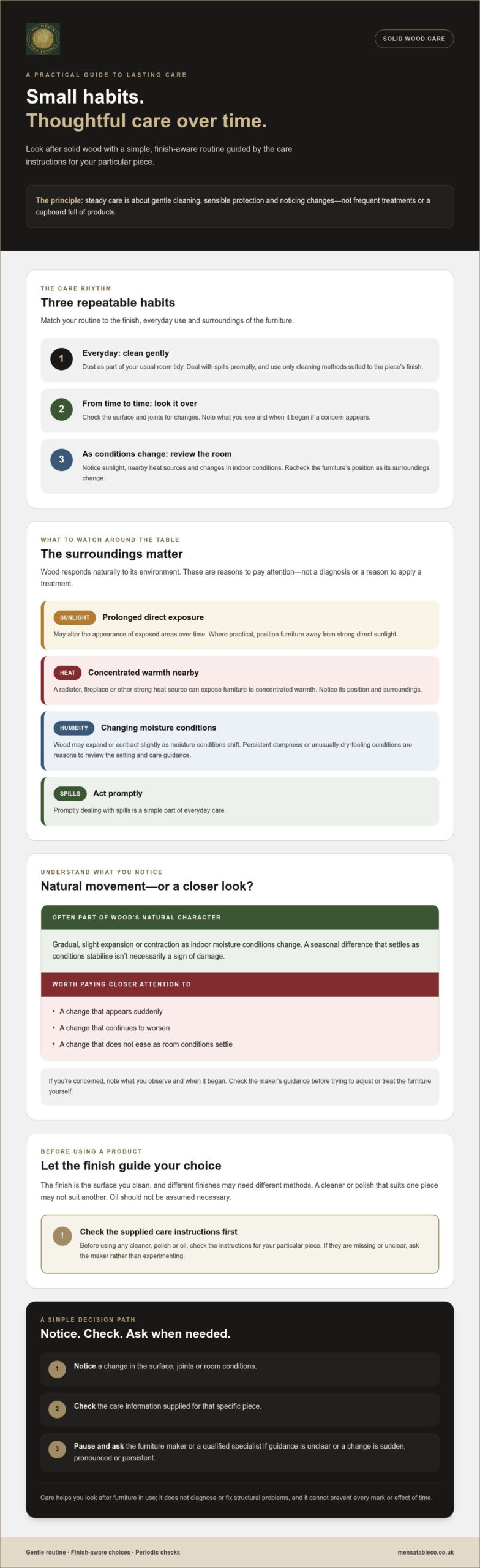
Think of care in three parts: gentle everyday cleaning, occasional inspection and awareness of the room around the furniture. Dusting and dealing promptly with a spill are routine tasks. Looking over the surface and joints from time to time can help you notice changes, while checking whether the piece sits in strong sunlight or near a heat source helps you understand its surroundings.
Follow the care information supplied by the furniture maker. It takes the surface finish into account, whereas generic advice may not suit every piece. Care guidance is different from restoration or repair: it helps you look after furniture in use, but it doesn’t diagnose or fix structural problems.
Why do timber and finishes need different care?
Solid wood is a natural material that responds to its surroundings. As moisture and temperature conditions change, it can expand or contract slightly. Gradual movement isn’t automatically a sign of damage; sudden or pronounced changes are a reason to take a closer look rather than immediately applying a treatment. The overview of Furniture preservation also identifies humidity and sunlight among the concerns for wood furniture.
The finish matters, too. It forms the surface you clean, and different finishes can call for different methods. A cleaner or polish that suits one piece may be unsuitable for another, and oil shouldn’t be assumed necessary. Before using polish, oil or any cleaner, check the supplied care instructions. If they’re missing or unclear, ask the maker before experimenting.
Keep the routine manageable: dust as part of your usual room tidy, deal with spills promptly and look over the piece periodically. The right care respects both the natural character of the timber and the finish protecting it.
How Wood Movement, Humidity, and Sunlight Affect Furniture
Solid wood can respond to changes in its environment, expanding or contracting gradually as moisture conditions shift. This movement is part of the material’s natural character, not automatically a fault. Understanding what’s ordinary can help you notice when a change seems persistent or pronounced enough to ask for advice.
What is wood movement, and when should owners pay attention?
Wood takes in and releases moisture from the air around it. As indoor conditions change, its dimensions may shift slightly. You might notice a seasonal difference in how a tabletop feels or how its components meet. A gradual change that settles as conditions stabilise isn’t necessarily cause for alarm.
Pay closer attention if a change appears suddenly, continues to worsen or doesn’t ease as room conditions settle. Note what you observe and when it began, then check the maker’s care guidance before trying to adjust or treat the piece yourself. This helps avoid treating every seasonal variation as damage while making sure a persistent concern isn’t ignored.
How can room conditions affect a wooden table?
Sunlight and heat can affect furniture over time. Prolonged direct sunlight may alter the appearance of exposed areas, while placing a table close to a radiator, fireplace or other strong heat source can subject it to concentrated warmth. Where practical, position furniture away from these conditions and notice whether its surroundings change with the seasons.
Also observe the room itself. Persistent dampness or unusually dry-feeling conditions are reasons to review the furniture’s position and consult its care information, not to assume a particular diagnosis or apply a product. Avoid sudden changes to the room where you can, and make a note if you see a recurring change in the wood.
Timber is part of a piece’s character, and different species have their own appearance and grain. For examples, explore the company’s solid European oak furniture and solid black walnut furniture. The wood alone doesn’t tell you which cleaner or treatment to use; follow the instructions for the specific finish on your furniture.
Room awareness is a practical part of a long-term care plan for your solid wood furniture. If you’re considering a new solid wood table and would like to discuss the available options, you can contact The Mensa Table Company.
Compare Everyday Cleaning, Protective Habits, and Occasional Checks
A useful long-term care plan for your solid wood furniture separates quick daily habits from occasional checks. Use the table as a starting point, but follow the care instructions for your particular piece, especially if they differ from general advice.
| Action | When | What to check | Guidance to follow |
|---|---|---|---|
| Dusting | As part of your usual room tidy | Look for grit or debris that could be dragged across the surface | Use a clean, soft cloth and follow the maker’s instructions |
| Spill response | Promptly, when a spill happens | Check the affected area for remaining moisture or a visible change | Use only the response method approved for that finish |
| Protective habits | During meals, drinks or other everyday use | Make sure accessories sit steadily and won’t scuff the surface | Choose suitable coasters or heat protection, following the maker’s advice |
| Inspection | Periodically, and when room conditions change | Notice new marks, changes in the surface or anything that seems to be worsening | Check the supplied care information; ask the maker if you’re unsure |
Which everyday cleaning habits are gentle and practical?
Dust with a clean, soft cloth, following any instructions provided for the furniture. If a spill occurs, deal with it promptly using the method approved for that finish. Don’t assume that a damp cloth, household spray or particular cleaner is suitable for every surface. Avoid abrasive cloths and materials that could scratch, and don’t apply an unverified product in the hope it will improve a mark.
Polish, oil and wax aren’t universal steps in a care routine. A product suitable for one finish may be inappropriate for another, so check the maker’s guidance before using any treatment. If the instructions don’t cover a product you’re considering, ask before applying it.
Which protective habits help reduce avoidable wear?
Coasters and heat protection can help limit rings and heat exposure when they’re suitable for the furniture’s intended use. Choose accessories with a stable, non-abrasive underside, and follow the maker’s advice about anything placed on the surface. When moving a vase, bowl or other object, lift it rather than sliding it; sliding can leave scratches or impact marks.
Keep protection simple and consistent. A coaster within reach and a gentle lift when rearranging the table are easier habits to maintain than repeated treatments. Before using a new accessory or care product, check that it’s appropriate for your furniture’s finish.
Use This Solid Wood Furniture Care Checklist Throughout the Year
A steady routine is easier to keep than a major clean-up after something goes wrong. Use this checklist as a reminder, adapting each task to the instructions supplied with your furniture. For a dining table, for example, the care notes should guide how you clean and protect its particular surface.
Routine use
- Dust with a clean, soft cloth, using the method recommended for the finish.
- Respond promptly to spills with the maker-approved method. Don’t reach for a general cleaner or treatment unless the care instructions say it’s suitable.
- Notice new marks, changes in how the piece sits, visible movement or hardware that seems loose. Make a note rather than attempting an adjustment you’re unsure about.
- Where practical, limit prolonged exposure to heat, moisture and direct sunlight. Use suitable coasters or heat protection if the maker’s advice allows them.
Seasonal review
- As the seasons change, check the furniture’s position. Has shifting sunlight, a heat source or a change in room conditions affected its surroundings?
- Look for persistent changes, such as a new mark or movement that appears to be worsening. Record what you see and when you first noticed it.
- Before changing your cleaning routine or trying a new product, reread the furniture’s care guidance. If it doesn’t answer your question, ask the maker before applying anything.
Browsing examples can also help you consider how timber and furniture styles might suit your home. Explore the company’s solid wood dining tables and solid European ash furniture, while remembering that care advice should match the finish of the piece you own.
Annual record
Once a year, review your notes and keep the furniture’s care instructions somewhere easy to find. A simple record can help distinguish a one-off incident from a change that continues over time.
- Date and observation: note new marks, movement or changes in how the furniture sits.
- Spills or incidents: record what happened and how you responded.
- Products used: list any cleaner or treatment, and whether the maker’s guidance approved it.
- Follow-up: write down questions to ask the maker if a change persists or the care advice is unclear.
This checklist can help turn a long-term care plan for your solid wood furniture into a habit that fits around everyday life. If you’re considering a new handmade piece for your home, contact The Mensa Table Company to discuss your options.
Keep Furniture Care Simple and Know When to Ask for Advice
A good routine doesn’t need to become another household project. Clean gently in line with the maker’s instructions, use sensible protection during everyday activities and pay attention to changes over time. That’s the heart of a long-term care plan for your solid wood furniture, not a reason to keep applying products or expect a naturally used piece to look untouched.
Let the furniture’s own care information guide each decision. Advice for one finish may not suit another, and an unnecessary treatment can create more uncertainty than it solves. If a product or method isn’t covered, pause and ask before using it.
When should you seek product-specific guidance?
Ask the furniture maker for guidance if you don’t know what finish is on the piece, or if the instructions don’t say whether a proposed cleaner, polish or oil is suitable. Stop experimenting if a product changes the surface or you’re unsure how to respond to a spill. If a change persists, worsens or concerns you, record what you’ve noticed and seek an informed assessment from a qualified specialist where appropriate.
The maker may be able to clarify the care information for their furniture, but don’t assume that means they can diagnose or carry out repairs. Keep your question focused on what you can verify, such as the finish details or recommended cleaning method. For a concern that needs assessment, consult someone qualified to evaluate it.
How can a carefully chosen new piece fit your home?
Care planning can begin before a piece enters your home. Think about how you’ll use it, where it will sit, and whether the room exposes it to strong sunlight, heat or persistent changes in conditions. A dining table used for shared meals has different everyday demands from a desk or coffee table, so consider intended use as well as shape and timber.
If you’re exploring timber options, browse the company’s solid European oak furniture. You can also explore its dining table range and consider how a handcrafted piece might suit the room and the routines that happen there. The Mensa Table Company makes dining tables in Mensa, Spider Leg, X-Frame, U-Frame, Trapezium, A-Frame and V-Frame designs, alongside matching benches and coffee tables. Its range also includes custom-made breakfast bars and desks.
The company focuses on making new furniture rather than restoration or flat-pack alternatives. If you’re considering a piece for your home, you can ask about the range and think through what may suit your intended use.
Make Thoughtful Care Part of Home Life
Solid wood furniture is made to be lived with. A long-term care plan for your solid wood furniture doesn’t need to be complicated: follow the care advice for its finish, protect it sensibly during everyday use and take time to notice changes. Small, steady habits can help you care for a piece without expecting it to remain untouched by daily life.
When choosing furniture for your home, consider how it will be used and where it will sit. The Mensa Table Company is privately owned and operated by craftspeople. Its range includes handcrafted dining tables, benches, coffee tables, breakfast bars and desks.
Have questions about choosing a new piece for your home? Contact The Mensa Table Company to discuss your furniture needs. With a thoughtful choice and a simple care routine, your furniture can find its place in everyday life.
Frequently Asked Questions
How often should you care for solid wood furniture?
Care for solid wood furniture through small habits as part of everyday life, with a closer check periodically and when room conditions change. Dust during your usual tidy, respond promptly to spills using the approved method, and look for new marks or changes in how the piece sits. There’s no need to apply treatments on a fixed schedule unless the furniture maker’s instructions recommend it for that particular finish.
Can you use furniture polish on solid wood furniture?
Use furniture polish only if the care instructions for your piece recommend it. Finishes vary, and a polish suitable for one surface may not suit another. Some products contain silicone, which can build up over time, while some finishes may require no polish at all. If the maker’s guidance doesn’t mention the product you’re considering, don’t guess; ask before applying it.
What should you do if you spill liquid on a wooden table?
Respond promptly, using the spill method recommended for your table’s finish. Avoid letting liquid sit, and don’t scrub with an abrasive cloth or reach for a household cleaner unless the care instructions approve it. If the guidance is unclear, gently lift away the liquid with a clean, soft cloth, without soaking the surface, then contact the maker for product-specific advice if you notice a lasting change.
Does solid wood furniture move with changes in humidity?
Yes. Solid wood responds to moisture in the air and can expand or contract gradually as indoor conditions change. This natural movement doesn’t automatically mean the furniture is damaged. Pay attention if a change appears suddenly, persists or worsens, and check the maker’s care guidance before attempting an adjustment or treatment. Note what you observe and when, so you can describe the change clearly if you seek advice.
How can you protect solid wood furniture from sunlight and heat?
Where practical, position furniture away from prolonged direct sunlight and strong heat sources such as radiators or fireplaces. Sunlight may alter exposed areas over time, while concentrated heat can create changing conditions around the piece. Use suitable heat protection for hot items if the maker’s instructions allow it, and notice whether the furniture’s surroundings shift seasonally. Avoid sudden environmental changes where you can.
What is the safest way to clean a solid wood table?
Start with the care instructions supplied for your table, then use a clean, soft cloth and the approved cleaning method. Avoid abrasive materials and don’t assume that water, household sprays, polish or oil are suitable for every finish. For routine dust, gentle wiping is often practical, but the piece’s own instructions take priority. If you’re unsure about a product, check before using it.
When should you ask someone for advice about wooden furniture care?
Ask the furniture maker if you don’t know the finish, the care instructions are missing, or you’re considering a product or treatment they haven’t addressed. Seek an informed assessment from a qualified specialist if a change persists, worsens or concerns you. A maker may clarify care guidance, but don’t assume they provide diagnosis or repair services. A simple record of spills, products used and visible changes can help explain your question.

Leave a Reply