
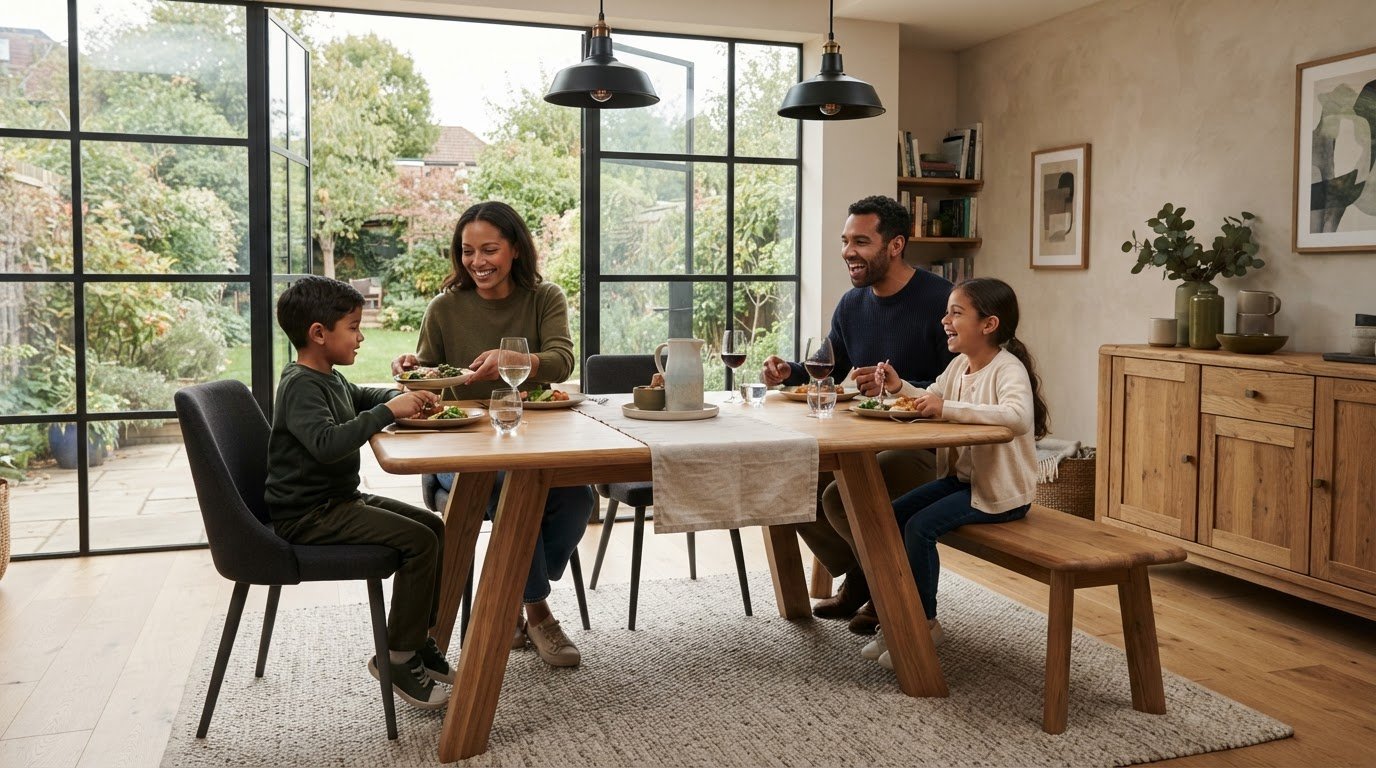
What if the strongest feature of your dining table could also give the room its character? An a-frame dining table combines the reassuring geometry of structural design with the natural warmth of timber, turning a practical piece of furniture into the setting for everyday rituals. Choosing a bold leg style can raise practical questions: how will it work with your chairs, how much room will the base take up, and which timber character will suit your home?
This guide explains how A-frame and V-frame designs differ, and what to consider when choosing between them. It also looks at the grain, tone and feel of European oak, ash, black walnut and Swedish pine, along with the details that help a table become part of family life for years to come. From proportions and seating comfort to the balance of architectural strength and natural warmth, use these ideas to find a table that feels considered, welcoming and ready for many shared meals.
Key Takeaways
- See how the a-frame dining table draws on trestle-inspired structure to create a confident focal point while making considered use of floor space.
- Compare A-frame and V-frame designs to find the visual footprint and architectural feel that best suits your home.
- Learn how timber species such as solid European oak bring distinctive grain, warmth and character to a table built for everyday life.
- Plan your dining area around comfortable walk-around space, and explore how matching benches can shape a more flexible seating arrangement.
- Discover why thoughtful, handcrafted construction offers an enduring alternative to furniture designed to feel temporary.
The Timeless Appeal of the A-Frame Dining Table
Some table bases recede into the room. An A-frame makes a more deliberate impression, drawing the eye from its broad feet up to the tabletop in a clear architectural line. Rooted in the trestle tradition, the design pairs a sturdy support structure with open space beneath the table. Its appeal is not limited to farmhouse interiors: thoughtful proportions and a considered choice of material can give the same silhouette a distinctly modern character.
The shape balances visual weight with openness. Inward-sloping legs make the base feel grounded, while the open centre keeps it from reading as a solid block. The feet do occupy floor area, so their spread matters in a compact dining room. The open centre, however, can feel less crowded than a bulky, enclosed base. For a closer look at the design’s roots, explore this account of trestle table history.
Why the A-Frame Silhouette Endures
A triangular frame has a reassuring visual logic: its angled supports meet the floor and tabletop in a shape that looks composed and purposeful. Stability depends on sound construction and proportions, not appearance alone, but the geometry suggests strength without relying on a heavy, closed-in base. That makes the a-frame dining table equally at home beside rustic textures, clean-lined modern furniture or an industrial mix. It can anchor a room without dictating everything around it.
There is a social quality to that presence, too. The table becomes a natural gathering point for meals, conversation and the everyday rituals that make a dining room part of home life. Its frame gives the space definition; the people around it give the design meaning.
Industrial Strength Meets Organic Warmth
Steel legs bring a crisp, industrial note, while timber legs create a softer, more rooted mood. Either way, the frame’s clean lines make a striking counterpoint to the changing grain of a solid wood top. Oak, ash, black walnut and Swedish pine each have their own colour and grain character. No two boards express those patterns in precisely the same way.
That contrast is felt as much as seen. A solid timber surface has a natural texture beneath the hand, with grain that catches the light and invites everyday use. Paired with the disciplined geometry of an A-frame, it feels robust and welcoming: a considered piece of furniture, not just a surface to eat at. Explore the dining table designs to see how this architectural form can suit different homes.
A-Frame vs. V-Frame: Choosing Your Architectural Statement
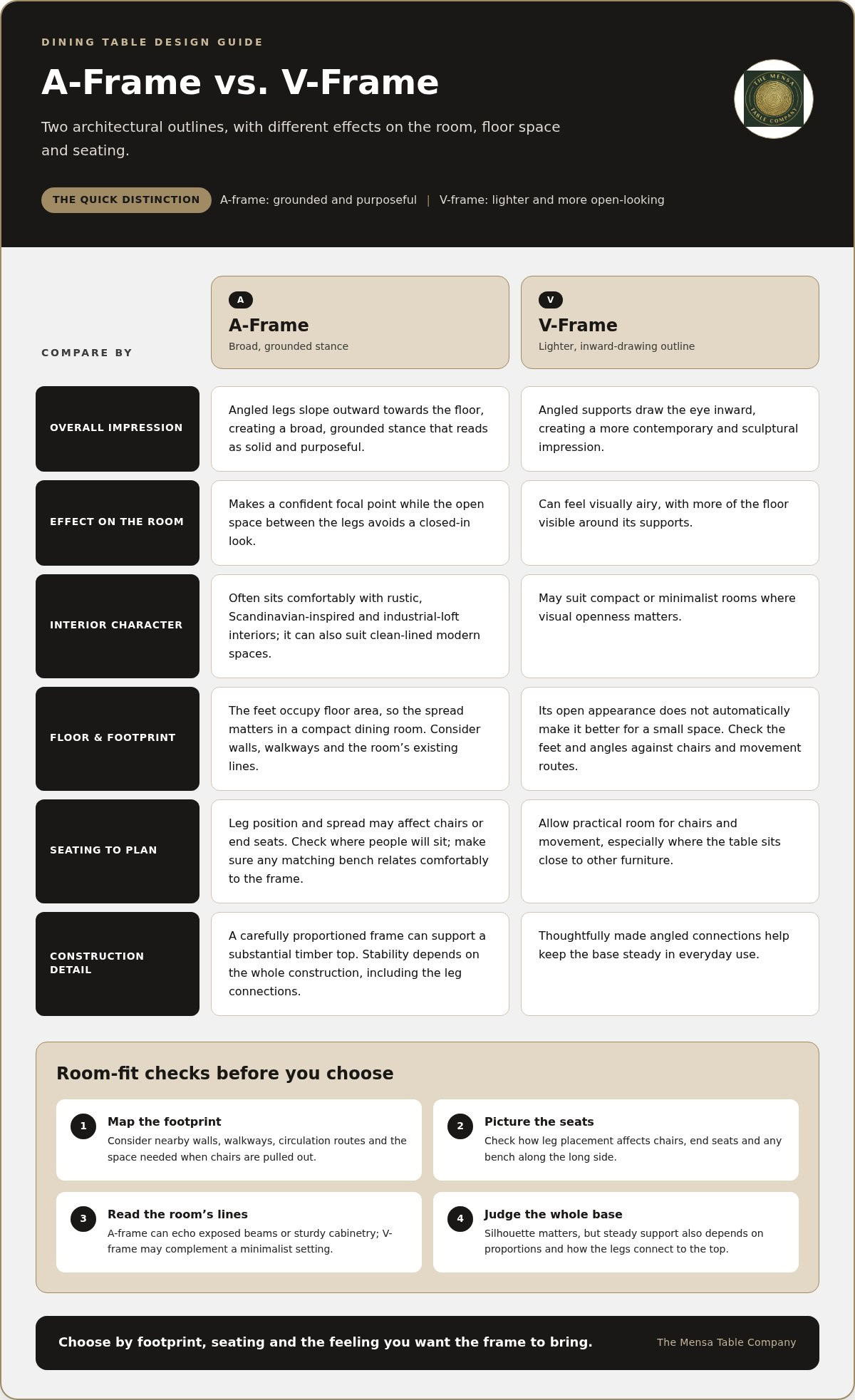
Both frames make the table a focal point, but they shape the room differently. An A-frame has a broad, grounded stance, with legs that angle out towards the floor. A V-frame draws the eye inward and can seem lighter because more of the floor remains visible around its supports. The right choice depends on more than taste: consider how the table relates to walls, walkways and the seats you use most.
Look at the room’s existing lines. A strong A-frame can complement exposed beams, sturdy cabinetry or the long lines of an industrial interior. A V-frame may suit a compact or minimalist space where visual openness matters. The broader architectural idea has its own story, explored in this overview of the history of A-frame design. For a dining table, the details of the base and its position matter as much as the silhouette.
The A-Frame: Traditional Stability
With its clear, outward-sloping supports, an A-frame feels at home in rustic, Scandinavian-inspired and industrial-loft interiors. Its form reads as solid and purposeful, while the open space between the legs avoids the closed-in look of a pedestal or panel base. A carefully proportioned frame can support a substantial timber top, though strength depends on the whole construction, including how the legs connect to the top.
Give seating a close look. Depending on the legs’ position and spread, they may affect chairs or end seats. Picture where people will sit before settling on a layout. Matching benches can create a simple, cohesive arrangement along the long sides; check how each bench relates to the frame so it can be positioned comfortably. See the range of matching dining benches.
The V-Frame: Modern Minimalism
A V-frame often feels more contemporary. Its angled supports leave a more open impression at floor level, which can help a room feel visually airy. That can be appealing when the table sits close to other furniture or you want to preserve an uninterrupted view across the room. It is not automatically better for a small space, though. The feet and angles still need to leave practical room for chairs and movement.
The clean appearance relies on careful design. Because the legs meet the structure at an angle, their connections need to be thoughtfully made to keep the base steady in everyday use. Compare the frame’s footprint with the shape of your room: note nearby walls, circulation routes and the space chairs need when pulled out. Choose the A-frame for a more grounded statement, or the V-frame if its lighter, more sculptural outline better suits the space.
Selecting the Timber: The Character of Solid Wood
Timber shapes more than the colour of an a-frame dining table. Its grain, tone and feel influence the atmosphere of the room, while the species affects how the surface responds to everyday use. Oak, ash and walnut each bring a distinct character. Consider the light in your dining space, the materials nearby and whether you prefer a lively grain or a quieter finish.
Solid timber is made from natural wood throughout, rather than a thin wood surface over a different core. The grain and texture you see belong to the material itself. Veneered furniture can offer its own design advantages, but its surface is a layer; solid wood offers a more substantial, tactile connection to the timber. Either way, care matters: protect the surface from excess moisture and follow the maker’s guidance to help it wear well.
European Oak and Ash: The Durable Classics
European oak has a prominent grain and warm, honeyed tones that bring depth to both traditional and pared-back interiors. It is a strong choice for a dining table used day after day, where an expressive natural surface feels at home alongside meals, work and conversation. Explore solid European oak to see its distinctive character.
Ash offers a lighter look, often with a paler tone and a clear, flowing grain that suits contemporary rooms. Both oak and ash are hardwoods valued for their strength, though precise hardness ratings depend on the grading method and timber characteristics. Rather than relying on a number alone, consider the table’s intended use and the finish that will protect its surface. Solid European ash offers another way to bring a brighter timber tone into a room.
Black Walnut: The Premium Statement
Black walnut brings a deeper palette, with rich brown tones that can lend an interior a more intimate, considered feel. Its natural lustre and smooth finish make it a striking choice when you want the tabletop to take a leading role without relying on ornament. The grain gives each surface its own visual rhythm, so the effect feels warm rather than stark. Discover solid black walnut for a closer look at this distinctive timber.
Walnut can be a considered choice when its darker tones complement your flooring or cabinetry. Oak, ash and walnut each bring a different kind of appeal, so let your preferred colour, grain and tactile character guide the decision. A thoughtfully chosen solid-wood top connects the table to the natural material at its heart.
Designing Your Space Around an A-Frame Table
A well-sized a-frame dining table should feel inviting, not like an obstacle course. Measure the room before choosing the tabletop: mark its intended footprint on the floor, then pull out chairs or place a bench within that outline. Check doorways, cupboards and walkways too. The legs may extend beyond the top, so include the full frame footprint in your measurements.
A useful planning rule is to leave around 90cm between the table edge and a wall or other obstacle. This gives chairs room to move and helps people pass behind seated guests. Treat it as a guide, not a fixed requirement: a busy thoroughfare needs more breathing room, while a tucked-away dining nook may work with less. Test the layout with chairs in place before deciding.
The Bench Pairing: A Social Seating Solution
A bench creates a relaxed, communal feel, making it easy for people to settle in together. Where the A-frame’s leg spacing allows, a bench can slide beneath the tabletop when it is not in use, helping keep the floor clear. Before choosing one, compare its length and position with the legs so it can tuck in without catching on the frame. Matching the bench timber to the tabletop brings a calm, cohesive look. Explore matching dining benches for a natural pairing.
End seats need particular attention. A-frame legs can occupy space near the corners, so check whether a chair can sit comfortably at each end without colliding with a support. If you often host a larger group, prioritise usable space around the legs as well as the number of places set at the table.
Sizing and Clearance: The Golden Rules
Plan capacity by counting seats along the sides and at the ends, then check that the frame will not interfere with knees or chair positions. As a starting point, six guests can sit three along each long side; eight can sit four per side; and ten may need end seats as well, depending on the tabletop length and frame layout. Allow enough elbow room for diners, and use the actual chair or bench dimensions when checking the fit.
For comfortable dining, the tabletop should let seated guests rest their forearms naturally, with enough clearance beneath it for knees and chair arms. Check the table and seat heights together rather than judging either in isolation.
Styling can be simple or richly layered. Pale timber, uncluttered tableware and clean-lined chairs suit a Scandi-inspired room; woven textures, warm lighting and natural linens lend a more rustic feel. Before choosing, use the dining table space planning page as a next step in thinking through your layout.
The Mensa Difference: Artisanal Craftsmanship
A table earns its place in a home through more than appearance. The Mensa Table Company designs and builds handcrafted dining tables, including A-frame models, alongside matching benches, coffee tables, breakfast bars and desks. The focus on considered design and craftsmanship reflects the idea behind slow furniture: choosing well-made pieces for lasting use rather than treating furniture as something to replace with each passing trend.
Slow furniture also invites a closer look at how a piece is made. Joinery, fixings, proportions and finishing all contribute to a table’s stability and everyday durability. Traditional joints can create strong, integrated connections when suited to the design, while well-chosen mechanical fixings have a role in other constructions. What matters is that the method fits the piece and is carried out with care. Responsible material choices matter too, so consider the timber’s origin and how its natural character is respected in the finished table.
Built for Generations, Not Just Seasons
A well-made wooden table has a quiet confidence. Its strength is expressed through balanced proportions, carefully considered construction and a surface made for daily life, not decoration alone. Solid timber brings its own grain and tactile warmth; with time, its appearance can develop alongside the stories gathered around it. The result is a focal point that can feel at home through changing interiors and different stages of family life.
That enduring quality is why craftsmanship deserves attention beyond a quick glance. Look at how the legs meet the top, how the frame relates to the tabletop, and whether the finish feels consistent. These details help a table function as well as it looks, creating a dependable setting for meals, homework and long conversations.
A Guided Journey to Your Perfect Table
Choosing a table is personal because the room and the people who gather there are personal. Start with the practical details in this guide: the available footprint, seating needs, preferred frame style and timber character. Then picture the moments the table will hold, from weekday breakfasts to celebrations that stretch into the evening. That is the heart of a lasting furniture choice.
Each handcrafted table connects skilled making with the home it becomes part of. The Mensa Table Company makes a range of dining tables, including A-frame and V-frame designs. Explore the dining table range to compare styles and find a piece that feels right for your space.
Choose a Table Made for Your Home and the Years Ahead
The right a-frame dining table brings more than architectural character to a room. Its frame should suit your space and seating, while the timber’s grain, tone and feel make the table personal. A-frame and V-frame designs each offer a distinct look, and careful measuring helps ensure there is room to gather comfortably.
The Mensa Table Company designs and builds handcrafted dining tables, matching benches, coffee tables, breakfast bars and desks. Each piece is made with attention to its construction and character, creating a setting for everyday moments, from shared meals to unhurried conversations.
Explore our handcrafted A-Frame Dining Tables to find a design for your home. Get in touch with our team to discuss the table that could bring your dining space together.
Frequently Asked Questions
Is an A-frame dining table stable for heavy use?
An A-frame dining table can be stable for everyday use when its frame, joints and tabletop are thoughtfully designed and well made. The angled supports create a grounded stance, but the silhouette alone does not determine strength. Consider how the legs connect to the top and whether the base is proportioned to the tabletop. Solid timber also benefits from sensible care, such as wiping spills promptly and avoiding prolonged exposure to moisture.
Can I tuck chairs in fully with an A-frame table?
It depends on the width and angle of the legs, where the supports sit and the size of your chairs. Measure the chair width and compare it with the clear space between the frame legs. Check that the chair can slide far enough beneath the tabletop without hitting a support. If you use chairs at the table ends, pay particular attention to the leg placement there.
What is the best wood for a modern A-frame table?
There is no single best species; choose by the tone and grain you want in your room. European ash has a lighter, contemporary appearance, while oak brings warmer colour and a more pronounced grain. Black walnut offers deeper brown tones and a refined feel. All three can suit a modern A-frame design. Consider your flooring, natural light and how much visual contrast you want from the tabletop.
How do I maintain the finish on a solid oak A-frame table?
Wipe the surface with a soft cloth, clean spills promptly and dry the area rather than leaving moisture on the wood. Use coasters or mats to help protect the finish from heat, scratches and marks, and avoid abrasive cleaners or harsh chemicals. Care can vary with the specific finish, so follow the maker’s guidance for your table. Regular gentle cleaning helps preserve oak’s natural grain and warm appearance.
Do A-frame tables work in small dining rooms?
An A-frame table can work in a smaller dining room if its full footprint leaves enough room to sit and move around. Measure the tabletop and the spread of the legs, then mark both on the floor before deciding. Allow space to pull out chairs and keep walkways usable. A bench may help keep seating compact, provided it fits comfortably between or alongside the frame supports.
Can I pair an A-frame table with a bench on both sides?
Benches can be used on both long sides if the table length, frame position and room clearance allow. Measure each bench and check that it can slide into place without catching on the angled legs. Also leave enough room for people to sit down and get up comfortably. Matching timber can create a coordinated look, while different finishes add a more relaxed contrast.
What is the standard lead time for a handcrafted dining table?
The time needed to make a handcrafted table depends on the design, materials and finishing involved. When planning around a move, renovation or gathering, factor the making process into your schedule rather than treating a handcrafted piece like ready-to-assemble furniture taken straight from stock.
Do you offer custom sizes for V-frame tables?
V-frame table dimensions should be planned around the room, the number of seats and the position of the angled supports. Start by measuring the available floor space and checking chair clearance, then consider how the frame’s footprint relates to the tabletop length and width. This helps you plan a balanced layout that feels open and practical, with enough room for guests to sit comfortably around the table.

Leave a Reply