
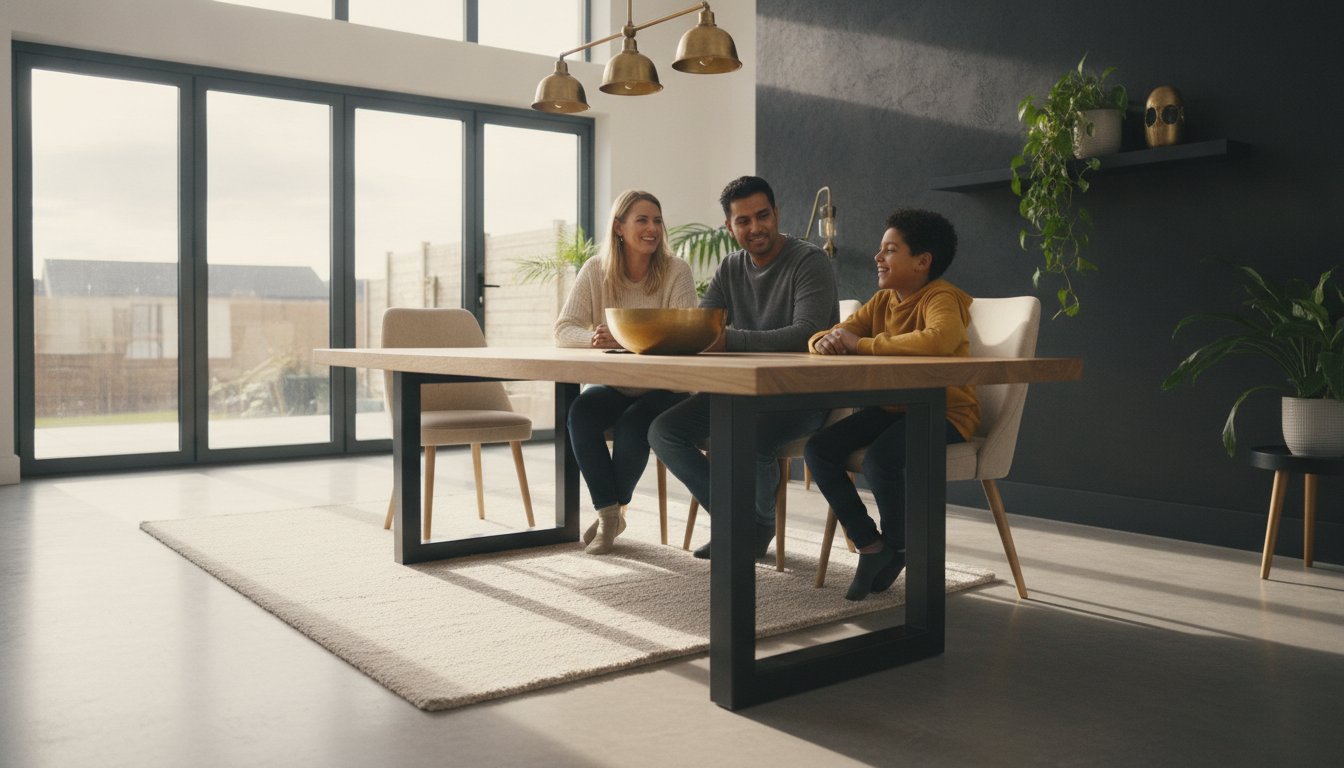
You’ve likely felt that familiar sinking sensation when a favorite desk begins to sway at the slightest touch. You reach for a screwdriver, hoping a quick turn will restore its stability, only to find the metal spinning endlessly in a crumbled cavity of particle board. These small, frustrating moments are actually the subtle signs your flat-pack furniture needs replacing before it becomes a safety concern. We know the quiet guilt that comes with the throwaway nature of mass-produced goods, especially when you crave a home that feels solid, intentional, and permanent.
I want to help you identify when a piece is truly beyond repair and explain why transitioning to handcrafted furniture is a lifelong investment in your space. We’ll look at critical failure points like sagging shelves and peeling veneers that signal the end of a product’s short life. By understanding the tactile strength of solid wood and the care of manual production, you can gain the confidence to choose pieces that last for generations. Let’s explore how moving away from temporary fixes allows you to create a home filled with heritage and warmth.
Key Takeaways
- Learn to perform the “sway test” to distinguish between a simple loose bolt and a fundamental failure in your furniture’s structural integrity.
- Understand why moisture is the natural enemy of particle board and how to spot the bubbling veneers that signal irreversible material damage.
- Discover the true environmental and financial cost of the “buy-break-bin” cycle and how to identify the signs your flat-pack furniture needs replacing before it fails completely.
- Explore the hierarchy of premium timbers like Oak, Ash, and Walnut to understand how natural materials offer a tactile, durable alternative to mass-produced goods.
- Master the art of choosing a “forever” piece by recognizing the quality joinery and artisanal methods that ensure your dining table remains the heart of your home for generations.
The Structural “Wobble”: Why Your Furniture Feels Unstable
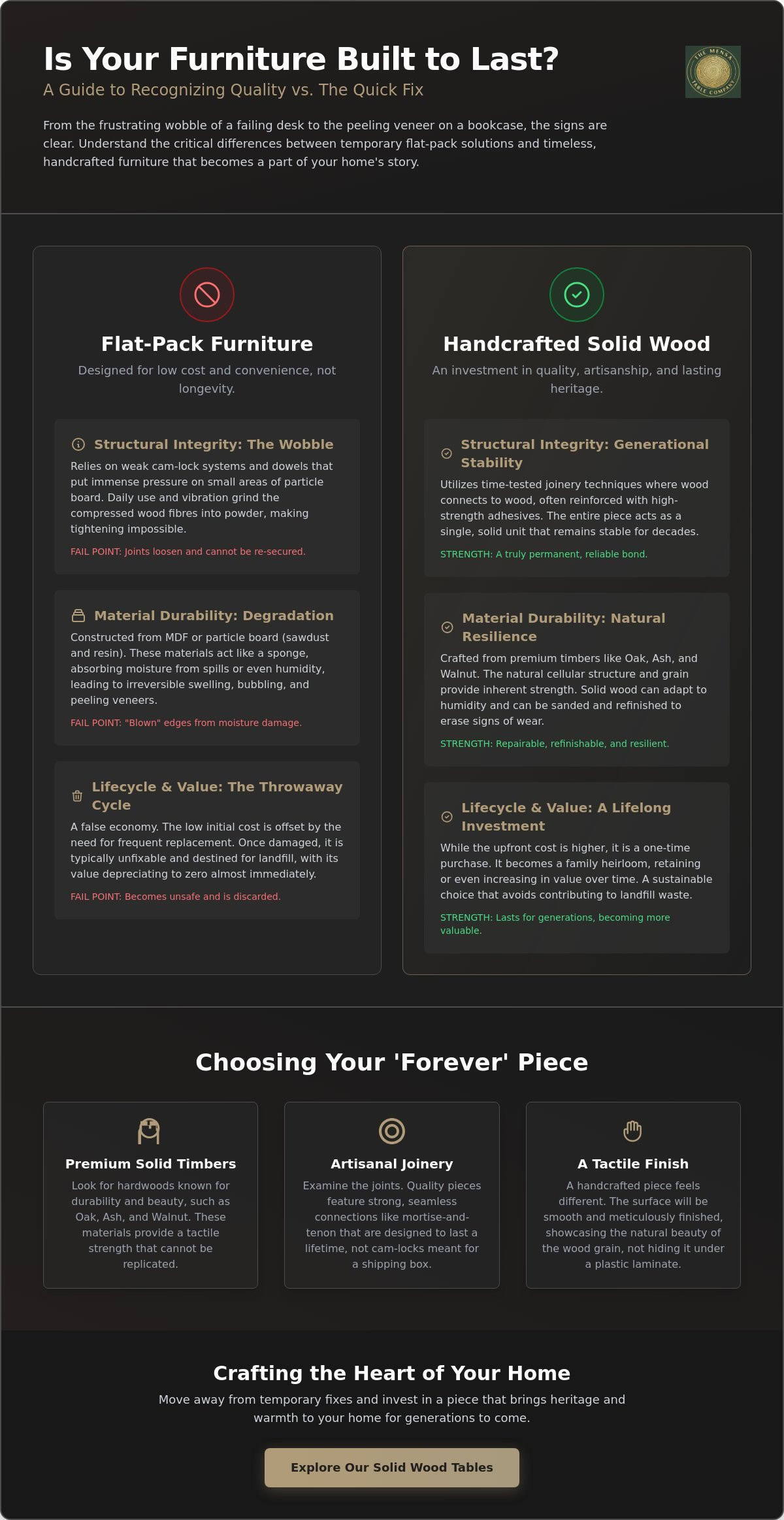
A table should be a silent, steady anchor in your home. It’s the stage for Sunday roasts and late-night deadlines, yet many of us have grown accustomed to a certain degree of movement. This instability usually begins with a slight tremor that we try to ignore. In the context of Ready-to-assemble furniture, this movement isn’t just a nuisance; it is often the first of several signs your flat-pack furniture needs replacing. While a loose screw in a solid wood piece can be tightened into healthy grain, the hardware in mass-produced items relies on friction against compressed wood dust. Once that friction is lost, the piece begins a slow, irreversible decline.
You can perform a simple “sway test” to gauge the health of your furniture. Place your hands on the edges of the surface and apply gentle pressure from side to side. If the legs move independently of the top, or if you hear a grinding sound from within the joints, the structural integrity has likely failed. In handcrafted pieces, like our solid wood dining tables, we use joinery designed to live with the wood, whereas flat-pack items rely on dowels that often lack the glue or the depth to create a permanent bond. This lack of a deep, chemical connection means the piece eventually relies entirely on its metal fasteners to stay upright.
The Failure of Cam-Lock Systems
Most mass-produced pieces use cam-locks, which are small metal cylinders that grip a bolt. These work by putting immense pressure on a very small area of particle board. Over time, the vibration of daily use causes the metal to chew through the compressed fibers. When you try to tighten a wobbly cam-lock, you aren’t fixing the joint. You’re often grinding the internal bore hole into a fine powder, making the connection even looser than before. It’s a point of no return where the material itself has lost the ability to hold a fastener, rendering the furniture unfixable.
Stability vs. Safety: When a Wobble Becomes a Risk
A wobbly table is frustrating, but for taller items, it’s a genuine hazard. Bookcases and wardrobes that lose their lateral stiffness can tip under the weight of their contents. When the internal structure of a dining table is compromised, its weight-bearing capacity drops significantly. If the joints can no longer resist the horizontal forces of someone leaning on the edge, the entire piece can collapse. Investing in a “forever” piece isn’t just about aesthetics. It’s about the peace of mind that comes from knowing your furniture is a safe, immovable part of your family’s life.
This need for structural integrity is just as critical in the bedroom, where a failing frame can lead to poor sleep and safety concerns; choosing a specialist like Discount Bed Store allows you to invest in luxury, bespoke beds that offer the same sense of permanence and quality as a handcrafted table.
Material Degradation: From Peeling Veneers to Moisture Damage
The materials used in mass-produced furniture are often a far cry from the living, breathing timber found in a dedicated workshop. Most flat-pack items are constructed from Medium Density Fibreboard (MDF) or particle board, which are essentially wood fibres and sawdust bonded with resins. While these materials are cost-effective, they lack the cellular structure that allows solid timber to endure. One of the most visible signs your flat-pack furniture needs replacing is when this internal core begins to rebel against its environment. Unlike solid wood, which can adjust to humidity, engineered boards act like a sponge.
Moisture is the silent thief of structural integrity. Even the humidity from a boiling kettle or a damp cloth can find its way through a seam in the plastic veneer. Once the water enters the core, the compressed fibres expand and “blown” edges appear. This creates a permanent distortion that no amount of weight or clamping can reverse. Safety is a primary concern here; as materials degrade, they lose their ability to hold weight or remain upright. In the UK, where domestic humidity levels fluctuate with the seasons, this degradation happens faster than you might expect. A compromised base or a swollen leg is no longer a reliable support for your family’s daily rituals.
The “Blown” Edge: Irreversible Moisture Absorption
In a busy kitchen or a high-traffic dining room, spills are inevitable. On a solid surface, a spill is a minor event. On particle board, a drop of water that lingers near a joint can cause the tell-tale bubbling under the laminate surface. This isn’t just an eyesore. It is a sign that the internal glue has failed. Because the material has no natural grain to hold it together, the expansion is chaotic and permanent. You can’t sand this down or refinish it; the only solution is often to start over with a material that respects the presence of water.
The Aesthetic Decline of Synthetic Finishes
There is a profound difference between the way natural materials age and how synthetic finishes fail. A table made of solid European oak will develop a rich patina over decades, telling the story of every meal and conversation. In contrast, plastic veneers simply degrade. They feel cold to the touch and lack the tactile warmth of real grain. When the edges begin to peel or the surface scratches, it reveals the grey, lifeless dust underneath. Living with furniture that feels “tired” or “cheap” can subtly drain the joy from a room. If you’re ready to move beyond temporary fixtures, you might want to talk to us about your vision for a piece that grows more beautiful with every passing year.
The False Economy: Why “Cheap” Furniture Costs More Over Time
It’s tempting to look at a low price tag and see a bargain. However, when you start noticing the signs your flat-pack furniture needs replacing, that initial saving begins to evaporate. The true cost of furniture isn’t found on the receipt; it’s found in the years of service it provides. A dining table that costs a few hundred pounds but only survives two house moves and a spilled glass of water is far more expensive than a solid wood piece that anchors your home for decades. We often see homeowners caught in a cycle of temporary fixes, where the frustration of a failing joint eventually outweighs the small upfront saving.
Particle board and MDF are designed for the moment, not for a legacy. Because these materials are held together by resins and glue rather than natural grain and traditional joinery, they have a definitive shelf life. When the internal structure turns to dust or the veneer begins to flake, professional restoration is rarely a viable option. You can’t sand back a plastic laminate to find a fresh surface, and you can’t re-drill a hole in crumbling sawdust. This creates a “buy-break-bin” cycle that is as taxing on your wallet as it is on the environment. Choosing a “forever” piece is a conscious step away from this throwaway culture.
The Replacement Cycle Trap
The average homeowner might replace mass-produced furniture every three to five years as structural issues become impossible to ignore. Beyond the purchase price, there are hidden costs to consider:
- The time spent researching, ordering, and waiting for delivery.
- The physical labor of assembly, which often takes hours of your weekend.
- The logistical headache and cost of disposing of bulky, broken items.
- The inevitable repeat of the entire process when the new piece fails.
When you invest in quality craftsmanship, you’re buying back your time and peace of mind. A well-made table doesn’t require a toolkit and a free Saturday every few years to keep it standing.
The Value of Authenticity in the Home
There is a profound psychological shift when you move from furniture as a commodity to furniture as a focal point. Pieces like The Mensa Dining Table do more than just hold plates; they provide a tactile connection to the natural world. In a home filled with synthetic textures and hollow boards, the weight and warmth of solid timber offer a sense of permanence and grounding. Artisanal furniture becomes a backdrop for your family’s social rituals, absorbing the history of every shared meal and celebration. It stops being a temporary utility and starts being a meaningful investment in the life of your home.
Choosing Your Forever Piece: What to Look for in a Replacement
Recognising the signs your flat-pack furniture needs replacing is a pivotal moment for any homeowner. It marks the transition from seeing furniture as a temporary commodity to viewing it as a permanent part of your home’s story. When you move toward handcrafted solid wood, you’re choosing a material that is essentially alive. Unlike the brittle, static nature of engineered boards, solid timber possesses a cellular structure that responds to its environment. This means a table needs “room to breathe.” We design our pieces with specific joinery that accounts for seasonal expansion, ensuring the wood never cracks or buckles under its own internal pressure.
Quality joinery is the silent hero of a durable home. While mass-produced items rely on metal cams and shallow dowels, a “forever” piece uses the natural strength of the wood itself. We focus on creating connections that distribute weight and stress evenly, rather than concentrating it on a single point of failure. This artisanal approach ensures that even after decades of use, the table remains as steady as the day it left our workshop. If you’ve spent years dealing with the sway of a failing desk or dining table, the absolute stillness of a solid wood surface is a revelation.
Selecting the Right Timber Species
The character of your home is often dictated by the species of wood you choose. Solid Black Walnut offers a deep, chocolatey richness and a sophisticated grain that feels inherently luxurious, whereas Ash provides a bright, energetic aesthetic with incredible impact resistance. For those seeking a more traditional feel, Swedish Pine brings a rustic, honest charm that remains remarkably reliable over the years. Solid European Oak is the gold standard for dining surfaces because of its exceptional density and timeless, versatile grain.
Leg Designs and Structural Integrity
The foundation of a great table lies in the marriage of steel and timber. Our Spider Leg Dining Table and X-Frame Dining Table are engineered to provide maximum lateral stability, preventing the “wobble” that often signals the end for cheaper alternatives. These designs aren’t just about modern aesthetics; they are about creating a wide, secure footprint that can support the heavy lifting of real family life. By using industrial-grade steel frames, we ensure that the table can handle everything from heavy school projects to the busiest festive gatherings without ever losing its poise. If you are ready to invest in a piece that will never need a screwdriver to stay upright, you can contact our team today to discuss your custom requirements.
The Mensa Table Company: Crafting the Heart of Your Home
Once you recognize the signs your flat-pack furniture needs replacing, the path forward leads away from the assembly line and toward the workshop. At The Mensa Table Company, we view our work as a partnership between the natural world and the human hand. Our philosophy is rooted in a quiet confidence that values substance over flashy marketing. We don’t just produce furniture; we curate the focal points of your daily life. Every piece begins with a deep respect for the raw materials, moving from the seasoned timber in our localized setting to a finished table that carries the weight of future memories.
Our team works with a deliberate, steady rhythm. We understand that high-quality output cannot be rushed, and the pace of our workshop is dictated by the time required for excellence. By choosing a manual approach in every interaction, we ensure that the soul of the wood is preserved. This isn’t a transactional exchange of goods. It’s an investment in a piece that is built to be the last one you ever buy. We take immense pride in knowing that our tables will witness the passage of time across multiple generations, standing firm while the trends of the throwaway era fade away.
Handcrafted to Order
The journey of your table is defined by intentionality. We focus on creating new, durable pieces from ethically sourced timber because we believe in building a legacy from the ground up. While some may seek to patch up failing boards, we know that true longevity requires a foundation of solid, uncompromised wood. Every surface is finished by hand, creating a tactile experience that synthetic materials simply cannot replicate. You can feel the history of the grain and the care of the craftsman in every inch of the timber, turning a simple piece of furniture into a site for human connection.
Completing the Space
A home feels most harmonious when its elements speak the same language of quality. We offer matching benches and coffee tables to help you create a cohesive environment that feels grounded and authentic. Our bespoke process allows us to tailor each piece to your specific life rituals, whether that’s a sprawling Sunday roast or a quiet morning coffee. We invite you to explore our full range of handcrafted dining tables and start your legacy today. Let us help you turn your living space into a sanctuary of warmth and permanent beauty.
Build a Legacy in Your Home
Choosing to move away from the temporary nature of mass production is a profound step in creating a sanctuary that lasts. By recognizing the signs your flat-pack furniture needs replacing, such as irreversible structural sway or the bubbling of moisture-damaged boards, you’re choosing to value substance over convenience. You’ve learned that a home is anchored by its focal points. The true cost of furniture is measured in the decades of service and shared memories it provides rather than its initial price tag.
Our workshop is dedicated to this sense of permanence. We take the raw beauty of Solid European Oak and Black Walnut and transform them into pieces that stand as a testament to British craftsmanship. Whether you’re drawn to the architectural strength of our Spider Leg designs or the classic stability of the X-Frame, every table we create is handcrafted in the UK to be the last one you’ll ever need to buy.
Invest in a table that lasts a lifetime; explore our handcrafted collections and let us help you find the perfect anchor for your dining room. It is time to surround yourself with the warmth of natural materials and the quiet confidence of a home built to endure.
Common Questions About Furniture Longevity
Can flat-pack furniture be repaired once it starts to wobble?
Repairing a wobbly flat-pack piece is rarely successful because the internal structure of particle board usually crumbles around the fasteners. While you might try to tighten the cam-locks, this often grinds the compressed fibres into a fine powder, making the joint even looser. Unlike solid timber, which allows for new pilot holes or traditional joinery fixes, engineered boards lose their structural integrity permanently once the initial factory-drilled hole fails.
How long should a standard flat-pack dining table actually last?
Most mass-produced dining tables have a functional lifespan of three to five years under normal household conditions. This timeline shortens significantly if the piece is moved between homes, as the stress of disassembly and reassembly often compromises the shallow joints. Identifying the early signs your flat-pack furniture needs replacing, such as slight lateral swaying or visible gaps in the seams, can help you plan for a more permanent investment.
Is it worth sanding and painting old flat-pack furniture?
Sanding flat-pack items is generally not recommended because the decorative veneer is often less than a millimetre thick. A few passes with sandpaper will likely reveal the grey, unattractive particle board core underneath, which cannot be restored to a smooth finish. Additionally, the plastic-based laminates used on these pieces don’t bond well with standard paints, often leading to a finish that flakes and peels within months of application.
What is the main difference between MDF and solid wood longevity?
The primary difference lies in the cellular structure of the material. MDF is a composite of wood fibres and synthetic resins that lacks a natural grain, meaning it cannot be refinished once the surface is damaged. Solid wood is a living material that can be sanded, oiled, and restored countless times over decades. Recognizing these material failings is one of the clearest signs your flat-pack furniture needs replacing with something more durable.
Why does my furniture smell different as it gets older?
Changes in scent often indicate the breakdown of the synthetic glues and resins used to bond engineered boards. As these materials age or absorb moisture from the air, they can release a distinct, sometimes musty odour that signals the internal core is beginning to degrade. In contrast, handcrafted solid wood pieces maintain a clean, natural scent, often smelling faintly of the oils and waxes used to preserve the timber’s surface.
How do I safely dispose of old flat-pack furniture when I upgrade?
You should contact your local council’s recycling centre to arrange for bulky waste collection or a dedicated timber skip. Never burn flat-pack furniture in a home fireplace or garden fire, as the resins and plastic veneers release toxic chemicals when heated. Because these pieces are often structurally compromised by the time they are discarded, many charities are unable to accept them, making responsible recycling the most ethical choice for your home.
Will a solid wood table really last for multiple generations?
A table crafted from solid European Oak or Black Walnut is designed to endure for a century or more. Because the material is consistent all the way through, any dents or scratches from daily life can be sanded out, allowing the piece to be refreshed for each new generation. This inherent durability turns a simple piece of furniture into a family heirloom that carries the history of every shared meal and celebration.
What maintenance does a handcrafted oak table require compared to laminate?
Laminate requires only a damp cloth, but its surface is essentially a ticking clock toward inevitable failure. A handcrafted oak table requires a simple application of furniture oil every six to twelve months to keep the fibres hydrated and resilient. While this requires a few minutes of manual care, it rewards you with a surface that grows more beautiful with age. This small ritual of preservation ensures your table remains the steady, tactile heart of your home.

Leave a Reply