
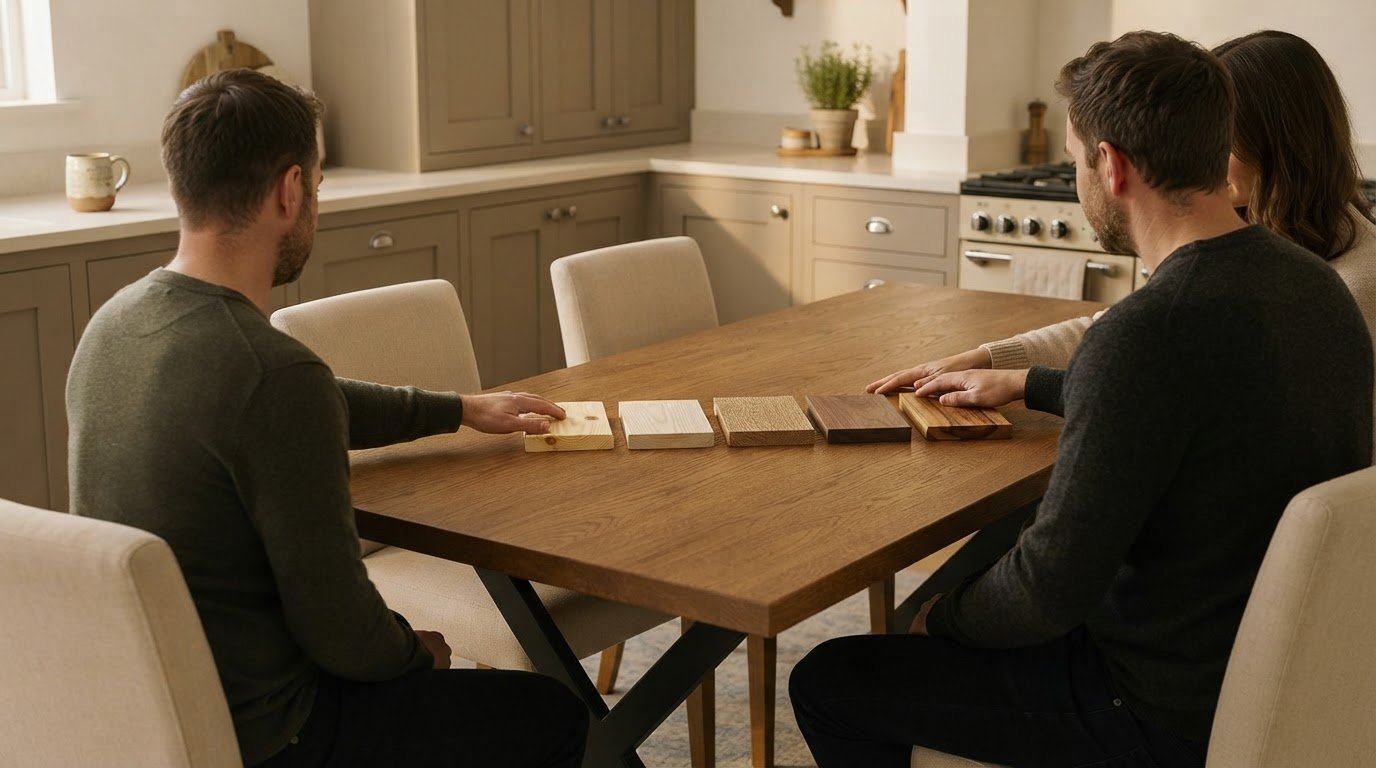
The best wood for a modern farmhouse table isn’t automatically the most rustic-looking option. Oak and pine are traditional choices, while ash, walnut and acacia offer other ways to shape the table’s character; the right fit depends on the table’s shape, your household’s needs and the finish you want.
A farmhouse table should suit the room and stand up to everyday meals, work and gatherings. This guide compares five woods through practical and visual considerations, including grain, colour and how each pairs with clean-lined bases and modern farmhouse finishes. You’ll get a clearer idea of what works for your space and the way you use the table.
Key Takeaways
- Match the timber’s grain and character to your table’s shape and scale, so the wood and base feel considered together.
- Choose a wood tone and texture that suit your household’s routines as well as the colours and materials already in your room.
- Oiled and waxed finishes bring out a natural farmhouse feel; the finish you choose also shapes the care the surface needs.
- Balance rustic grain with clean-lined furniture, or let a simpler setting give a more expressive table room to stand out.
- Explore how different table designs and a coordinating coffee table can carry the same modern farmhouse character through your home.
1. Wood choices for different table shapes and sizes
Oak and pine are familiar farmhouse table woods; ash and walnut bring different grain and colour. The best wood for a modern farmhouse table depends on its design, the room’s scale and how you’ll use the surface. With solid wood, natural grain and variation are part of the look, so knots and colour shifts contribute to the table’s character.
For dents and scratches, harder species generally have an advantage. White oak measures about 1,360 on the Janka hardness scale, ash about 1,320 and walnut about 1,010; acacia varies by species from 1,700 to 2,200. Hickory is harder still, at about 1,820. Pine is softer, so marks may show more readily. No timber is spill-proof: a protective finish and prompt cleaning matter more than species alone.
There isn’t one UK price for a solid wood farmhouse table. The cost depends on the species, top dimensions, construction, finish and preparation; reclaimed timber can also need extra work. Pine may suit a simpler, lighter look, while oak, ash and walnut offer different grain and colour choices. Compare like with like: a large top and a carefully finished surface involve different materials and labour from a smaller, simpler design.
Reclaimed wood brings visible history, such as weathered colour, old fastener marks and varied grain. These details can give a farmhouse table individual character and suit a rustic interior. The variation also means boards may differ in tone, condition and stability, so timber selection and preparation matter. Reclaimed wood is a good fit when you welcome variation rather than expect a uniform surface.
Solid wood responds to changes in humidity by taking in or releasing moisture, which can make boards expand, contract, cup or crack. To reduce movement, use well-seasoned timber, a sound construction that allows for natural movement, and a suitable finish on exposed surfaces. Keep the table away from direct heat and sudden moisture changes. Quartersawn lumber moves about half as much as flatsawn lumber, making board cut another consideration.
The table’s shape can help guide your wood choice. A long rectangular top displays continuous grain, while a round or compact top draws attention to the wood’s figure and edges. Oak or ash can give a large table clear grain; walnut adds a darker, richer tone. Choose board widths and grain patterns that suit the tabletop, rather than relying on the species name alone.
Wooden flooring can help tie the table into the room: hardwood, herringbone and pine are all farmhouse-style options. Keep the floor and tabletop within a similar warm or cool family, or use contrast deliberately. For example, a neutral oak floor can sit comfortably beneath walnut, while pine boards echo a lighter pine table. Leave enough natural wood visible to let the grain, finish and table shape read clearly.
2. Choosing wood for household needs and interior style
Start with how the room is used. In a family dining space used for meals, homework and gatherings, think about how the table’s grain will look alongside the rest of the interior. Oak has a familiar farmhouse grain, ash appears paler and more understated, and walnut brings a darker note that can complement warm neutral walls and furnishings. Consider the whole room, not just a wood sample.
Next, compare the timber’s colour with the furniture already in place. Keeping wood tones in the same warm or cool family helps the room feel connected. A warm oak table can sit naturally beside honey-toned floorboards, while paler wood can complement grey stone flooring. Contrast works too: a dark tabletop against light walls creates a focal point, while repeated tones create a simpler look.
Natural materials build the farmhouse aesthetic through texture as much as colour. Timber furniture can sit alongside stone flooring, wooden beams and shiplap wall details without needing elaborate decoration. In a kitchen-diner, an oak-effect tabletop can provide a warm centre against painted cabinetry. Keep generous areas of wood visible rather than covering the surface with accessories; the grain and craftsmanship then remain part of the room’s character.
Household needs also shape the choice. A compact dining nook may suit a lighter-looking top that doesn’t dominate the space, while an open-plan room can carry a more pronounced grain or deeper tone. If the table is an extension of a busy kitchen, consider how its colour relates to worktops, flooring and nearby cabinetry. A simple palette makes mismatched textures easier to balance; repeating one timber tone in a shelf or frame can help tie the pieces together.
Branches add vertical interest without taking up the space a large furniture piece would. Arrange a few in a tall vase on a sideboard or at the end of a console near the dining area. Their fine lines contrast with the broad tabletop. Keep the arrangement visually light, especially in a room with shiplap or exposed beams, so those details remain visible.
For a closer look at warm, visible grain, explore solid European oak furniture as one material reference. If you’re planning a table around a particular room, wood tone and interior style, get in touch to discuss your design.
In a farmhouse-style kitchen diner, an oak-effect top can serve as the focal point, bringing the table choice into the room’s overall style. Keep generous areas of natural wood visible so the table’s grain and craftsmanship remain prominent rather than obscured.
For a cohesive dining room, keep wood tones within the same warm or cool family. This gives you a practical starting point for coordinating the table with other wood in the room while keeping the natural surface central to the farmhouse look.

3. Farmhouse table features and finishes
A farmhouse tabletop often has a substantial wooden top, visible grain, knots and natural colour variation. Those details give oak, ash or pine a tactile presence, while the table’s finish determines whether the surface feels rustic, refined or somewhere between. Choosing the best wood for a modern farmhouse table means considering the timber and finish together, not treating them as separate decisions.
Lighter to medium wood tones can add warmth without making a dining room feel heavy. A pale oak surface, for example, keeps the grain visible and can suit a smaller room. Medium tones add depth and contrast with warm white walls, painted cabinets or dark chairs. Match the table to the floor for a quieter look, or make it a deliberate focal point.
The finish affects both appearance and care. The Mensa Table Company uses a high-wax-content oil finish on oak and Swedish pine, and protective oil on walnut. Wipe spills promptly, use coasters and placemats, avoid harsh chemicals, and clean with a damp cloth and mild soap. Re-oil periodically, following the care guidance for the particular table. Heat and stain resistance is limited, so use heat protection and avoid prolonged liquid exposure.
Glossy lacquer creates a smoother, more reflective appearance. That can sharpen the contrast between a rustic tabletop and clean-lined chairs, but it changes how the grain reads. A matte or low-sheen finish keeps reflections subdued and makes knots and tonal changes easier to appreciate. Before choosing, consider the room’s light: a bright window can make a reflective top more noticeable than a table in a softly lit dining room.
Thickness and construction both contribute to the table’s feel and durability. No single thickness guarantees strength: the material, sound construction and support all matter. A solid-wood top creates a substantial farmhouse profile, while well-fitted boards form a coherent surface. The base should support the top, and the construction should allow for natural wood movement.
Style the finished table with restraint. Leave the wood visible, then add accents such as linen, a ceramic bowl or dark metal candleholders. Black accents can echo chair legs without competing with the grain. To compare table designs, browse the dining table range. A considered mix of wood tone, finish and surrounding furniture brings farmhouse warmth to a modern interior.
Choosing a finish for a particular room can involve balancing grain, light and daily use. Discuss your table design and finish when you’re ready to shape those details.
4. Mixing clean lines with rustic textures
Modern farmhouse style works through contrast: a table with a rustic oak top can feel balanced beside clean-lined chairs and uncluttered cabinetry. The grain gives the room character, while simpler silhouettes prevent the overall feeling from becoming overly traditional. Oak suits this mix because it brings rustic charm without requiring ornate details. A straightforward rectangular top, for example, can sit comfortably with slim metal legs and a pared-back pendant.
Pair a strongly grained tabletop with quieter surroundings. If the wood has pronounced grain, knots or colour variation, choose chairs with simple frames and restrained upholstery. Linen cushions add softness without another busy pattern. Alternatively, a woven runner or textured wool seat can add tactile contrast to crisp modern furniture. This balance lets the table remain central.
A few rustic accessories can add warmth without cluttering the room. A ceramic bowl, linen runner or simple candleholder brings texture while leaving the wood visible. In a room with exposed beams or stone flooring, choose accessories that echo one material rather than repeating every rustic detail. A woven basket, for example, introduces natural texture while keeping the tabletop clear for meals.
A wooden sideboard can extend the farmhouse look while storing table linens, serving dishes and board games near the dining area. Choose a finish that relates to the table without matching every piece exactly. A slightly different wood tone adds depth; repeated black accents on chair legs, cabinet handles and a pendant can connect the room.
In a compact dining space, keep the contrast simple: a rustic oak tabletop, plain chairs and one textured accessory. An open-plan room can accommodate a stronger mix of wood, stone and modern lighting. Keep enough clearance around the table to move comfortably, and consider a bench along one side if chair backs would interrupt the layout.
A classic farmhouse look can lean heavily on rustic details, but modern styling needs breathing space. Leave some wall and tabletop areas visually quiet, then repeat a chosen accent in 2-3 places, such as black on the pendant, chair frames and sideboard hardware. That repetition links the pieces without making them identical. The result feels gathered over time, yet the clean lines keep the room current and composed.
5. Modern farmhouse table designs
Modern farmhouse design is a meeting of material and silhouette. A broad oak top can carry rustic grain, while a simple base gives it a cleaner outline. In a kitchen-diner, that contrast helps a solid-wood table feel purposeful rather than old-fashioned. Choose the shape first: a rectangular top suits a long room, while a round top softens a compact breakfast area. Then select a wood tone that supports the room’s existing palette.
Rectangular designs make a strong centrepiece in open-plan spaces. Their long edges echo kitchen islands and cabinetry, creating a clear visual line through the room. A lighter oak or ash top can keep the effect open beside painted cabinets; walnut introduces a deeper focal point against pale walls. Pair either choice with simple chairs, and let the timber provide the warmth instead of adding ornate legs or heavily patterned accessories.
Round and oval tables bring a different feeling to farmhouse interiors. Their curved edges can soften rooms dominated by straight kitchen units, square tiles or panelled walls. A round top in a warm wood tone feels welcoming in a breakfast nook, while an oval shape offers a more elongated profile without the sharp corners of a rectangle. Keep the base visually light, so the wood grain and curved outline remain easy to see.
The base is part of the design as well as the support. Clean metal legs sharpen the rustic character of an oak top, while a substantial wooden base gives the table a more classic look. Pair pronounced grain with a restrained frame, or choose a quieter top if the base has a bold geometric outline. This keeps the elements from competing.
Think about how the table will work with nearby furniture. A bench along one side creates a relaxed arrangement, while upholstered chairs at the ends add comfort and a more formal note. In a kitchen, a black table frame can echo cabinet handles. Keep other accents simple; repeating one detail helps separate pieces feel connected without matching every wood tone or finish.
For a cohesive modern farmhouse look, decide on three elements: table shape, wood tone and base style. A rectangular oak top with a simple dark frame feels different from a round walnut top on a sculptural base, even if both suit the same interior. Leave visible wood around a modest centrepiece, then use lighting and chairs to complete the setting. To shape a table design around your room and preferred materials, talk with us about your table ideas.
The Mensa Table Company: Coffee Tables
The Mensa Table Company offers coffee tables for bringing a considered wood-and-design choice into your living space. If you’re choosing a farmhouse dining table, a coffee table can carry a related sense of warmth through the adjoining room without needing to match every detail.
For dining, The Mensa Dining Table, The Spider Leg Dining Table and The X-Frame Dining Table offer distinct forms to consider alongside your preferred timber and interior style. Think about how the table shape, visible grain and surrounding furniture work together, then carry that feeling into the rest of your home.
When you’re ready to discuss a table for your space, contact The Mensa Table Company.
Make the table part of your home’s story
The best wood for a modern farmhouse table is the one that suits your room and everyday life. Think about the moments the table will hold, from morning coffee to family meals and gatherings with friends. Those routines can guide a choice that feels personal rather than simply fashionable.
A table can also set the direction for the room as it develops. Its character can inform your choices of chairs, lighting and smaller pieces over time. There’s no need for a perfectly matched set: thoughtful choices let natural materials and individual details sit comfortably together.
If you’re ready to explore a design that suits your home, contact The Mensa Table Company to discuss your ideas. A little thought now can help shape a welcoming place to gather for years to come.
Frequently Asked Questions
Which woods are best for a modern farmhouse dining table?
Oak, ash, walnut and pine all suit modern farmhouse dining tables, with the choice guided by the room’s palette and the look you prefer. The Mensa Table Company offers tables in these solid woods: ash, oak and walnut tops are 45 mm thick, while Swedish pine tops are 40 mm thick. Those details can help you weigh the tabletop’s presence alongside its grain and colour.
Is oak or walnut better for a modern farmhouse table?
Neither is universally better: oak suits a lighter, more traditional farmhouse look, while walnut brings a deeper, darker tone. Their care finishes differ too. The Mensa Table Company uses a high-wax-content oil finish on oak and protective oil on walnut. Choose the one that works with your room’s existing colours, then follow the care guidance for its finish to keep the surface looking considered through everyday use.
How do pine, oak, ash and walnut compare for durability and price in the UK?
For durability against dents and scratches, oak (about 1,360 Janka) and ash (about 1,320) are harder than walnut (about 1,010); pine is softer, so marks may show more readily. UK price depends on species, top size, construction, finish and preparation, though pine may suit a simpler, lighter look.

Leave a Reply