

Last Sunday, a client visited our workshop after years of enduring a dining table that felt more like a barrier than a gathering place. They had spent £1,200 on a mass-produced piece only to find their knees constantly clashing with the underside of the frame. It’s a common frustration that often stems from ignoring the standard dining table height of 75cm to 76cm. This measurement dictates whether your evening is spent in relaxed conversation or shifting uncomfortably in your seat.
We believe your dining table should be the quiet hero of your home; a place where memories are etched into the character of the wood. You shouldn’t have to worry about whether your bespoke chairs will slide under the surface or if a bench will leave your guests reaching too high for their drinks. We’ve crafted over 450 reclaimed timber tables, and we know that true comfort relies on the delicate balance between the tabletop thickness and the legroom beneath. This guide provides the precise ergonomic measurements you need to ensure your furniture offers a lifetime of comfort. We’ll explore the relationship between seating types and table heights, helping you choose a piece that fits your family’s unique rhythm perfectly.
Key Takeaways
- Learn why the standard dining table height in the UK typically falls between 71cm and 76cm to ensure your handcrafted centerpiece offers the perfect ergonomic balance for your home.
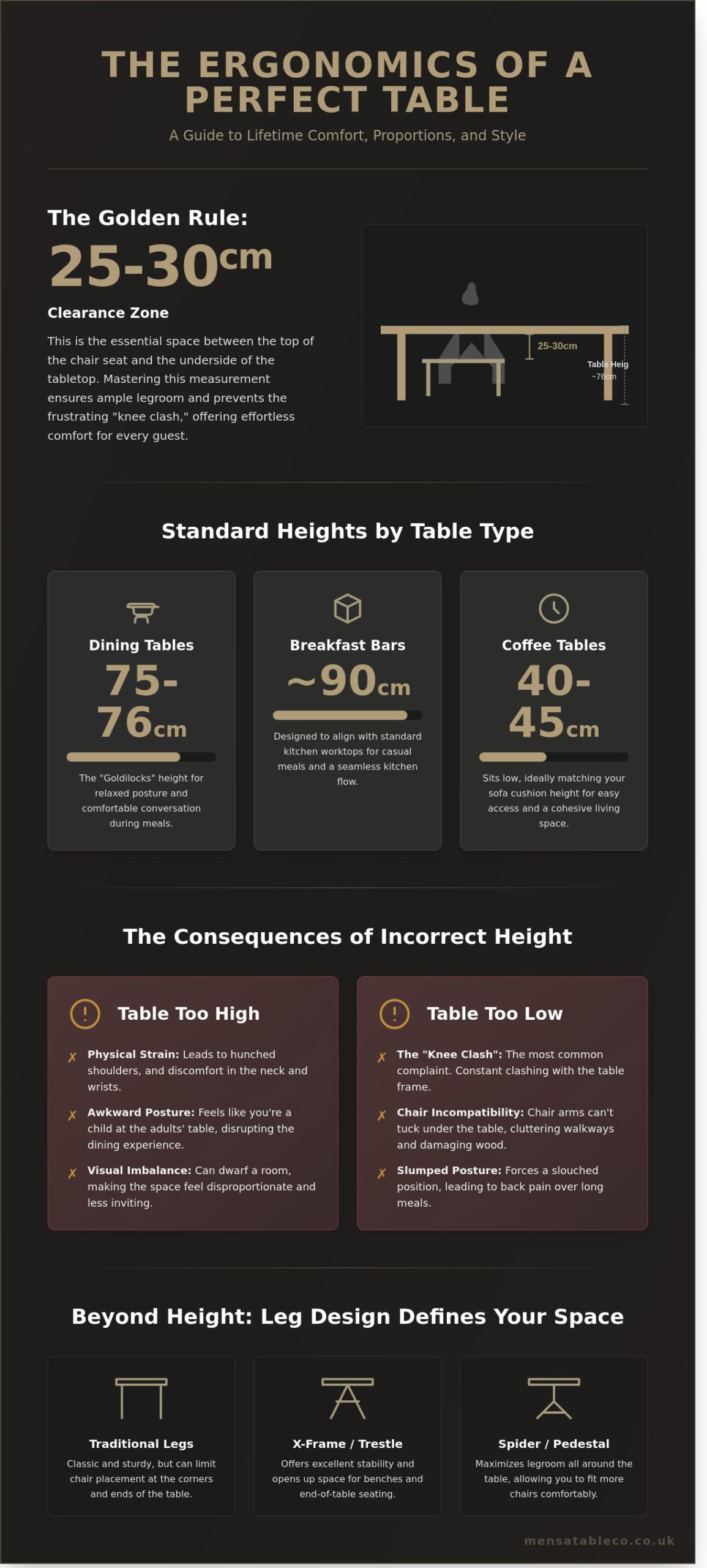
- Master the essential “25-30cm Clearance Zone” rule to provide your guests with effortless comfort and ample legroom during every gathering.
- Discover how bespoke leg designs, such as spider and X-frames, interact with your seating choices to define the flow and practical capacity of your dining area.
- Follow our practical guide to measuring your space accurately, accounting for the subtle impact of rugs and uneven floors on your table’s final proportions.
- Explore how choosing sustainable, reclaimed timber and artisanal craftsmanship creates a timeless legacy for your family’s most cherished meeting place.
Understanding Standard Dining Table Height and Why It Matters
Walking into our workshop, the first thing you notice isn’t just the scent of seasoned oak or the hum of the lathe; it’s the sense of proportion. We spend our days obsessing over millimetres because we know that the standard dining table height in the UK, which typically sits between 71cm and 76cm, is the foundation of home life. This range represents a delicate harmony between the human frame and the furniture we rely on. When a table is built correctly, it acts as a silent host. It allows your shoulders to relax and your arms to rest naturally, ensuring that the focus remains on the food and the company rather than a nagging ache in your lower back.
The psychology of height is equally vital. A table that sits at the correct level fosters a sense of equality and openness. It sets the stage for those long, winding conversations that last long after the plates are cleared. In our experience, the “human touch” of bespoke furniture is what makes the difference. We don’t just follow a blueprint; we consider how a specific piece of reclaimed timber will feel when you pull up a chair. While mass-produced pieces are rigid, handcrafted work allows for the subtle adjustments that make a table feel like a part of the family.
You can see this philosophy in action in well-designed hospitality spaces; many hotels in Taunton Somerset, for example, use carefully selected furniture to create a welcoming atmosphere where guests can relax and connect.
The History of the Standard 76cm Table
Looking back at the history of dining tables, we see a fascinating evolution from the heavy, high trestles of the 16th century to the refined surfaces of today. By the mid-1900s, 76cm became the “Goldilocks” height for the average British home. This measurement was designed to accommodate the 175cm average height of an adult while providing enough clearance for legs. As our homes shifted from having formal, closed-off dining rooms to multi-functional hubs, this 76cm standard proved its worth. It’s a height that works just as well for a child finishing their homework as it does for a festive family gathering.
The Consequences of Getting the Height Wrong
Choosing a table without considering the standard dining table height can lead to daily frustrations. If a table is even 3cm too high, you might experience persistent neck strain during a meal. Conversely, a table that is too low often results in the “clash” problem. This happens when the arms of your dining chairs cannot tuck under the timber frame, cluttering your walkway and damaging the wood. Beyond physical discomfort, there is an aesthetic cost. A table that sits too tall can easily dwarf a small room, making the proportions of your home feel skewed and the atmosphere less inviting.
- Physical Strain: Poor posture leads to discomfort in the shoulders and wrists.
- Chair Compatibility: Standard chairs require at least 20cm of clearance between the seat and the table underside.
- Visual Flow: Correct heights maintain the horizontal lines of a room, creating a sense of calm.
Every piece of wood we select has its own story, and we believe the height of your table should reflect your story too. Whether you are working with a compact kitchen or a grand dining hall, these measurements are the starting point for a lifetime of memories.
The Essential Measurements: Table Heights and Clearance Rules
Crafting a table from character-rich, solid oak requires more than just an eye for grain patterns; it demands a precise understanding of how the human body interacts with the timber. In our workshop, we often find that the difference between a comfortable evening and a cramped one comes down to a few millimetres. While the standard dining table height in the UK typically settles between 75cm and 76cm, these figures are only the starting point for a piece of furniture intended to last for generations.
Standard Heights by Table Type
- Dining Tables: For most traditional seating, a height of 75-76cm provides the ideal balance for the average adult. This height ensures that your elbows rest naturally on the surface without hunching your shoulders.
- Breakfast Bars: At 90cm, the breakfast bar aligns with standard UK kitchen worktops. This height is the sweet spot for kitchen stools, allowing for a casual morning tea or a quick perch while the kettle boils.
- Coffee Tables: These are designed to sit lower, usually between 40cm and 45cm. We recommend matching the table height to your sofa cushions to create a seamless visual line across your living space.
Seeing these different types in a real-world context can help solidify your choice. While we specialize in bespoke timber, browsing the extensive collections at a large furniture store like Wiegers XL can provide valuable inspiration for how different table heights and styles fit into various home settings.
Calculating Your Personal Clearance Zone
The most vital measurement for comfort isn’t actually the height from the floor, but the space left for your legs. The Clearance Zone is the vertical space between the chair seat and the underside of the table apron. To ensure you can cross your legs comfortably, we aim for a gap of 25cm to 30cm. This range aligns with the BIFMA Ergonomics Guideline, which provides the foundation for healthy, comfortable seating positions in both home and professional environments.
When you choose a solid wood table, the thickness of the timber plays a significant role in this calculation. A 40mm tabletop is standard, but many of our clients prefer the substantial, tactile feel of 50mm reclaimed wood. While that extra 10mm adds incredible character and a sense of heritage, it technically reduces your legroom if the overall standard dining table height remains fixed. We account for this by adjusting the leg length or the frame design to protect that crucial 30cm zone.
Traditional tables often feature a “skirt” or “apron” which is a wooden frame sitting directly under the tabletop. These can be bulky, often measuring 70mm in depth, which significantly eats into your clearance. In our workshop, we often employ The Mensa Table Company’s approach by using steel sub-frames or low-profile supports. By eliminating the heavy wooden apron, we provide maximum legroom without compromising the structural integrity of the heavy timber. If you are planning a unique space, you might find inspiration in our bespoke dining table collections where we balance these precise dimensions with the natural beauty of the wood.
Beyond the Surface: How Leg Design and Seating Styles Change the Equation
While the standard dining table height in the UK typically rests between 75cm and 77cm, the physical comfort of your guests depends heavily on the architecture beneath the timber. We’ve spent years in our workshop observing how different frames interact with the human form. A table isn’t just a flat surface; it’s a structural dance between the tabletop and the legs that support it. If the leg placement is poorly planned, even a table of the perfect height will feel cramped and restrictive during a long Sunday roast.
The “tuck-in” test is a vital part of our design process. This involves ensuring there’s a minimum of 20cm to 25cm of clearance between the seat of your chair and the underside of the table frame. Without this gap, guests will find themselves knocking knees against the support stretchers or the steel box sections. It’s about creating a space where movement feels fluid rather than forced.
Leg Styles: From Spider to U-Frame
The choice of leg style dictates where your guests can actually place their feet. We often recommend specific frames based on how many people you intend to host regularly.
- Spider Legs: These centralised supports are a favourite in our workshop. By anchoring the table from the middle, they provide 360-degree clearance. This allows you to squeeze in extra guests at the corners without anyone having to straddle a wooden post.
- X-Frame and A-Frame: These designs offer a rustic, industrial aesthetic. However, the 45-degree angle of an X-frame can eat into legroom at the table ends. To maintain comfort, we ensure the table overhang is at least 30cm to prevent the base from interfering with your feet.
- Trapezium and U-Frames: These frames use 50mm or 75mm box section steel to create a clean, modern look. Because the legs sit at the very ends of the table, they offer maximum width for tucking in wide chairs or multiple diners along the long side.
Benches vs. Chairs: An Ergonomic Comparison
Choosing between traditional chairs and handcrafted benches changes the ergonomic requirements of your dining set. Most standard dining chairs feature a seat height of 46cm to 48cm. In contrast, we often craft our benches to sit slightly lower, usually at 45cm. This 1cm to 3cm difference might seem small, but it’s essential for the “slide-in” factor.
Benches require a different relationship with the standard dining table height because they lack the individual mobility of a chair. You don’t pull a bench out; you slide along it. If the table frame is too low or the bench is too high, your thighs will catch on the table’s edge. We design our bespoke benches to tuck fully underneath the tabletop when they’re not in use. This saves floor space in smaller UK homes while ensuring that when you do sit down, the proportions feel natural and relaxed. It’s this focus on the fine details of the grain and the frame that turns a simple meal into a comfortable family memory.
Measuring Your Space: A Practical Guide to Finding Your Ideal Height
Measuring for a new table is about more than just numbers on a metal tape. It is about how your family flows through the heart of your home. We suggest starting with a clear floor and a roll of masking tape. Mark out the footprint of the table on your floorboards or tiles. To truly test the vertical space, stack cardboard boxes to a height of 75cm. This simple trick lets you feel the standard dining table height in your actual environment before we start selecting the timber for your build.
Think about the vertical flow of the room. A table acts as an anchor, and its height dictates how your lighting and decor interact. If you have a low-hanging pendant light, it should ideally sit 75cm to 90cm above the tabletop. This creates a focused, intimate pool of light that brings people together. If the table is too high or too low, that carefully planned “centrepiece” effect is lost, and the room can feel disjointed.
The Floor Factor: Rugs, Tiles, and Timber
Your flooring choice can subtly alter how your furniture sits. A thick 15mm pile rug effectively lowers your table by that same amount. If your chairs are tucked onto the rug but the table legs sit on the bare floor, you lose precious knee clearance. In older UK properties, floors often slope. We’ve seen Victorian terrace floors with a 12mm dip from one side of the room to the other. To solve this, our handcrafted industrial frames often include discreet adjustable feet. These allow you to level the surface perfectly, ensuring your morning coffee stays level even if your floorboards have shifted over the last century.
Bespoke Adjustments for Unique Needs
We often work with families where the standard dining table height of 75cm simply isn’t the right fit. For a household where the average height is over 190cm, we might suggest increasing the frame to 77cm or 78cm to prevent slouching. Conversely, some clients prefer a lower table at 72cm to create a relaxed, lounge-style dining experience that encourages guests to linger over wine for hours. We don’t believe in a one-size-fits-all approach because every home has a different rhythm. Every millimetre matters when you’re creating a piece intended to last for generations.
Choosing the right dimensions ensures your table remains a place of comfort rather than a source of back strain. If you’re ready to design a piece that fits your home’s unique proportions, explore our bespoke dining table options to find your perfect match.
The Mensa Philosophy: Crafting Tables for Lifetime Comfort
We believe that a dining table is far more than just a functional surface. It’s the steady anchor of a home; a place where the digital world fades away and the human touch takes over. Our team of makers in the workshop approaches every commission with a deep respect for the material and the person who will eventually sit at it. While we often adhere to the standard dining table height of 76cm to ensure universal comfort for most UK seating, every other aspect of our work is driven by your specific needs and the unique character of the wood.
Sustainability sits at the core of our workshop. We choose to work with reclaimed timber because it possesses a soul that new wood simply cannot replicate. These boards, often salvaged from 19th-century industrial structures, have already stood the test of time. By repurposing this timber, we reduce the demand for fresh felling and give a second life to materials that carry a rich, textured history. You aren’t just buying a table; you’re preserving a piece of heritage that has already survived a century of use.
Quality That Lasts Generations
Handcrafted furniture offers a level of structural integrity that flat-pack alternatives cannot match. Mass-produced items often rely on cheap glue and cam-locks that fail when the wood naturally expands. We understand that timber is a living material. Our construction methods allow for natural timber movement, ensuring the wood can breathe without warping or cracking as the seasons change. There’s a profound sensory joy in running your hand across a solid grain that’s been finished with natural oils. It feels substantial, permanent, and honest.
Your Table, Your Story
We invite you to become an active participant in the creation of your furniture. The bespoke journey begins with a conversation about how you live, whether you’re hosting large family gatherings or need a quiet space for morning coffee. While the standard dining table height provides a reliable baseline for comfort, we can adjust our designs to suit your specific ergonomic requirements or heirloom seating.
A table that fits your home perfectly becomes the backdrop for a lifetime of memories, from the chaos of Christmas dinners to the quiet focus of a child’s homework. We take pride in knowing that our work will be there for it all. If you’re ready to create a centerpiece that reflects your values and your style, you can explore our range of handcrafted dining tables and start your journey with our team of makers today.
Bringing Lasting Comfort to Your Home’s Centrepiece
Finding the right standard dining table height isn’t just about following industry rules; it’s about ensuring every Sunday roast and morning coffee feels effortless. While most UK tables sit between 75cm and 76cm, the true magic happens when you account for the 30cm of clearance needed for your legs to move freely. We believe a table should fit your life perfectly, which is why our team handcrafts every piece in our UK workshop using sustainable and reclaimed timber. These materials carry a unique history through their grain and texture, creating a legacy that mass-produced furniture simply can’t match.
We take pride in offering bespoke sizes tailored to your home, ensuring your furniture provides ergonomic support for generations. Our makers focus on the human touch in every joint and finish, moving at a deliberate pace to guarantee quality that lasts. You deserve a space that invites connection and celebrates the natural beauty of wood. Discover your perfect handcrafted dining table and start creating memories around a surface built just for you.
Frequently Asked Questions
What is the standard dining table height in the UK?
The standard dining table height in the UK is typically between 75cm and 76cm from the floor to the top of the table surface. This measurement ensures that the average adult can sit comfortably with their feet flat on the ground. Our makers often aim for the 750mm mark because it accommodates the majority of seating styles found in British homes. It’s a height that encourages a relaxed posture, perfect for those long Sunday lunches that stretch into the evening.
How much space should be between the chair and the table?
You should aim for a gap of 25cm to 30cm between the seat of your chair and the underside of the table. This specific clearance provides enough room for guests to cross their legs without hitting the timber frame or apron. If your table features a deep support rail, you might need to choose chairs with a lower profile. Ensuring this 30cm space prevents the seating area from feeling cramped during family gatherings.
Are all dining chairs a standard height?
Most dining chairs feature a seat height of 45cm to 48cm, which aligns with the UK’s 76cm table standard. While designs vary from rustic benches to upholstered carvers, this range remains consistent across 90% of British furniture manufacturers. We recommend measuring from the floor to the highest point of the seat cushion to be sure. A 46cm seat height usually offers the most ergonomic fit for our bespoke reclaimed wood tables.
Can I have a dining table made to a custom height?
Yes, we can craft a dining table to any custom height that suits your specific needs or your home’s unique architecture. While the standard dining table height works for most, some clients prefer a 72cm height for a lower profile or 80cm to accommodate taller family members. Our workshop team takes pride in tailoring every millimetre of the build. This ensures your furniture becomes a comfortable, lifelong investment for your family.
Does the thickness of the tabletop affect the height I should choose?
Tabletop thickness significantly impacts your comfort because a 50mm thick slab reduces the available legroom compared to a 25mm board. If you choose a chunky, reclaimed timber top, you must ensure the total height still allows for that essential 30cm leg gap. We often adjust the leg length on our 40mm character oak tops. This keeps the surface at 76cm while maintaining plenty of space for your knees underneath.
How high should a bench be for a standard dining table?
A bench for a standard dining table should be 45cm high to match the comfort and utility of a traditional chair. This height allows users to tuck the bench fully under the table when it’s not in use, which is a brilliant space-saving trick for smaller UK kitchens. We handcraft our benches to 450mm, ensuring they provide a sturdy and communal seating experience. They pair beautifully with our 75cm high reclaimed dining sets.
Why does my dining table feel too high?
Your dining table likely feels too high because your chair seats are lower than the standard 45cm or the table exceeds 77cm. Even a 2cm difference can make a person feel like they’re reaching up to eat, which quickly strains the shoulders. If your chairs have soft springs that sink 5cm when you sit, the table will naturally feel much taller. Checking these two measurements usually solves the mystery of the discomfort.
What is the difference between counter height and dining height?
The main difference is that counter height tables stand at 90cm while dining tables sit at 75cm. Counter height furniture is designed to match the level of a standard UK kitchen worktop, making it ideal for casual breakfasts or food prep. Dining height is more traditional and better suited for formal evening meals. You’ll need 60cm stools for a counter, whereas a dining table requires 45cm chairs for the best fit.

Leave a Reply