
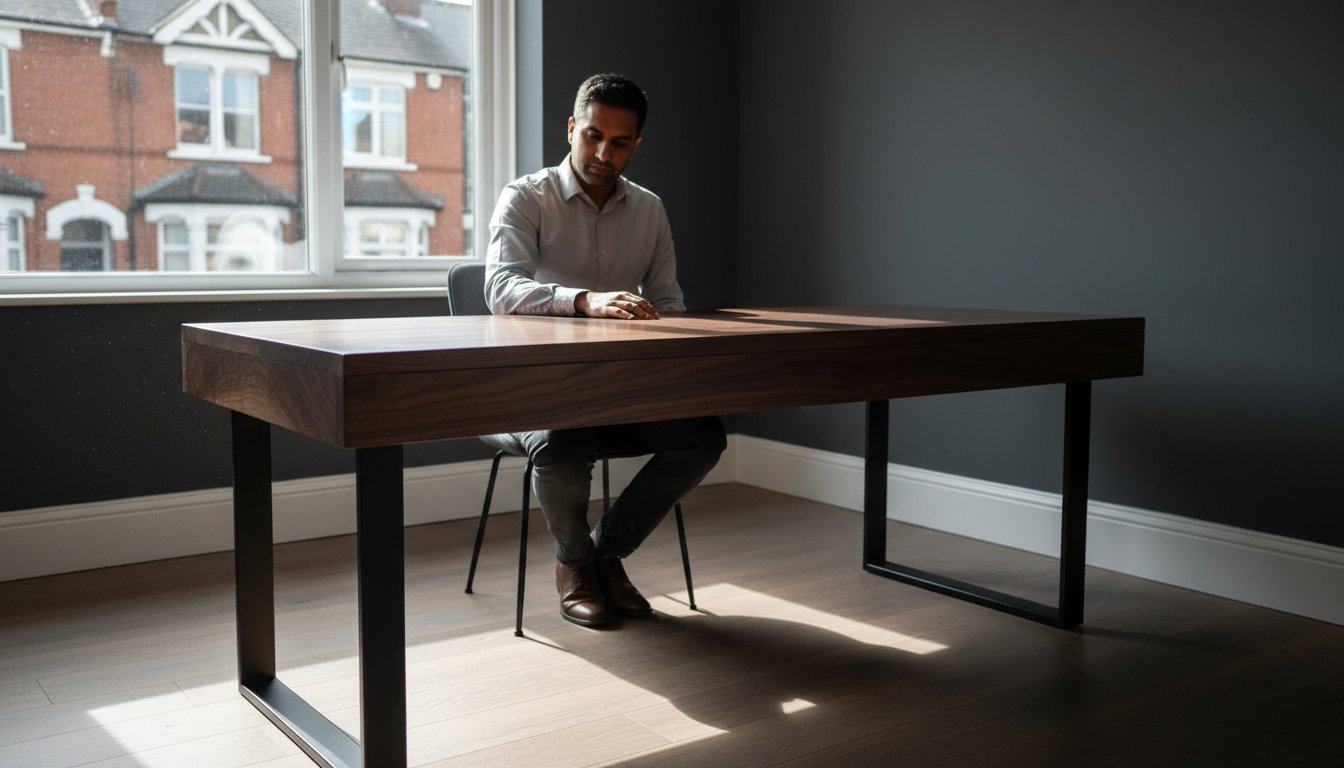
What if the furniture you touch for forty hours a week was built to outlive your career instead of peeling at the edges after a single season? Many of our clients come to us after being let down by flimsy flat-pack alternatives that look tired within months. You deserve a walnut desk that reflects the quality of your work, offering a tactile connection to the natural world through its deep, swirling grains and honest, solid timber construction. Because American Black Walnut takes between 50 and 75 years to reach its prime harvest age, the density and character it offers are simply impossible to replicate in a factory.
We know you’re looking for a workspace that feels permanent and grounded. In this guide, we’ll show you how to distinguish true British craftsmanship from high-street imitations and why solid timber is the only choice for a legacy piece. You’ll discover how to select a desk that balances artisanal beauty with the durability needed for daily use. We’ll also walk you through the sustainable practices our UK workshop uses to ensure every piece of wood is respected, helping you create an office that inspires productivity and lasts for generations.
Key Takeaways
- Learn why solid walnut is the gold standard for home furniture, offering a depth of colour and durability that mass-produced laminates simply cannot replicate.
- Discover how the “slow furniture” movement and artisanal hand-finishing techniques preserve the unique character and tactile texture of every timber slab.
- Understand the long-term investment value of a handcrafted walnut desk and how its prestige compares to other traditional British hardwoods like oak.
- Gain expert guidance on measuring your home office to ensure your new furniture achieves the perfect balance between functional workspace and aesthetic room flow.
- Explore the importance of the “human touch” in British manufacturing and how our dedicated makers create timeless pieces intended to last for generations.
The Timeless Appeal of a Walnut Desk: Why Solid Timber Matters
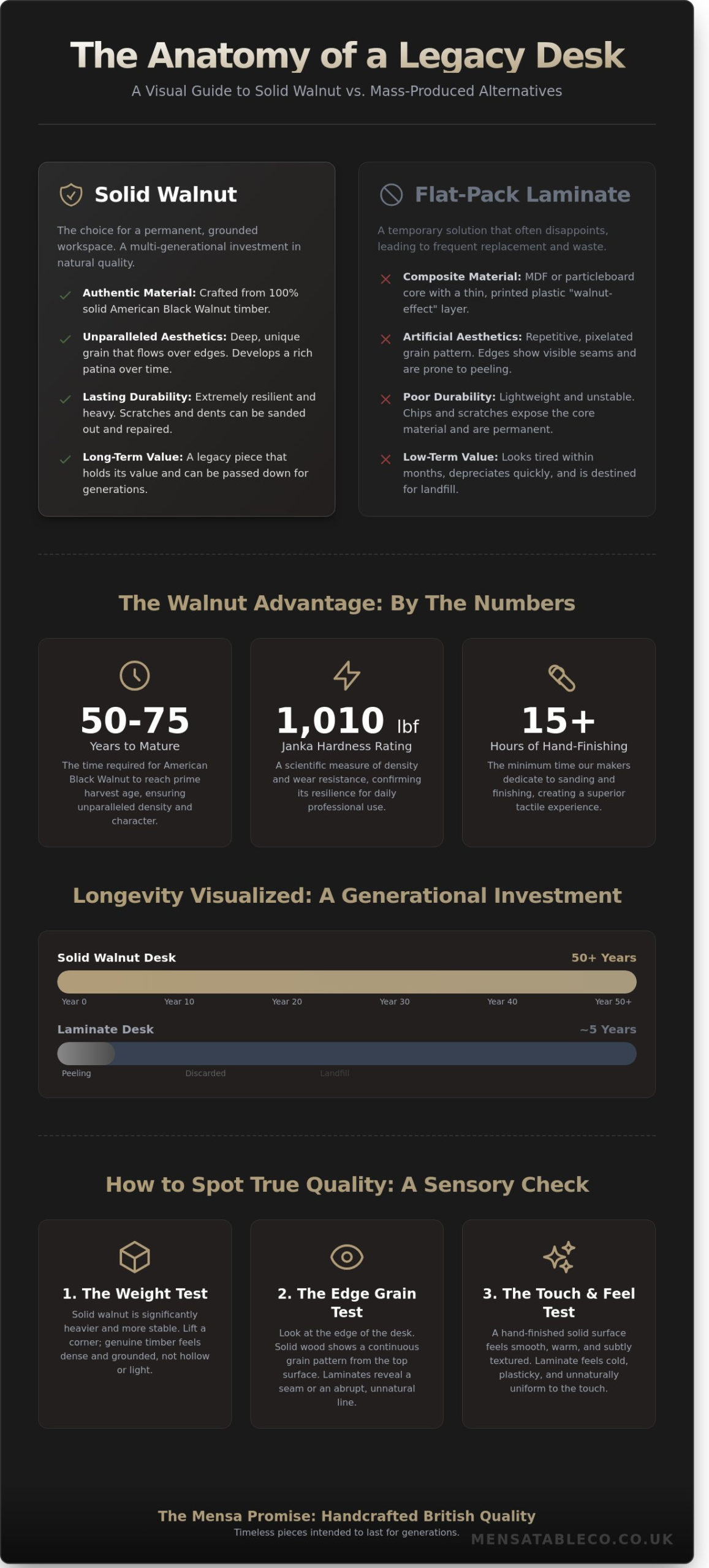
Choosing the right material for your workspace is a decision that balances aesthetics with long-term utility. We believe that a walnut desk represents the pinnacle of this balance. As a premium hardwood, walnut is celebrated for its deep, chocolatey tones and a complex grain structure that ranges from straight lines to dramatic burls. When you run your hand across a surface crafted from American Black Walnut timber, you aren’t just touching furniture; you’re connecting with a material that has a Janka hardness rating of approximately 1,010 lbf. This density ensures that your desk remains resilient against the daily rigours of professional life for 50 years or more.
There is a living character in solid wood that mass-produced alternatives simply cannot replicate. While walnut-effect laminates rely on a printed, repetitive image of wood grain, every plank of genuine timber is unique. In our workshop, we see how the natural variations in the wood tell a story of the tree’s growth, influenced by the soil and the seasons. This authenticity transforms a piece of furniture into a legacy. Owning a solid timber piece offers a profound emotional value. It doesn’t just sit in your office; it ages with you, developing a soft lustre and a unique patina that only improves with time and sunlight.
Walnut vs. Walnut Effect: Spotting the Difference
Identifying genuine solid timber is a sensory experience that starts with weight and ends with the fine details. A solid walnut desk is significantly heavier and more stable than a desk made from MDF with a thin veneer. You can spot the truth by looking at the end grain; on a solid piece, the grain patterns will flow continuously from the top surface down through the edge. Laminate often shows a distinct break or a thin seam where the plastic meets the board. Longevity is the true divider here. While a laminate desk might last five years before the edges peel, solid walnut is a multi-generational investment. If you accidentally scratch the surface, you can sand it back and re-oil it. A chip in a laminate desk is a permanent scar that exposes the unsightly compressed fibres beneath.
The Psychology of a Natural Workspace
Creating a productive environment involves more than just ergonomics; it involves the senses. Biophilic design principles suggest that incorporating natural elements into our indoor spaces can have a measurable impact on our well-being. A 2010 study by the University of British Columbia found that the presence of natural wood surfaces in an office environment can lower sympathetic nervous system activation, effectively reducing stress levels in the user. The organic warmth of walnut creates a sanctuary that feels far more inviting than the clinical coldness of metal or plastic. “A solid walnut desk does not just occupy a room; it anchors it with the quiet confidence of the natural world.” By surrounding ourselves with natural textures, we foster a sense of calm and focus that is essential for deep work.
Handcrafted Excellence: How We Build Character into Every Desk
Creating a walnut desk isn’t a task we rush. It begins in the timber yard, where our team spends hours sorting through raw slabs to find the perfect match. We look for a balance between the deep, chocolate tones and the swirling patterns that give the wood its soul. Every piece of timber has a history; our job is to listen to it and ensure the grain flows naturally across the surface. This careful selection process prevents jarring colour shifts and ensures your workspace feels like a cohesive piece of art.
We embrace the philosophy of “slow furniture,” a movement that rejects the frantic pace of factory lines. According to technical data on the characteristics of American Black Walnut, this species is prized for its shock resistance and dimensional stability. However, it takes a human touch to bring these qualities to life. Hand-finishing produces a superior texture that machines simply cannot replicate. We spend up to 15 hours on the sanding and finishing stages alone, ensuring every inch of the wood feels soft to the touch while remaining durable enough for daily use.
The Signature Mensa Leg Styles
The foundation of every walnut desk we build is as important as the timber itself. We’ve designed our steel frames to act as structural art, providing a contrast to the organic warmth of the wood. You can choose from three distinct styles:
- The Spider Leg: This is a bold, modern statement. Its central mounting point offers 360 degrees of legroom, making it ideal for those who move around their workspace frequently.
- The X-Frame: A nod to industrial heritage. These legs provide rock-solid stability, easily supporting heavy setups with multiple monitors or desktop PCs.
- The U-Frame and Trapezium: These minimalist designs are for the purists. They provide a clean, architectural silhouette that lets the natural beauty of the walnut desktop take centre stage.
Bespoke Joinery and Finishing Touches
Our craftsmen use traditional joinery techniques to ensure your desk remains stable for generations. We don’t rely on cheap fasteners; instead, we use methods that allow the wood to move naturally with changes in humidity. We protect our desks with a blend of natural oils and waxes. These finishes penetrate deep into the fibres to protect against spills while allowing the wood to breathe. You’ll notice the difference the moment you sit down. A hand-sanded edge, rounded over through four distinct stages of grit, feels infinitely more comfortable against your forearms than a sharp, machine-cut corner. It’s these small, deliberate details that make our furniture a joy to use every day. If you’re ready to start your journey, you can view our full range of designs to find the perfect fit for your home office.
Solid Walnut vs. Other Timbers: Understanding Your Investment
Choosing the material for your workspace is a decision that balances tactile pleasure with long-term durability. While oak and pine serve their purposes in many British homes, a walnut desk occupies a unique space in our furniture tradition. We often regard it as the most prestigious timber available in our workshop because of its rich, chocolatey tones and the intricate, swirling patterns of its grain. It feels substantial and permanent, qualities that define a truly professional environment.
Walnut vs. Oak: A Style Comparison
Oak brings a sense of bright, traditional charm to a room, often leaning into a rustic or farmhouse aesthetic with its honeyed hues. In contrast, walnut offers a sophisticated executive presence that anchors a room. It fits perfectly within the “dark academia” aesthetic or the clean, minimalist lines of mid-century modern design. When you’re looking at your existing decor, consider your flooring. A dark walnut desk creates a stunning focal point against lighter oak floors, providing a contrast that feels intentional and curated rather than accidental.
The physical properties of these woods differ too. Walnut is slightly softer than oak but remains incredibly stable, meaning it’s less prone to warping over time. This stability is vital when you’re planning an ergonomic workspace setup where every millimetre of level surface matters for your comfort and posture. You want a surface that stays true, year after year.
You’ll notice that walnut carries a higher price tag than oak or pine. This isn’t arbitrary. Walnut trees grow much slower than many other hardwoods, often taking up to 50 years to reach a harvestable size. This slow maturation creates a denser, more figured grain, but it also means the supply is naturally limited. In the UK market, the demand for high-quality walnut consistently outpaces the available timber, making it a true investment in craftsmanship rather than a simple purchase.
For those who prefer a more storied appearance, reclaimed timber offers an alternative with deep, visible character. These pieces often feature old nail holes or scars from their previous lives, telling a history that new timber simply cannot replicate. We find that many clients love the juxtaposition of a rugged, reclaimed top paired with a refined walnut frame, blending the old world with the new.
Why Walnut is the Sustainable Choice
We believe in a “buy once, buy well” philosophy that values substance over flashy marketing. Choosing a solid wood desk is an act of environmental responsibility because the timber acts as a carbon store for its entire life. While mass-produced desks are destined for landfill, a solid walnut desk is a legacy piece that can be passed down through generations. It’s a rejection of the “fast furniture” culture that sees over 670,000 tonnes of furniture discarded every year in the UK. By choosing a piece built to last, you’re investing in the future of your home and the planet alike.
Designing Your Workspace: Finding the Perfect Size and Style
A solid walnut desk brings a sense of permanence to a room, but it requires a careful balance between the physical footprint of the furniture and the rhythm of your daily movement. We suggest starting with a simple floor plan before committing to a specific size. A desk that looks beautiful in a workshop can easily overwhelm a small home office if it doesn’t have room to breathe. You should measure your available floor space and subtract at least 90 centimetres from the back edge of where the desk will sit. This allows your office chair to glide freely, ensuring the room feels like a sanctuary rather than a cramped cubicle.
Handcrafted leg styles act as the architectural foundation of your workspace and should reflect the soul of your home. For a modern flat in London, slim steel frames provide a minimalist, industrial edge that keeps the room feeling airy and light. In a traditional country cottage, solid timber legs offer a grounded, heritage feel that honours the history of the property. You should also consider where the light falls throughout the day. Placing your desk at a right angle to a window allows natural light to highlight the deep, chocolatey swirls of the grain without creating a harsh glare on your monitor. The way the timber catches the sun at 3 PM can transform a simple afternoon task into a moment of quiet appreciation for the natural world.
Ergonomics Meets Aesthetics
We craft our desks to a standard height of 73 centimetres. This height pairs perfectly with most high-quality office chairs, ensuring your elbows sit at a comfortable angle while you type. Depth is just as vital as width for a productive day. A depth of 80 centimetres provides ample room for a large monitor and a keyboard, while still leaving space for your favourite ceramic mug and a physical notebook. We manage cables by hand-cutting discreet ports into the rear of the timber. It’s a simple solution that keeps your workspace tidy without disrupting the organic flow of the handcrafted surface.
Customising Your Bespoke Desk
Every home has its own unique character, and sometimes a standard size won’t fit the story of your space. Our team of makers enjoys the challenge of crafting pieces for awkward alcoves or specific corner requirements. You can specify dimensions down to the millimetre to ensure your furniture fits your life perfectly. To create a truly cohesive environment, we can also craft matching walnut benches or low coffee tables. This creates a unified visual story throughout your home office suite, turning a functional room into a curated gallery of natural beauty and sustainable craftsmanship.
If you have a specific vision for your home office, explore our range of bespoke tables to find a piece that fits your space perfectly.
The Mensa Promise: Handcrafted British Quality
We believe a desk is far more than just a flat surface for a laptop. It’s the place where your most important ideas take shape and where your professional legacy is built. At The Mensa Table Company, our commitment to artisanal UK manufacturing means every walnut desk we create begins as a deliberate conversation between the maker and the timber. We don’t rely on anonymous assembly lines or automated factories. Instead, we embrace a slower, more thoughtful process that values the time it takes to achieve true excellence. From the very first sketch on our workshop floor to the final delivery at your home, our hands guide every single step.
Our Workshop Philosophy
We treat every piece of wood as a unique story waiting to be told. The deep, swirling grain of a solid walnut desk isn’t just a decorative pattern; it’s a living record of decades of growth and natural history. Our team of makers values substance over flashy marketing or temporary trends. We focus our energy on creating new, durable furniture that stands the test of time rather than restoration projects. This dedication ensures that every joint is precise and every finish is smooth. We choose to build pieces that will be as sturdy in 50 years as they are today.
In our workshop, you won’t find any flat-pack shortcuts, flimsy cam-locks, or thin veneers. We’ve seen how mass-produced furniture fails under the pressure of daily use, and we refuse to compromise on structural integrity. Choosing a Mensa desk is an investment in British craftsmanship that directly supports your productivity. When your environment feels solid and intentional, your work follows suit. We provide the physical foundation so you can focus entirely on your best output.
Bringing a Mensa Desk Into Your Home
What sets us apart is the reassurance of buying from a local, dedicated team of craftsmen. When you order from us, you aren’t just another number in a database. You’re supporting a small-scale business that takes immense pride in the “human touch.” Our delivery and installation process reflects this care. We don’t simply leave a heavy box on your doorstep for you to struggle with. Our team ensures your new furniture is positioned perfectly in your workspace, allowing you to appreciate the texture and scent of the wood immediately.
There is a quiet confidence that comes from knowing exactly who made your furniture. You can feel the difference in the weight of the timber and the silkiness of the hand-applied oil finish. It’s a connection between maker and user that mass-market retailers simply can’t replicate. We invite you to bring a piece of our workshop into your daily life and experience the warmth of real wood.
Explore our collection of handcrafted walnut desks and discover the difference that genuine British quality makes to your home office.
Bring Lasting Character to Your Home Office
A workspace should be more than a functional necessity. It’s the anchor of your productivity and a reflection of your personal style. By choosing a walnut desk, you aren’t just buying furniture; you’re welcoming a piece of sustainable history into your home. Each slab of timber is selected for its unique grain pattern, ensuring that no two desks leaving our UK workshop are ever identical. Our craftsmen spend hours refining every edge to ensure the natural beauty of the wood shines through.
Whether you’re drawn to the industrial strength of our Spider legs or the clean, architectural lines of our X-Frame designs, our furniture is built to stand the test of time. We focus on slow, deliberate construction that honours the raw material. This commitment to quality means your desk will remain a sturdy, inspiring centrepiece for your daily tasks for many years to come. It’s time to move away from disposable, flat-pack alternatives and embrace the tactile warmth of solid British craftsmanship.
Browse our handcrafted walnut desks and find your workspace centrepiece
We look forward to helping you create a space where your best work can truly flourish.
Frequently Asked Questions
Is walnut wood good for a desk?
Walnut is an exceptional choice for a workspace because it offers a perfect balance of density and natural beauty. It ranks 1,010 on the Janka hardness scale, which means it’s tough enough to resist the daily knocks of office life while remaining stable enough to prevent warping. Our makers value it for this structural integrity, ensuring your desktop remains a flat, reliable surface for decades.
How do I care for a solid walnut desk to ensure it lasts?
You should dust your walnut desk weekly with a soft, lint-free cloth and apply a high-quality furniture wax every 6 to 12 months. It’s best to keep the wood away from direct heat sources like radiators, as temperatures exceeding 21 degrees Celsius can cause the timber to dry. We always suggest using coasters for your tea or coffee to protect the hand-applied finish from heat rings.
Will the colour of my walnut desk change over time?
Walnut is one of the few woods that naturally lightens over time, typically developing a warm, honey-brown patina after 5 to 10 years of use. Unlike oak which darkens, walnut’s deep chocolate tones mellow as they’re exposed to ambient light. You can ensure an even transition by occasionally moving items on your desk so the wood ages consistently across the entire surface.
Do I need a desk mat to protect a solid wood desktop?
A desk mat isn’t mandatory, but it provides a helpful shield against the pressure of ballpoint pens and the constant movement of a computer mouse. If you spend 8 hours a day at your station, a mat prevents the natural oils from your skin from wearing down the finish in specific spots. It’s a simple way to preserve the pristine texture of the grain while you work.
What is the difference between American Walnut and European Walnut?
American Black Walnut generally features a darker, more uniform colour, while European Walnut is known for its lighter tones and more decorative, swirling grain patterns. European varieties often show more contrast between the heartwood and sapwood. In our workshop, we select the timber that best tells a story, though both species provide the incredible durability required for high-end furniture.
Can I have a walnut desk made to a custom size?
We specialise in creating bespoke pieces that are tailored to the exact dimensions of your home office. Whether you require a compact 100cm surface for a quiet corner or a 200cm executive station, our team handcrafts each walnut desk to your specifications. This personal approach ensures your furniture serves your specific needs rather than forcing you to adapt to a mass-produced standard.
Is solid walnut furniture better than walnut veneer?
Solid walnut is a far superior investment because it can be sanded and restored multiple times over a lifespan of 50 to 100 years. Veneer consists of a thin 1mm layer of wood glued over MDF, which often begins to peel or chip at the edges after just 3 to 5 years. Choosing solid timber means you’re buying a legacy piece that grows more beautiful with age.
How much weight can a handcrafted walnut desk support?
A solid walnut desk built with traditional mortise and tenon joinery can safely support between 75kg and 100kg of equipment. This strength easily accommodates heavy ultrawide monitors, desktop towers, and stacks of reference books without any risk of the wood bowing. We take great pride in the sturdiness of our frames, ensuring they provide a rock-solid foundation for your most important projects.

Leave a Reply