
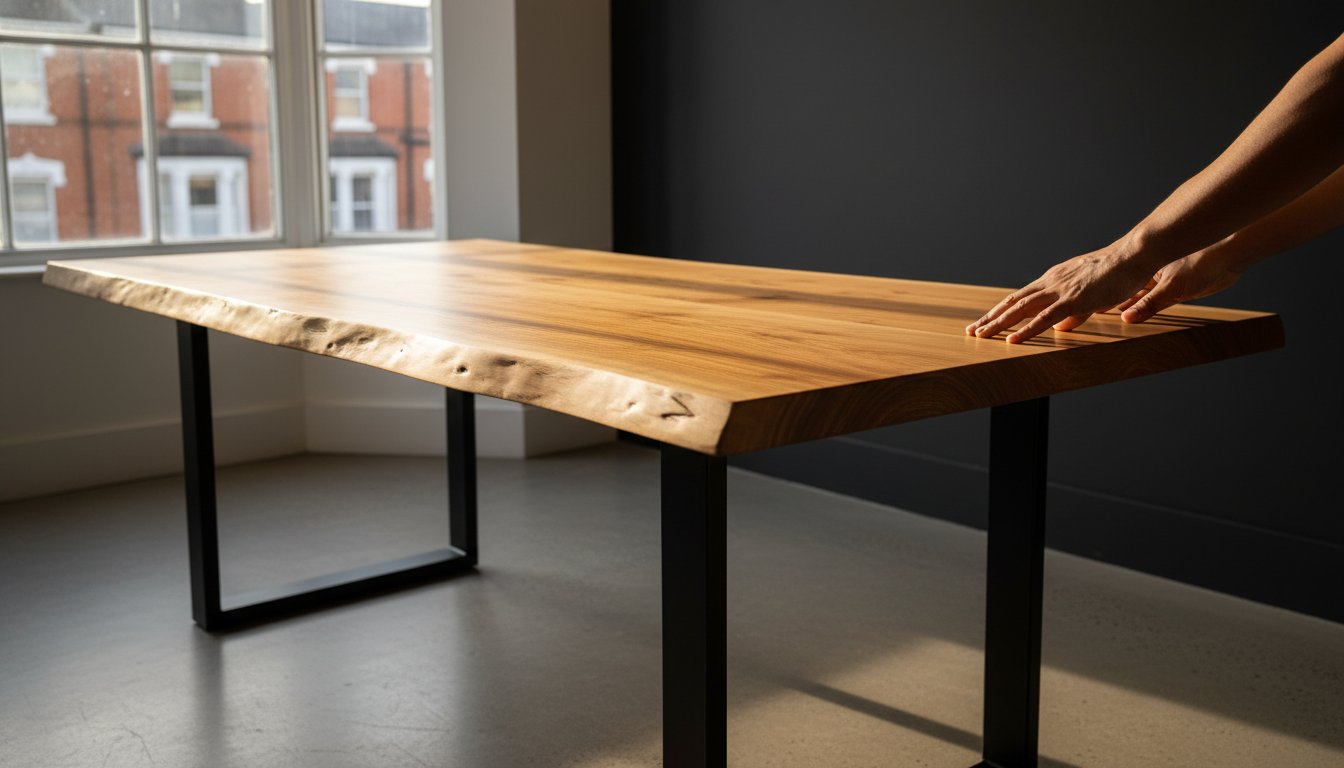
A dining table shouldn’t be a temporary fixture that ends up in a landfill after five years of light use. While a 2023 report suggests over 22 million pieces of furniture are discarded in the UK every year, your home deserves a legacy piece that grows more beautiful with age. You likely feel that a generic, mass-produced item lacks the character your space needs, yet the fear of timber movement or finding a specific size that fits your dining room often stalls the search. We understand that hesitation. Selecting a handmade dining table is about more than just picking a surface; it’s about inviting a piece of the natural world into your daily rituals.
In this guide, we’ll help you discover how to choose a handcrafted centrepiece that blends artisanal timber with a design that never goes out of style. You’ll gain expert advice on why certain timber types resist cracking and how our workshop’s slow-fashion approach ensures your investment remains stable for generations. We’ll walk through the maker’s process, from the first selection of the grain to the final finish, giving you the confidence to commission a piece that perfectly fits your room and your life.
Key Takeaways
- Understand why an authentic handmade dining table represents a lasting legacy, contrasting the longevity of artisanal joinery with the fleeting nature of mass-produced alternatives.
- Explore the sensory world of timber species and the crucial role of seasoning in preserving the natural character and structural integrity of your bespoke centrepiece.
- Gain insight into the engineering behind leg designs, ensuring your table possesses both a striking silhouette and the steadfast stability required for generations of use.
- Learn the practical framework for sizing your furniture, including the essential “elbow room” rule to create a perfectly balanced and inviting dining environment for your guests.
The Value of a Handmade Dining Table: Beyond the Surface
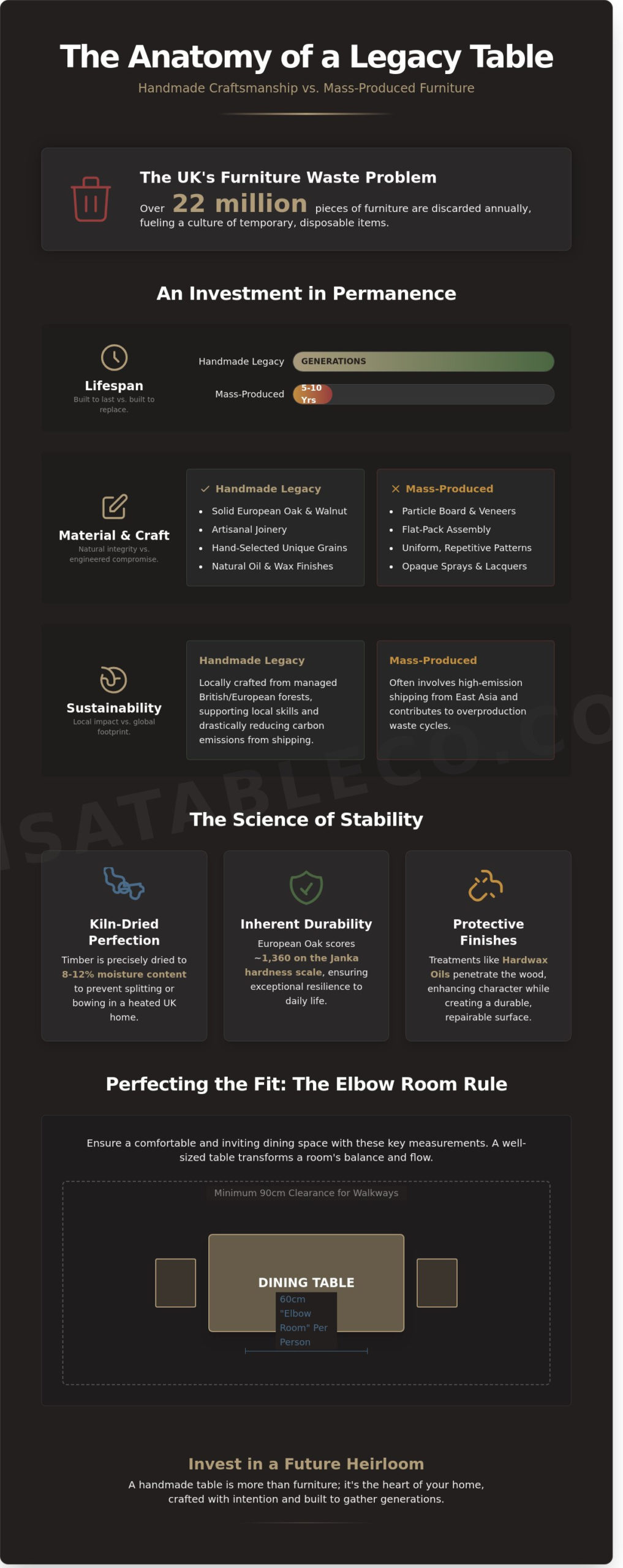
Choosing a handmade dining table is an intentional act. It represents a firm departure from the “throwaway culture” that sees over 22 million pieces of furniture discarded annually in the UK, according to data from the North London Waste Authority. For us, a table is a marriage of slow-fashion ethics and traditional joinery. It’s a rejection of the flimsy, mass-produced flat-pack that often relies on particle board with a lifespan of barely five to ten years. Instead, we focus on the longevity of solid wood, creating a piece that doesn’t just fill a room but anchors a home for decades.
This furniture serves as the quiet, sturdy backdrop for life’s most meaningful moments. It’s where Sunday roasts are shared, homework is tackled, and late-night conversations unfold over tea. By choosing locally crafted furniture, you significantly reduce the carbon footprint associated with mass imports. Shipping a single table from East Asia can generate carbon emissions many times higher than sourcing timber from managed British or European forests. We believe your furniture should have a soul, reflecting a commitment to sustainability and the enduring beauty of natural materials that grow more beautiful as they age.
This philosophy of investing in sustainable, high-quality European materials can extend beyond the dining room to your outdoor living spaces. For homeowners looking to create durable and beautiful patios or garden areas, it’s worth exploring modern composite solutions. To see how this approach is applied to decking and cladding, you can learn more about Green Plank.
The Human Touch in Every Grain
In our workshop, the process begins long before the first cut is made. An artisan carefully selects each plank, looking for grain patterns that tell a unique story. Unlike factory-made pieces that use thick, opaque sprays to hide imperfections, we celebrate the wood’s character. Hand-finished surfaces, treated with natural oils or waxes, offer a “quiet confidence” that factory lines cannot replicate. Every knot in a piece of reclaimed timber acts as a historical marker. It’s a physical connection to a past life; perhaps it once served as a Victorian floorboard or a structural beam in a 19th-century warehouse.
Why “Slow Furniture” is a Growing UK Trend
British homeowners are increasingly prioritising quality over quantity. A 2022 report by the British Furniture Manufacturers indicated a notable shift toward supporting independent workshops and local craftsmanship. The rise of the handmade dining table in UK interiors reflects a desire for authenticity. When you commission a bespoke piece, we build it to your exact specifications, which eliminates the waste inherent in overproduction. Supporting local makers ensures that traditional skills stay alive in our communities while providing you with a legacy piece built to survive the rigours of family life for generations.
Selecting the Soul of Your Table: Timber and Character
Choosing the right wood for your handmade dining table is a sensory journey that goes far beyond simple aesthetics. When you run your palm across a finished surface, you’re feeling the history of a tree that likely stood for over 100 years. We believe the timber is the soul of the piece; it dictates the warmth, the weight, and the longevity of your home’s most important gathering spot. It isn’t just about the look of the grain. It’s about the technical integrity of the build. We ensure all our timber is kiln-dried to a precise moisture content of 8% to 12%. This specific range is vital for UK homes, as it prevents the wood from bowing or splitting when the central heating is turned on during the damp winter months.
The finish we apply acts as a lens for the wood’s natural character. Different treatments interact with the fibres in unique ways:
- Hardwax Oils: These penetrate deep into the grain, enhancing the natural golden hues of oak while leaving a tactile, matte texture.
- Natural Waxes: Best for a soft, low-sheen glow that feels organic to the touch, though they require more frequent care.
- Lacquers: These create a durable, waterproof seal that’s ideal for busy households, providing a slightly more polished appearance.
For high-traffic dining areas, the structural density of the wood is your best defence against daily wear. Solid oak and walnut aren’t just beautiful; they’re incredibly resilient materials that can withstand decades of family life without losing their structural poise.
Solid Oak: The Timeless British Favourite
European character oak remains the gold standard for a reason. Its durability is legendary, scoring approximately 1,360 on the Janka hardness scale, making it perfect for the rigours of a busy kitchen. The grain patterns are prominent and architectural, featuring beautiful medullary rays that catch the light. Whether your home is a modern apartment or a rustic cottage, oak fits effortlessly. It’s a living material that records your family’s history, developing a deep, rich patina that actually improves as the decades pass.
The Elegance of Walnut and Reclaimed Timber
Walnut offers a sophisticated alternative for those seeking a more refined, contemporary look. Its dark, chocolate tones and smooth, swirling grain create an immediate sense of luxury. If you prefer a table with a pre-written history, reclaimed timber sourced from 19th-century industrial joists or Victorian floorboards provides a texture that’s impossible to manufacture. These boards carry original saw marks and nail holes, offering a rugged charm. While walnut requires a gentle re-oiling every 12 to 18 months to maintain its lustre, reclaimed wood is far more forgiving of life’s little accidents. You can explore our full range of bespoke timber options to find the perfect match for your space.
Architecture Under the Top: Choosing Your Leg Design
While the timber top often captures the first glance, the architecture underneath dictates how your handmade dining table functions and feels within your home. The frame is the silent partner in every meal; it provides the structural integrity required to support solid wood slabs that can weigh upwards of 90kg for a standard 2.4-metre oak piece. We design our frames to ensure zero wobble, using heavy-duty UK-sourced steel to create a foundation that lasts for generations. A table that vibrates when you cut your food or lean on the edge fails its primary purpose, no matter how beautiful the wood might be.
Choosing a leg style is a balance between engineering and aesthetics. A central frame opens up the floor, making a small dining room feel more spacious, whereas corner legs define the table’s footprint with traditional authority. The marriage of industrial steel and natural wood has become a hallmark of contemporary British design. It offers a striking contrast between the cold, precise lines of metal and the organic warmth of the grain. This combination doesn’t just look modern; it’s a practical solution for the weight and movement of natural timber.
Signature Styles: The Spider Leg and Mensa Designs
The Spider Leg design serves as a sculptural centrepiece. By drawing the support to the centre, it eliminates the frustration of guests knocking their knees against corner posts. It provides 360-degree seating flexibility, which is ideal for social gatherings. Our signature Mensa frame takes this further with a complex geometric arrangement that creates a bold, architectural statement. These designs work best in open-plan kitchens or square dining rooms where the table is viewed from all angles and needs to command the space.
Classic Frames: X-Frame, U-Frame, and Trapezium
For those seeking a nod to the past, the X-frame offers a rugged, farmhouse aesthetic that pairs beautifully with reclaimed timber. If you prefer a cleaner, more minimalist look, the U-frame or Trapezium designs provide sleek vertical lines that don’t distract from the wood’s character. We finish our steel in powder-coated Black, Raw Steel, or Anthracite (RAL 7016). Black remains our most popular choice, accounting for 65% of our bespoke commissions because of its ability to anchor a room. Each frame is pre-drilled with oversized holes to allow your handmade dining table top to breathe and move naturally as the humidity in your home changes throughout the year.
- Spider Legs: Best for maximising seating capacity and legroom.
- X-Frames: Perfect for a rustic or industrial farmhouse vibe.
- U-Frames: The go-to choice for modern, minimalist interiors.
- Trapezium: Adds a subtle geometric twist to a standard rectangular top.
Perfecting the Fit: Sizing and Bespoke Considerations
A handmade dining table serves as the heart of the home, but its beauty relies on how it interacts with your physical space. To ensure your room feels airy and functional, we recommend measuring your floor area with a focus on “circulation zones.” You’ll want to avoid a cramped environment where guests feel trapped once they’ve sat down. Every guest requires roughly 60cm of horizontal “elbow room” to dine comfortably without clashing with their neighbour. If you frequently host formal three-course meals, increasing this to 70cm provides the extra breathing room needed for multiple wine glasses and side plates.
Our workshop crafts tables to a standard height of 75cm. This specific measurement is the result of decades of ergonomic refinement, ensuring that your legs have ample clearance while your arms rest at a natural angle for eating. This height also ensures that almost any high-quality dining chair found in the UK will slide neatly underneath. For homes with unique architectural quirks, like narrow galley kitchens or repurposed breakfast nooks, our bespoke process allows us to adjust widths by as little as 5cm. We’ve helped clients in Victorian terraces transform “dead space” into functional dining areas by creating slimline tables that don’t sacrifice the chunky, artisanal aesthetic they love.
Seating Strategies: 6, 8, or 10 Seater Tables
Dimensions play a critical role in the social dynamic of your gatherings. A 1.8m table comfortably seats six, while a 2.1m length is the sweet spot for eight guests. If you’re looking to seat 10 people, you’ll need a surface at least 2.4m long to avoid a squeeze. Leg placement significantly impacts these numbers; choosing inset “A-frame” legs or a central pedestal allows you to squeeze extra stools around the corners, whereas end-of-table “U-frame” legs provide a more structured, symmetrical look. The ideal clearance between a table and the wall is 90cm.
The Practicality of Matching Benches
Benches are the ultimate space-saving solution for modern UK living. Sliding a bench completely under your handmade dining table when it’s not in use reclaims roughly 0.5 square metres of floor space, making it perfect for open-plan kitchen-diners. Beyond the footprint, benches foster a relaxed, communal atmosphere that reminds us of traditional farmhouse gatherings. We typically build our benches 20cm shorter than the table length. This precise sizing ensures the bench tucks perfectly between the table legs without catching on the timber, maintaining a clean and tidy silhouette in your home.
Ready to find the perfect dimensions for your space? Explore our bespoke sizing options
Investing in a Legacy: The Mensa Table Company Way
At The Mensa Table Company, we don’t believe in the cold efficiency of a mass production line. Our philosophy balances technical expertise with the natural warmth of timber. Every handmade dining table starts as a conversation between you and our small team of makers in our UK workshop. We handle everything personally. You won’t find a faceless call centre here; you’ll speak directly to the people who select your timber and sand your tabletop. This direct connection ensures that your vision is translated perfectly into the final piece.
The journey from our workshop floor to your home is handled with immense pride. We understand that a table is a significant investment, so we manage our national delivery service with extreme care. No matter where you are located within the country, we ensure your furniture arrives in pristine condition. We use our own dedicated vehicles or trusted white-glove partners who understand how to handle heavy, solid wood furniture. It’s a personal service that reflects the “human touch” we pour into every joint and finish.
Crafted to Order, Delivered with Care
True quality takes time. Our current lead times average 8 to 10 weeks because we refuse to rush the seasoning or finishing processes. We believe the wait is a small price for a piece that lasts a lifetime. Before any handmade dining table leaves our care, it undergoes a rigorous 14-point quality inspection. We check grain alignment, moisture levels, and the silkiness of the finish. When you choose us, you’re entering a partnership with a craftsman. We keep you updated as your timber is transformed, making you part of the story before the table even enters your dining room.
Caring for Your Table for Generations
A well-maintained surface becomes more beautiful over the decades. We recommend a simple care routine to keep your investment looking its best:
- Apply a high-quality furniture wax every 6 months to nourish the wood fibres.
- Use coasters or heat mats for any items exceeding 60°C to prevent marks.
- Wipe spills immediately with a soft, damp cloth to protect the natural oils.
- Keep the table away from direct heat sources like radiators to prevent the wood from drying too quickly.
This table isn’t just furniture; it’s a legacy that grows in emotional value as it hosts your family’s milestones. It’s a place for Sunday roasts, late-night chats, and Christmas mornings. To complete your home’s aesthetic, we invite you to browse our matching range of desks and coffee tables. Each piece is built with the same artisanal dedication, ensuring a cohesive and soulful feel throughout your living space.
Crafting a Legacy for Your Home
Choosing a handmade dining table is an investment in the stories your family will tell for decades to come. Since 2018, Mensa Table Co. has been dedicated to honouring the natural character of timber, ensuring every grain and knot tells its own unique story. By selecting a bespoke size and a leg design that complements your architecture, you create a functional piece of art that fits your life perfectly. We don’t believe in one-size-fits-all solutions; we believe in the human touch and the enduring quality of slow-made furniture.
Our team provides national UK delivery, bringing the warmth of our workshop directly to your doorstep. Whether you need a compact surface for an intimate kitchen or a grand centrepiece for a formal dining room, our bespoke options ensure your table is exactly as you envisioned. Your home deserves a foundation built on authenticity and expert craftsmanship. We invite you to explore how a truly artisanal piece can transform your living space into a sanctuary of connection.
Discover our range of handcrafted dining tables
We look forward to helping you find the perfect heart for your home.
Frequently Asked Questions
What is the best wood for a handmade dining table?
The best wood for a handmade dining table depends on your aesthetic, but European Oak and English Ash remain our most requested timbers for their exceptional 700 kg/m3 density and resilience. We often work with reclaimed pine that carries over 80 years of history, offering a unique character that new timber cannot replicate. These hardwoods ensure your table survives decades of family Sunday roasts and daily use.
How do I choose the right size table for my dining room?
You should allow a minimum of 90cm of clearance between the table edge and your walls or other furniture to ensure guests can move freely. For a comfortable dining experience, we recommend allocating 60cm of width per person along the length of the table. If you’re planning for a 6-seater arrangement, a length of 180cm is the ideal starting point for most UK dining rooms.
How do I maintain and clean a solid wood dining table?
Maintaining your solid wood table requires nothing more than a damp, lint-free cloth and a small drop of pH-neutral soap for daily spills. To keep the timber nourished, we suggest applying a fresh coat of natural hardwax oil every 6 months to maintain its protective barrier. Avoid harsh chemical sprays found in supermarkets, as these can strip the 3-layer finish we carefully apply in our workshop.
Are handmade tables more durable than mass-produced ones?
A handmade dining table is significantly more durable than mass-produced alternatives because we use traditional joinery techniques like mortise and tenon joints rather than cheap cam-locks or glue. Our tables typically feature 40mm thick solid wood tops that won’t warp or peel like the 15mm veneered MDF found in high-street chains. These pieces are built to last for 50 years or more, becoming a true family heirloom.
Can I customise the leg design and timber finish?
We offer full customisation across our entire range, allowing you to choose from 5 distinct steel leg profiles and 4 hand-applied timber finishes. Whether you prefer a raw, natural look or a deep, dark oak stain, our makers work with you to ensure the final piece fits your home perfectly. You can even specify the level of character, from clean grains to rustic knots and cracks.
What is the standard dining table height in the UK?
The standard height for a dining table in the UK is 76cm from the floor to the top of the timber surface. This height pairs perfectly with standard dining chairs that usually have a seat height of 45cm, providing 31cm of legroom. We maintain this measurement across all our bespoke designs to ensure ergonomic comfort during long evenings spent sharing stories with friends and family.
Do I need a tablecloth to protect a handmade wooden table?
You don’t need a tablecloth to protect your table, as our 3-coat hardwax oil finish is designed to withstand the rigours of modern life. While we recommend using coasters for mugs straight from the kettle to avoid heat marks over 100 degrees, the wood’s natural beauty is meant to be seen and felt. Small marks that appear over 5 or 10 years simply add to the table’s unique story.
How long does it take to build and deliver a bespoke table?
It typically takes our craftsmen between 6 and 8 weeks to hand-build, finish, and deliver your bespoke furniture. This timeframe allows us to source the right timber and give the oils sufficient time to cure before our 2-man delivery team brings the piece into your home. We’ll always keep you updated on the progress of your build as it moves through our local workshop.

Leave a Reply