
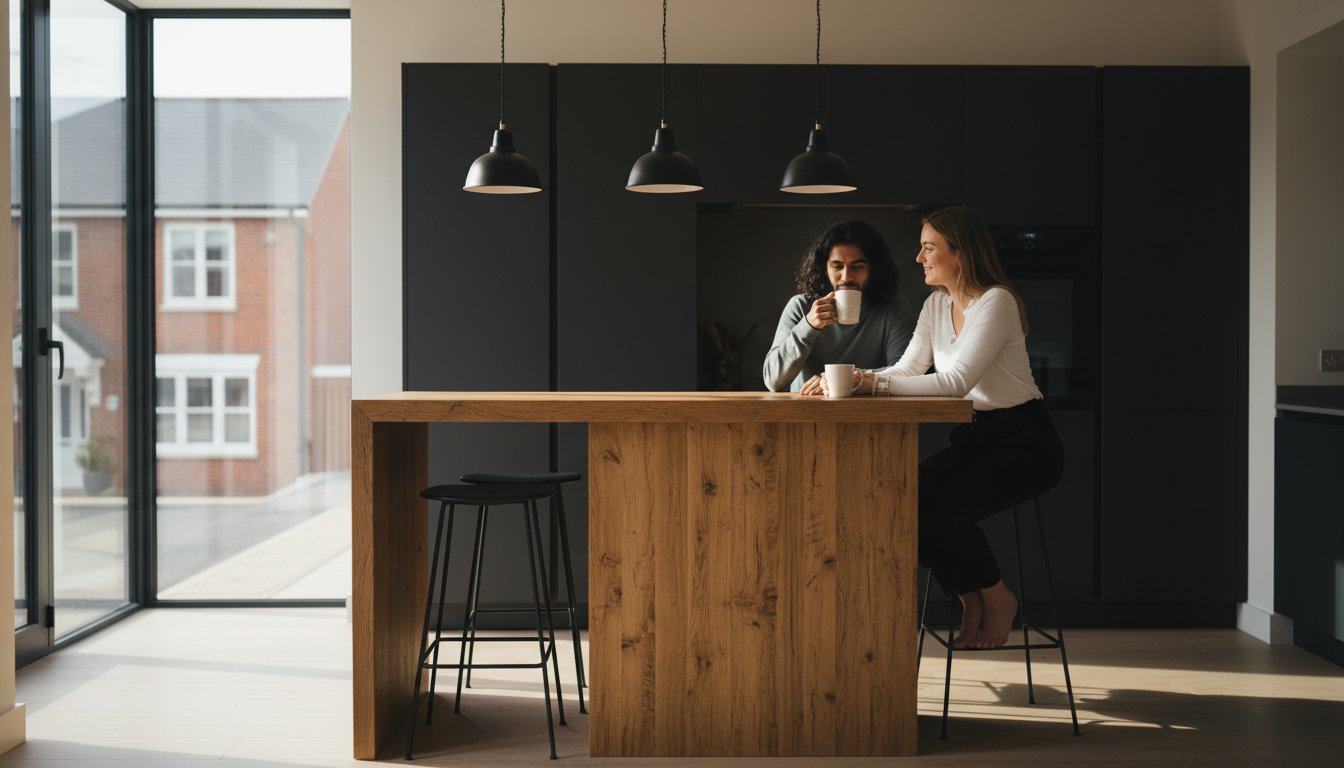
Recently, a homeowner shared how their morning routine changed from a rushed, standing affair to a slow, shared experience around their new reclaimed oak surface. It wasn’t just about adding a piece of furniture; it was about reclaiming the soul of their home. If your kitchen currently feels more like a cramped thoroughfare than a social hub, you’re not alone. Many homeowners find themselves stuck with mass-produced pieces that lose their lustre after just 24 months. We believe your breakfast bar should be an investment in connection, crafted with a level of care that stands up to the rigours of daily life.
You deserve a space that reflects your story and handles the morning rush with ease. We’ll show you how a bespoke breakfast bar can transform your layout through artisanal craftsmanship and timeless design. This guide explores everything from selecting character-rich timbers to understanding the precise seating clearances needed for a comfortable, functional home.
Key Takeaways
- Understand how a bespoke surface transitions your home from formal dining to a modern, social “broken-plan” living space.
- Learn to select the perfect timber by exploring how grain character and ethical sourcing create a lasting legacy in your kitchen.
- Master the essential measurements for your breakfast bar, including standard UK heights and the necessary clearance for comfortable seating.
- Discover professional techniques for integrating your new piece with existing cabinetry to define distinct zones within an open-plan area.
- Explore why commissioning a hand-finished piece from our workshop offers a level of soul and durability that mass-produced furniture simply cannot match.
The Evolution of the Kitchen: Why a Breakfast Bar is Essential
The British kitchen has undergone a radical transformation over the last few decades. It’s no longer a hidden scullery tucked away at the back of the house; it’s become the vibrant lungs of the home. This Evolution of the Kitchen reflects a significant cultural shift toward “broken-plan” living, a design trend that gained 25% more traction in UK architectural briefs since 2018. Unlike the stark open-plan layouts of the early 2000s, broken-plan living uses furniture like the breakfast bar to create subtle zones. This allows for a sense of space and light while providing the practical boundaries families need to function effectively.
A modern breakfast bar acts as a multi-functional culinary bridge. It’s a dedicated space where the person cooking can remain part of the social circle without being crowded by guests or children. By installing a handcrafted bar rather than a standard worktop extension, you’re not just adding a surface; you’re creating a centrepiece. These bespoke additions provide an emotional value that mass-produced kitchen islands lack, turning a functional room into a sanctuary for connection and shared stories.
The Social Heart of the Modern Home
The bar serves as the primary transition point between the focus of cooking and the comfort of relaxing. It’s the spot for the first coffee of the morning, the frantic school run breakfast, and the evening glass of wine while dinner simmers. We find that the sensory appeal of solid wood is vital in these high-traffic areas. When you run your hand across a handmade timber surface, you feel a sense of warmth and authenticity that cold stone or laminate simply cannot replicate. This tactile connection grounds the room, making the kitchen feel lived-in and loved rather than just a clinical workspace.
Bespoke vs. Mass-Produced: The Quality Gap
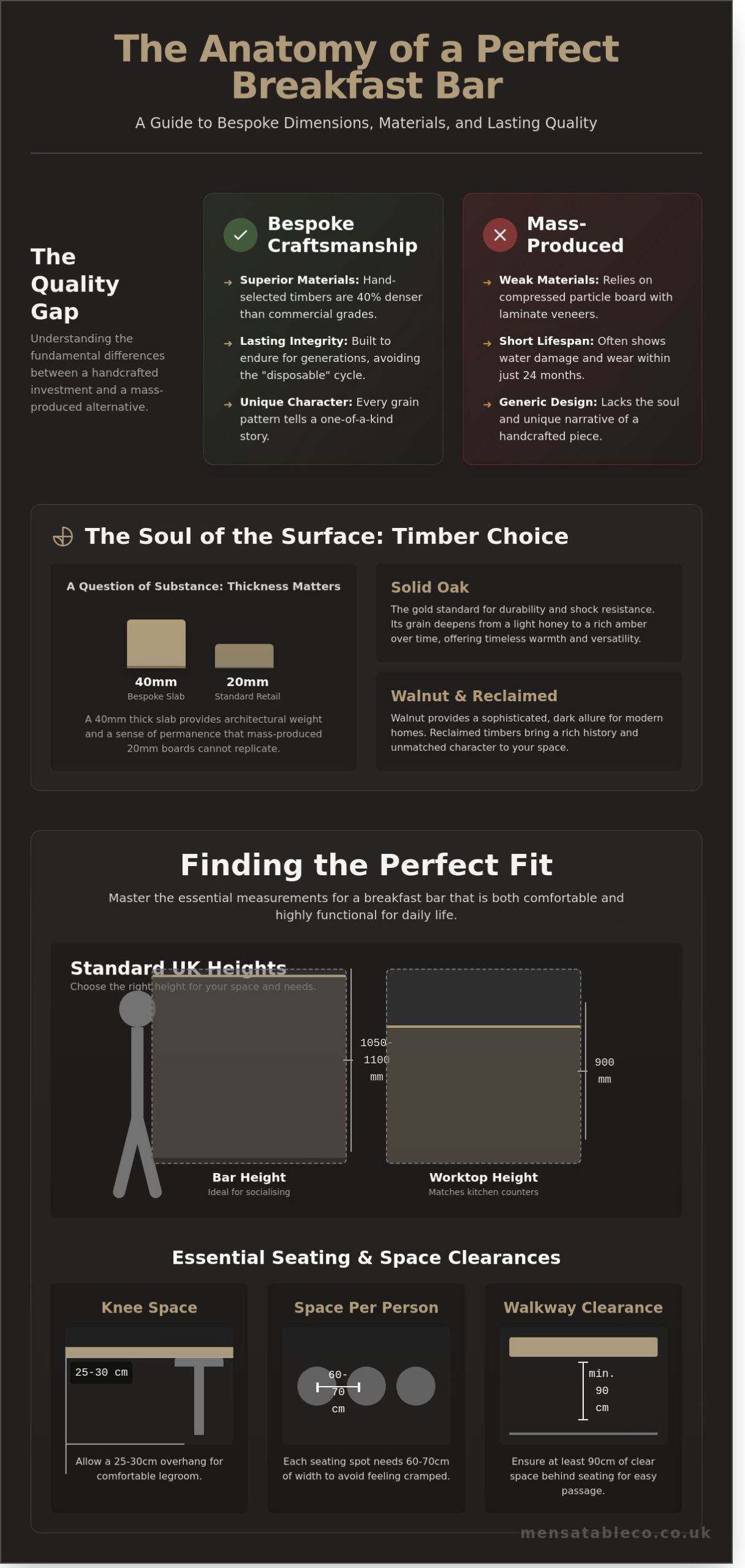
Choosing a surface for your home is an investment in longevity. Flat-pack alternatives often rely on compressed particle boards that fail to withstand the rigours of daily kitchen life, frequently showing signs of water damage within just 24 months. At Mensa Table Co., we focus on structural integrity, which is particularly vital for cantilevered or overhang designs that must support weight without bowing. Our commitment to the artisanal spirit means we reject “fast furniture” in favour of pieces that endure.
- Structural Integrity: Hand-selected timbers provide 40% more density than standard commercial grade materials.
- Artisanal Finish: Every grain pattern is unique, ensuring your home features a one-of-a-kind narrative.
- Sustainable Choice: Bespoke furniture reduces waste by avoiding the “disposable” cycle of mass-market products.
We believe that a kitchen should reflect the people who live in it. By choosing a handcrafted bar, you’re opting for a piece of furniture that respects the natural origins of the wood and the time required to treat it with care. It’s a quiet confidence in quality that ensures your kitchen remains the heart of your home for generations.
Selecting the Right Timber: The Soul of Your Breakfast Bar
Timber isn’t just a functional surface; it’s the heartbeat of your kitchen. The character of the wood dictates the atmosphere of the entire room, influencing how light reflects and how the space feels to the touch. We source our timber from ethically managed forests, ensuring every piece meets FSC standards established in 1993 to protect global forest health. When you choose a 40mm thick slab over a standard 20mm retail board, you’re investing in a sense of permanence and architectural weight. This thickness creates a luxury feel that mass-produced alternatives simply can’t replicate. The natural grain patterns act as nature’s own artwork, turning your breakfast bar into a bespoke focal point that invites people to linger.
Solid Oak: The Timeless Choice for Durability
Oak remains the gold standard for high-use surfaces because of its incredible density and shock resistance. It handles the daily ritual of morning coffees and evening homework with ease, standing up to the pressure of a busy family home. Over a period of 5 to 10 years, the wood undergoes a beautiful transformation, shifting from a light honey hue to a richer, deep amber as it reacts to natural light. This versatility allows it to sit comfortably alongside industrial steel legs or traditional shaker cabinets. It’s a hard-wearing material that survives the rigours of a British household while retaining its natural, welcoming warmth.
Many specialist workshops in Britain focus on this beautiful material. For some great examples of handcrafted solid oak pieces, you can check out Masterplank UK.
Walnut and Reclaimed Wood: Character and Heritage
Walnut offers a sophisticated, dark allure that works perfectly for those creating a modern home office or bar hybrid. Its chocolate tones provide a striking contrast in minimalist settings, bringing a touch of executive luxury to the kitchen. For the eco-conscious homeowner, reclaimed timber offers a story that new wood cannot tell. We define “reclaimed character” as a unique legacy for each piece, where every nail mark or weathering line represents a previous life in a 19th-century barn or Victorian warehouse. Choosing these woods reduces the demand for virgin timber, making it a thoughtful, sustainable choice for the modern environment.
Finishes That Protect and Enhance
Applying the right finish is vital for a food-safe kitchen environment where hygiene and beauty must coexist. While lacquers provide a hard shell, we often recommend natural oils or waxes that penetrate deep into the fibres. These treatments allow the timber to breathe and move naturally with the seasons, preventing the cracking often seen in cheaper alternatives. A well-oiled surface resists spills from red wine or coffee, provided they’re wiped within 30 minutes of contact. To keep the grain vibrant and the wood protected, we suggest a light re-oiling every 6 to 12 months. You can explore our range of handcrafted wood finishes to see how we preserve the raw beauty of our materials.
Finding the Perfect Fit: Dimensions, Heights, and Seating
When we craft a breakfast bar in our workshop, we always begin with the precise measurements that ensure your morning coffee feels effortless. In the UK, the majority of kitchen islands sit at a standard worktop height of 900mm. If you prefer a tiered look that separates the cooking zone from the social area, we often build to a height of 1050mm. To prevent elbow-clashing during a busy Saturday brunch, we recommend allowing between 500mm and 600mm of width for every person. This spacing ensures everyone has enough room to move without losing that sense of closeness. The gap between the top of your stool seat and the underside of the timber should remain around 250mm to 300mm to keep your posture natural and relaxed.
Measuring Your Space for Flow and Function
A bespoke piece of furniture should never feel like an obstacle in your home. We suggest maintaining a clear 1000mm zone behind any seated guests to allow for comfortable traffic flow through a bustling kitchen. Before we select your timber, use masking tape to mark the footprint on your floor. Seeing a 1200mm by 600mm outline in your actual room helps you visualise the daily movement and ensures the space still breathes. It’s a simple step that prevents the room from feeling cramped once the final piece arrives.
The Science of the Overhang
True comfort is found in the hidden details of the design. A minimum overhang of 300mm is essential because it provides the necessary knee room for an ergonomic sitting position. When we design deeper surfaces, we carefully manage the structural balance to avoid bulky supports that might clutter the artisanal aesthetic. The cantilever effect allows a heavy timber surface to extend gracefully beyond its base while maintaining absolute stability through clever internal weight distribution. This approach keeps the silhouette clean and the floor space open.
Matching Benches and Seating Solutions
Choosing the right seating completes the narrative of your kitchen. We often find that matching benches create a cohesive, artisanal look that celebrates the shared grain and character of the wood. For smaller homes where every centimetre is precious, stools that tuck completely under the breakfast bar keep the floor space clear when the meal is over. This design choice turns a functional dining area into a streamlined part of your living space; it’s about making the furniture work for your lifestyle rather than against it.
Styling and Integration: Making Your Bar the Social Hub
We believe a breakfast bar should feel like a natural extension of your home. It anchors the room. By aligning the timber grain with your existing cabinetry or kitchen island, we create a visual flow that feels intentional rather than accidental. In an open-plan living area, the bar acts as a vital boundary. It defines the transition from the high-energy prep zone of the kitchen to the softer, relaxed atmosphere of the lounge. A well-placed 1.8-metre bar provides enough space for three people to sit comfortably without encroaching on the walkway, maintaining a clear 900mm clearance for easy movement.
Our workshop often pairs industrial metal legs with thick, natural timber to achieve a modern rustic aesthetic. The raw strength of the steel provides a sturdy foundation, while the wood brings soul to the space. This combination works because it balances the functional needs of a busy household with the timeless beauty of the British countryside. It is about creating a piece that feels as though it has always belonged there.
Lighting and Atmosphere
The rule of three is a design staple for a reason. Placing three pendant lights over a standard-sized bar creates a balanced, rhythmic aesthetic that draws the eye. We recommend using bulbs with a colour temperature of around 2700K. This warm light spills across the wooden surface, catching the unique character of the grain and making the timber glow. It allows you to shift the mood effortlessly; bright task lighting helps with the morning school run, while dimmed pendants transform the space for evening drinks and conversation.
While artificial lighting sets the mood, nothing compares to the impact of natural light. Maximising sunlight can make your timber surfaces truly shine and enhance the entire room’s atmosphere. For those undertaking a broader kitchen renovation, upgrading windows and doors is a key consideration. If you’re looking for high-quality uPVC or aluminium options, you can check out Custom Trade Systems Ltd.
From Coffee Station to Home Office
The role of the kitchen has shifted significantly. According to 2023 data from the Office for National Statistics, 44% of workers in the UK now spend at least part of their week working from home. This makes the breakfast bar a vital secondary workspace. We often incorporate hidden cable management or discreet power outlets into our designs to keep the surface clutter-free. If you find your kitchen bar becoming your permanent 9-to-5 spot, you might also consider our bespoke desks for the home office to reclaim your dining space for family time.
Colour Palettes and Material Contrasts
Contrast adds depth to a kitchen. Pairing dark, rich timber like walnut or stained oak with light quartz or stone worktops creates a sophisticated look. For a more architectural feel, “Spider Leg” or “X-Frame” designs in matte black steel provide a striking silhouette against neutral flooring. There is a profound sensory contrast between the cold, unyielding precision of powder-coated steel and the soft, organic warmth of a hand-finished timber surface. These tactile differences make the bar a joy to use every day.
The Mensa Difference: Commissioning Your Bespoke Breakfast Bar
At Mensa Table Co., we don’t believe a breakfast bar should be a mere afterthought or a generic slab of laminate. It’s the quiet witness to your morning rituals and the focal point of your evening catch-ups. Our process starts with the raw material. We hand-select every piece of timber for its unique grain pattern and inherent strength. While mass-produced furniture relies on thin veneers and chemical glues, we prioritise solid wood and traditional joinery. Our makers spend upwards of 50 hours on a single commission, ensuring that the final piece isn’t just a surface, but a tactile experience. This dedication creates furniture that doesn’t just last for a few seasons; it becomes a family legacy that grows more beautiful as it ages.
The difference between a handcrafted piece and a factory-line product is felt in the details. You’ll notice it in the way the light catches the natural oil finish and the way the edges feel under your hand. We avoid the clinical perfection of machines in favour of a finish that celebrates the wood’s history. Whether we’re working with characterful oak or historic reclaimed pine, we aim to preserve the story of the timber. This approach ensures your kitchen features a centerpiece that’s entirely unique to your home, standing as a sturdy alternative to the disposable culture of modern retail.
A Personal Journey with the Maker
We value the connection between the person who makes the furniture and the person who uses it. There’s a profound transparency in our workshop. You’ll know exactly where your timber came from and who shaped it. We rely on the human touch to feel the wood’s texture and response to our tools, something a machine simply can’t replicate. As part of our 2026 commitment to sustainable British craftsmanship, we’ve pledged to source all our materials from managed UK woodlands or reclaimed sites. This ensures your home remains a sanctuary of ethical, slow-fashion design that respects the natural world.
Ordering and National Delivery
Creating something truly special takes time. Our typical lead time of 8 to 12 weeks reflects the care we put into every stage, from the initial seasoning of the wood to the final application of natural oils. We don’t rush the drying process because we know that patience results in a more stable, durable product. Once your piece is ready, our specialist delivery team ensures it reaches you safely, whether you’re in the heart of London or the Highlands. Your new breakfast bar will be installed with the same care it was built with. If you’re ready to start your journey, contact us to discuss your breakfast bar project and let’s create something timeless together.
Bring Your Vision to Life with an Authentic Social Hub
Choosing the right breakfast bar is about more than just adding surface area; it’s about defining how your family interacts within the heart of the home. Since 2018, our small team of makers has worked from our UK workshop to transform solid timber into functional art. We never use veneers, so the character you see in the grain runs deep through every piece we create. By selecting the perfect timber and tailoring the dimensions to your specific kitchen layout, you create a space that feels both intentional and deeply personal.
Our craftsmen specialise in bespoke sizes, ensuring every millimetre of your new furniture fits your daily life. Whether you’re drawn to the rugged history of reclaimed wood or the refined elegance of new oak, the focus remains on quality you can feel under your fingertips. We’re here to help you design a piece that bridges the gap between a simple utility and a cherished family heirloom that’ll serve your home for decades.
View our handcrafted breakfast bar gallery to explore the textures and designs we’ve created for homes across Britain. We look forward to crafting a piece where your future memories will take root.
Frequently Asked Questions
What is the standard height for a breakfast bar in the UK?
The standard height for a breakfast bar in the UK is 900mm if you want it to sit flush with your kitchen worktops. If you prefer a raised look, the common height is 1050mm. Choosing the 900mm level allows you to use standard counter stools. If we craft your piece at the 1050mm height, you’ll need taller bar stools so your guests can sit comfortably while sharing a morning coffee.
How much overhang do I need for a breakfast bar?
You need an overhang of at least 300mm to provide enough room for your knees when sitting at a breakfast bar. This depth ensures that 100% of your guests sit naturally without knocking their legs against the cabinetry. While 250mm is the absolute minimum for a quick snack, we recommend the 300mm standard to create an inviting space where family members can linger over a meal for an hour or more.
Can I use a breakfast bar as a main dining table in a small kitchen?
A bespoke breakfast bar serves as an excellent main dining table in small kitchens, saving up to 40% of the floor space required by a traditional four-legged table. By integrating the seating into your existing layout, you remove the need for wide walkways around a central furniture piece. We often design these for apartments where every 10cm of space matters, providing a sturdy surface for both food preparation and evening meals.
What is the best wood for a kitchen breakfast bar?
European Oak and Black Walnut are the premier choices for a kitchen surface due to their high Janka hardness ratings of 1,120 and 1,010 respectively. These dense hardwoods resist the daily wear of a busy home while showcasing a stunning natural grain. For those seeking a piece with a deeper history, our reclaimed timber offers a unique character that new wood cannot replicate, ensuring your home features a sustainable, one-of-a-kind centrepiece.
How do I maintain a solid wood breakfast bar surface?
You should maintain your solid wood surface by applying a fresh coat of hardwax oil every 6 to 12 months to preserve its water resistance. We recommend using a lint-free cloth to buff the oil into the grain, which protects the timber from 95% of common household spills. Daily cleaning only requires a damp cloth and a mild, pH-neutral soap. Don’t use harsh chemicals that strip the natural oils and dull the wood’s organic lustre.
Do I need a support leg for a bespoke breakfast bar?
You’ll need a support leg if your breakfast bar overhangs by more than 300mm or if the unsupported span exceeds 1.5 metres. For heavy solid wood tops, providing a structural leg every 120cm ensures the surface remains perfectly level and secure. We handcraft matching timber legs or sleek steel supports in our workshop to complement your design, preventing any sagging or stress on your kitchen units over the coming decades.
How many people can fit at a 2-metre breakfast bar?
A 2-metre breakfast bar comfortably accommodates 3 adults, allowing 600mm of lateral space per person. If you’re seating children, you can often fit 4 people along this length by reducing the individual spacing to 500mm. Providing this 600mm breathing room ensures that guests don’t bump elbows during dinner. It’s a practical measurement we use in our workshop to help families plan their seating arrangements without anyone feeling cramped or restricted.
Can a breakfast bar be attached to an existing kitchen island?
You can certainly attach a breakfast bar to an existing kitchen island by using a “dropped” or “tiered” design. This involves fixing a 40mm thick timber slab at a different height to the main worktop, creating a distinct zone for socialising. We use hidden steel brackets or cantilevered supports to join the two surfaces seamlessly. This 2-tier approach adds 1.2 square metres of extra functionality to a standard island layout without requiring a full renovation.

Leave a Reply