
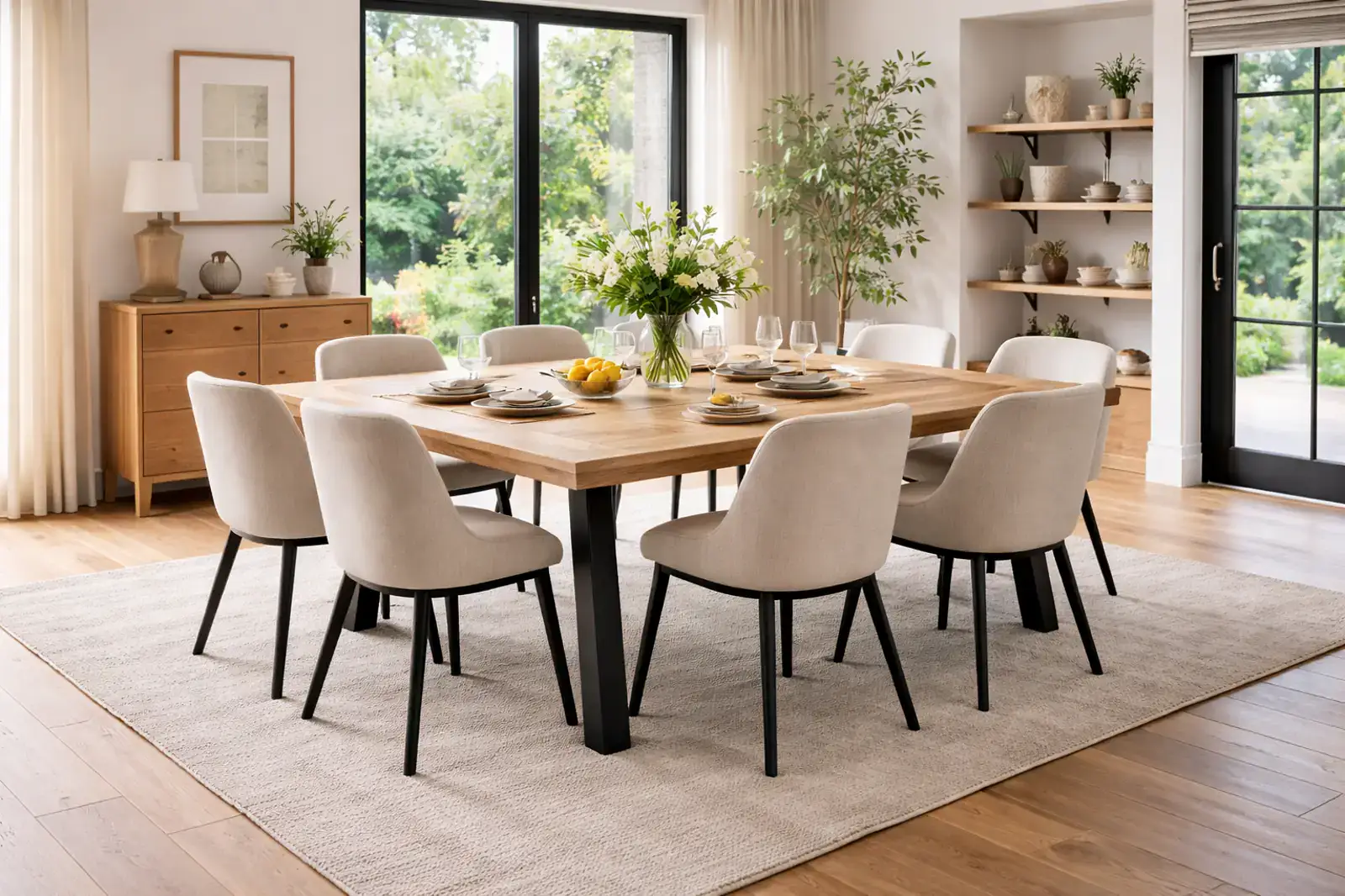
Choosing the right dining table size is one of the most important — and often overlooked — decisions when designing your dining space. A table that’s too large can make a room feel cramped and difficult to navigate, while a table that’s too small may leave guests feeling squeezed or under-accommodated.
In this comprehensive dining table size guide, we’ll walk you through everything you need to know to find the perfect fit for your home, including practical charts, spacing rules, and expert tips used by interior designers.
A well-chosen dining table does more than fit a room — it shapes how we gather, connect, and share. When space is thoughtfully planned, every meal feels more comfortable, every conversation flows more freely, and every moment feels perfectly placed.
Why Dining Table Size Matters
Your dining table is more than just a piece of furniture — it’s the heart of your home. It’s where meals are shared, conversations unfold, and memories are made. Getting the size right ensures:
- Better functionality for everyday use and special occasions
- Comfortable seating for family and guests
- Easy movement around the room
- A balanced, visually pleasing layout
The Golden Rule: Allow Space to Move
Before diving into table dimensions, it’s crucial to understand spacing.
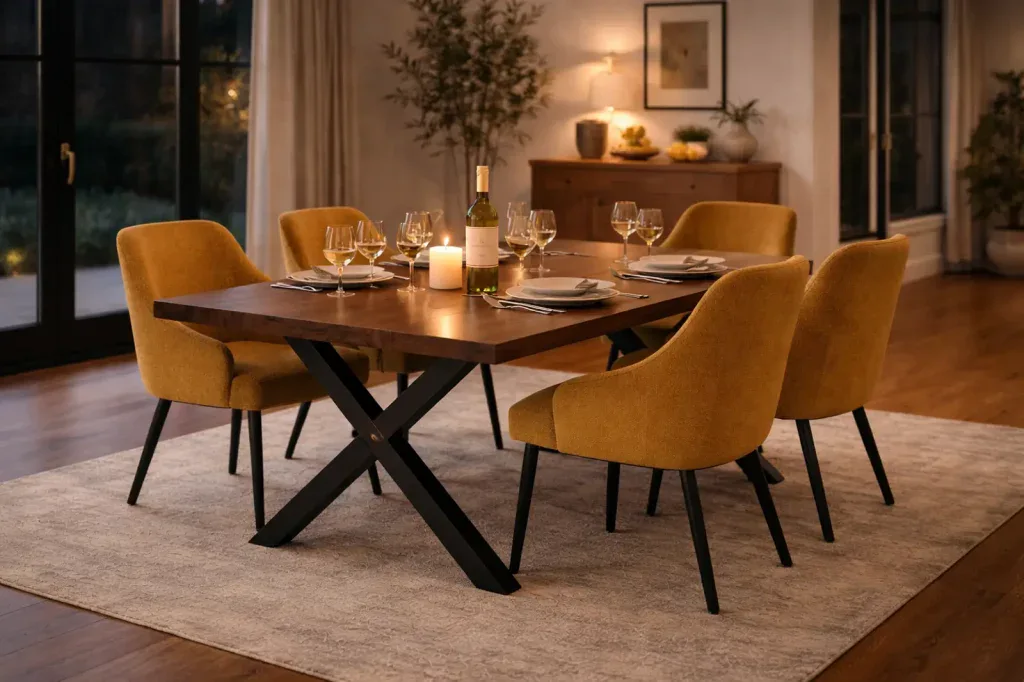
Interior designers generally recommend leaving at least 90cm (36 inches) of clearance around your dining table. This allows enough room for chairs to be pulled out and for people to move comfortably around the space.
Minimum Clearance Guidelines:
| Area | Recommended Space |
| Around dining table | 90cm |
| Behind seated diners | 40-60cm |
| Walkways (high traffic) | 120cm+ |
If your space is tight, you can reduce clearance slightly, but anything under 75cm will likely feel restrictive.
Step 1: Measure Your Room
Start by measuring the length and width of your dining area. Then subtract the recommended clearance (at least 90cm on all sides) to determine the maximum table size that will fit comfortably.
Example:
- Room size: 4m x 3m
- Subtract 180cm (90cm on each side)
- Maximum table size: 2.2m x 1.2m
Step 2: Choose the Right Table Shape
The shape of your table plays a major role in how it fits your space.
Rectangular Tables
Best for larger rooms and open-plan spaces. They offer the most seating capacity.
Round Tables
Ideal for smaller rooms or square spaces. They encourage conversation and improve flow.
Square Tables
Perfect for compact dining areas or seating 2–4 people.
Oval Tables
A great alternative to rectangular tables, offering softer edges and better movement flow.
Step 3: Dining Table Size Chart (By Seating Capacity)
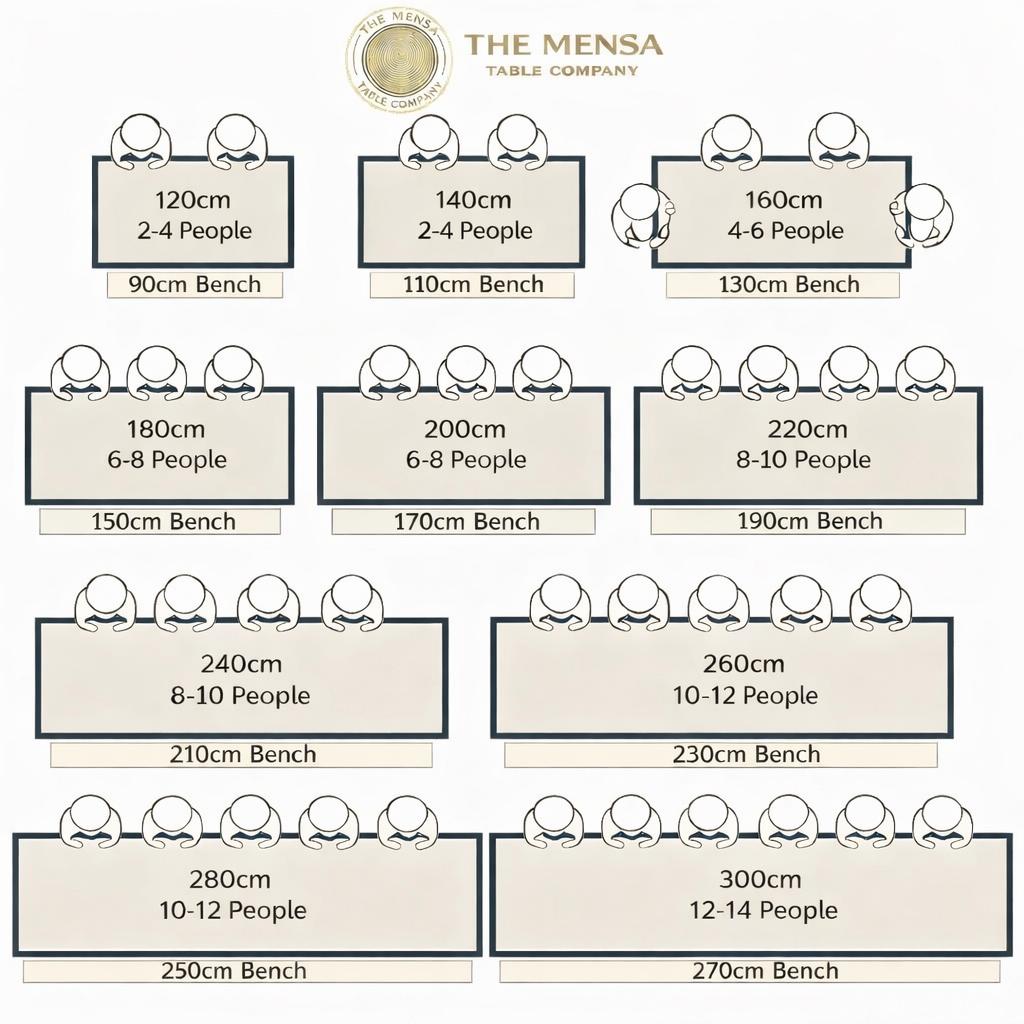
Use this quick-reference chart to determine the ideal table size based on how many people you want to seat.
Rectangular Dining Table Sizes
| Seats | Length (cm) | Width (cm) |
| 4 | 120-140 | 75-90 |
| 6 | 160-180 | 80-100 |
| 8 | 180-220 | 90-100 |
| 10 | 220-260 | 100-110 |
| 12 | 260-320 | 100-120 |
Step 4: Consider Chair Space
Each person typically needs 60cm of width at the table to dine comfortably. Don’t forget to factor in:
- Armchairs (require more space)
- Chair depth (usually 50–60cm)
- Pull-out space behind chairs
Step 5: Think About Functionality
Ask yourself how you’ll use the table:
- Everyday dining → Standard size works well
- Hosting guests → Consider extendable tables
- Multi-purpose use → Allow extra space for laptops, décor, etc.
Extendable tables are especially useful if you want flexibility without committing to a large permanent footprint.
Pro Tips from Interior Designers
- Go bigger if you can afford the space — it’s better than feeling cramped during gatherings
- Use rugs to define the dining area, ensuring the rug extends at least 60cm beyond the table
- Match table shape to room shape for better visual balance
- Avoid overcrowding — negative space is key to a well-designed room
Common Mistakes to Avoid
- Choosing a table before measuring your space
- Ignoring clearance for chairs and walkways
- Overestimating how many people you’ll regularly seat
- Forgetting about nearby furniture like sideboards or radiators
Final Thoughts
Selecting the perfect dining table size doesn’t have to be complicated. By following a few simple rules — measuring your space, allowing proper clearance, and choosing the right shape — you can create a dining area that is both functional and beautiful.
Remember, the goal is to strike a balance: a table that comfortably fits your space while still accommodating your lifestyle.
Explore More
For a deeper dive into materials, styles, and everything you need to know before buying, visit our complete guide:
👉 The Ultimate Guide to Choosing a Dining Table
With the right planning and a clear understanding of dimensions, you’ll be well on your way to creating a dining space that feels just right — no compromises needed.

Leave a Reply