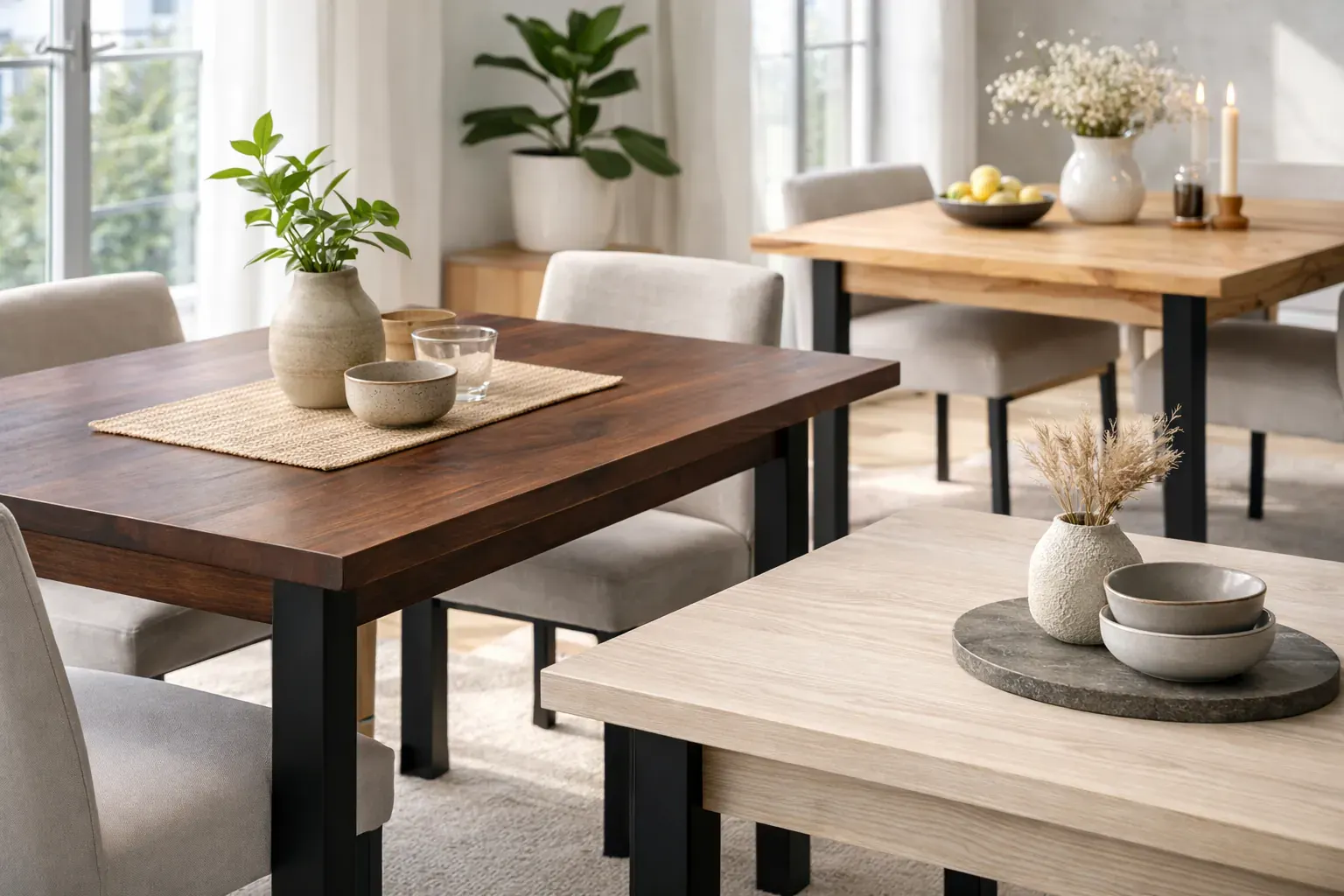
Choosing the best wood for a dining table is one of the most important decisions you’ll make when furnishing your home. A dining table isn’t just a functional piece—it’s the centre of family life, entertaining, and everyday moments. The material you choose will influence not only the look of your space but also durability, maintenance, and long-term value.
In this guide, we explore the most popular dining table woods—oak, walnut, Swedish pine, and ash—breaking down their unique characteristics, pros, and ideal uses. Whether you’re after a timeless statement piece or a modern, minimalist look, understanding these materials will help you make the right choice.
A dining table is more than wood and craftsmanship—it’s where stories are shared, memories are made, and time slows down. Choose a material that not only fits your space, but grows richer with every moment gathered around it.
Why Choosing the Right Wood Matters
When searching for the best wood for dining tables, it’s essential to consider:
- Durability – Will it withstand daily use?
- Grain and appearance – Does it match your interior style?
- Maintenance – How easy is it to care for?
- Cost and value – Does it fit your budget long-term?
Solid wood dining tables are a long-term investment, and choosing the right species ensures your table ages beautifully over time.
Oak Dining Tables: Timeless Strength and Character
Oak is one of the most popular choices for dining tables—and for good reason.
Key Characteristics:
- Exceptional durability – Highly resistant to wear and tear
- Prominent grain pattern – Adds texture and visual interest
- Versatile finishes – Works with both traditional and modern interiors
Why Choose Oak?
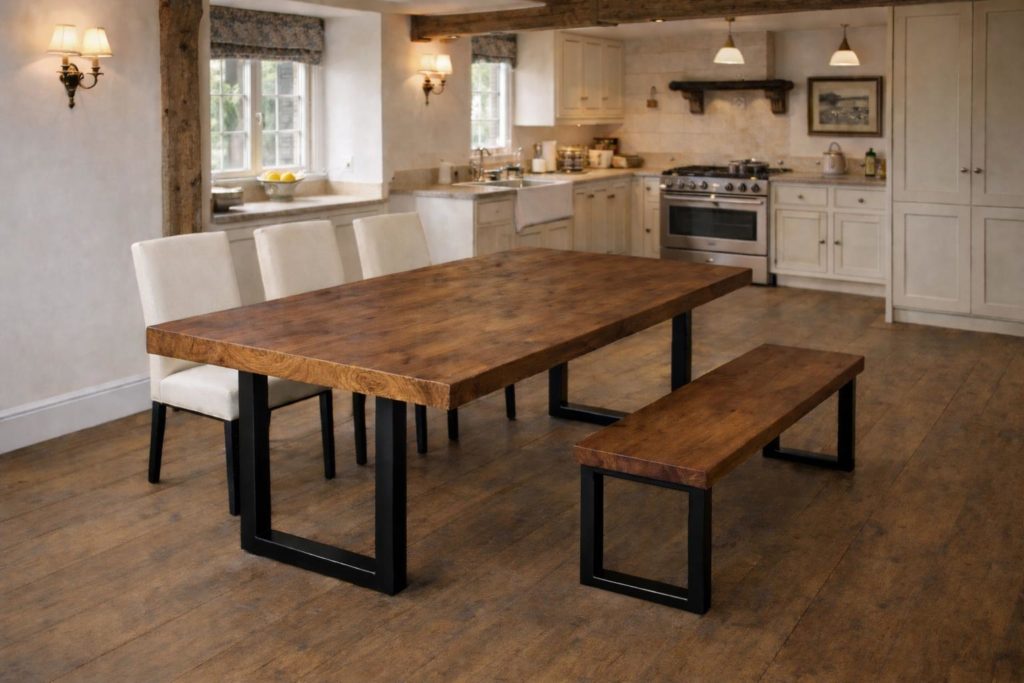
Oak dining tables are known for their longevity and classic appeal. Whether you prefer a rustic farmhouse look or a clean, contemporary finish, oak adapts effortlessly. Its strength makes it ideal for busy households, and it develops a rich patina over time.
Best For:
- Family homes
- High-traffic dining areas
- Traditional and transitional interiors
Walnut Dining Tables: Luxury and Sophistication
If you’re looking for a premium, statement-making piece, walnut is a standout choice.
Key Characteristics:
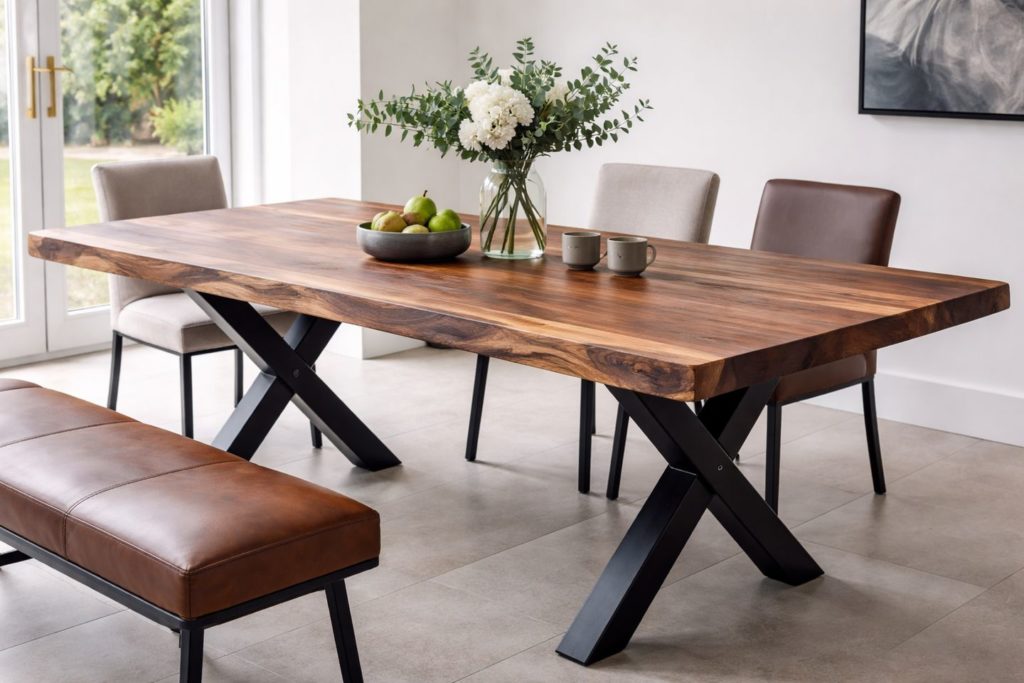
- Rich, dark tones – Deep chocolate and warm brown hues
- Smooth, fine grain – Elegant and refined appearance
- Strong but slightly softer than oak
Why Choose Walnut?
Walnut dining tables bring a sense of luxury and sophistication to any space. The natural colour variation and subtle grain patterns make each table unique. It’s perfect for those wanting a high-end aesthetic without sacrificing durability.
Best For:
- Contemporary and modern interiors
- Statement dining rooms
- Design-led homes
Swedish Pine Dining Tables: Light, Natural and Affordable
Swedish pine offers a lighter, more relaxed aesthetic, making it a popular choice for Scandinavian-inspired interiors.
Key Characteristics:
- Pale colour tones – Brightens up spaces
- Lightweight yet sturdy
- More affordable than hardwoods
Why Choose Swedish Pine?
Swedish pine dining tables are ideal for creating a warm, inviting, and casual atmosphere. While softer than oak or walnut, pine can still be durable when properly treated and maintained. Its natural knots and grain give it a charming, organic feel.
Best For:
- Scandinavian and minimalist interiors
- Smaller or brighter spaces
- Budget-conscious buyers
Ash Dining Tables: Modern Versatility with Strength
Ash is an often-overlooked wood that combines durability with a lighter aesthetic.
Key Characteristics:
- Light colour with subtle grain
- Strong and shock-resistant
- Smooth finish ideal for modern designs
Why Choose Ash?
Ash dining tables offer a clean, contemporary look while maintaining excellent durability. It’s a great alternative to oak if you want something slightly lighter in tone but still robust enough for everyday use.
Best For:
- Those seeking a balance between style and strength
- Modern and minimalist interiors
- Open-plan living spaces
Comparing the Best Woods for Dining Tables
| Wood Type | Durability | Appearance | Price Range | Style Suitability |
| Oak | High | Bold grain | Mid-High | Traditional & modern |
| Walnut | High | Dark, refined | High | Luxury & contemporary |
| Swedish Pine | Medium | Light, knotty | Low-Mid | Scandinavian & casual |
| Ash | High | Light, subtle grain | Mid | Modern & minimalist |
How to Choose the Best Wood for Your Dining Table
When deciding between oak, walnut, pine, or ash, consider:
- Your lifestyle – Busy households benefit from harder woods like oak or ash
- Your interior style – Walnut suits darker, elegant spaces; pine suits lighter ones
- Your budget – Pine is more affordable, while walnut is more premium
- Longevity – Hardwood options typically last longer and age better
Design Inspiration and Resources
For further inspiration on dining table styles and interior design trends, consider exploring reputable design platforms such as:
- Architectural and interior design blogs
- Pinterest boards focused on dining room styling
- Online magazines like Dezeen or House & Garden
These platforms can help you visualise how different wood types work in real spaces and guide your design decisions.
Final Thoughts: Which Wood is Best for You?
There’s no single “best wood for dining tables”—only the best choice for your home.
- Choose oak for timeless durability
- Choose walnut for luxury and depth
- Choose Swedish pine for light, relaxed interiors
- Choose ash for modern versatility
By understanding each wood’s unique characteristics, you can confidently invest in a dining table that will serve as the heart of your home for years to come.
👉 For a deeper dive into sizes, shapes, and styles, explore our comprehensive guide: The Ultimate Guide to Choosing a Dining Table

Leave a Reply